ORIENTATION MANUAL AND GUIDELINES
For South Africans Immigrants Resettling in the U.S.
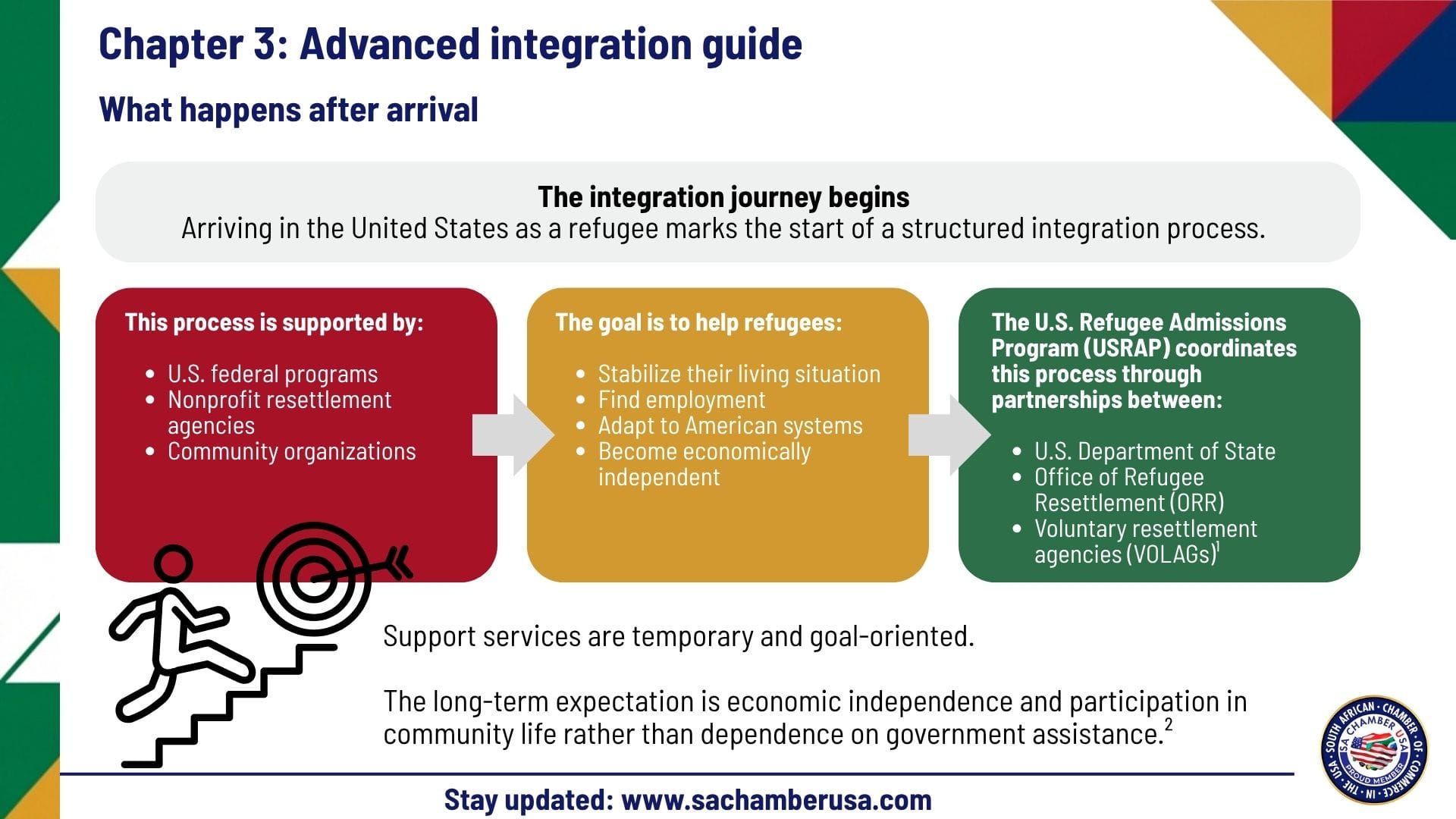
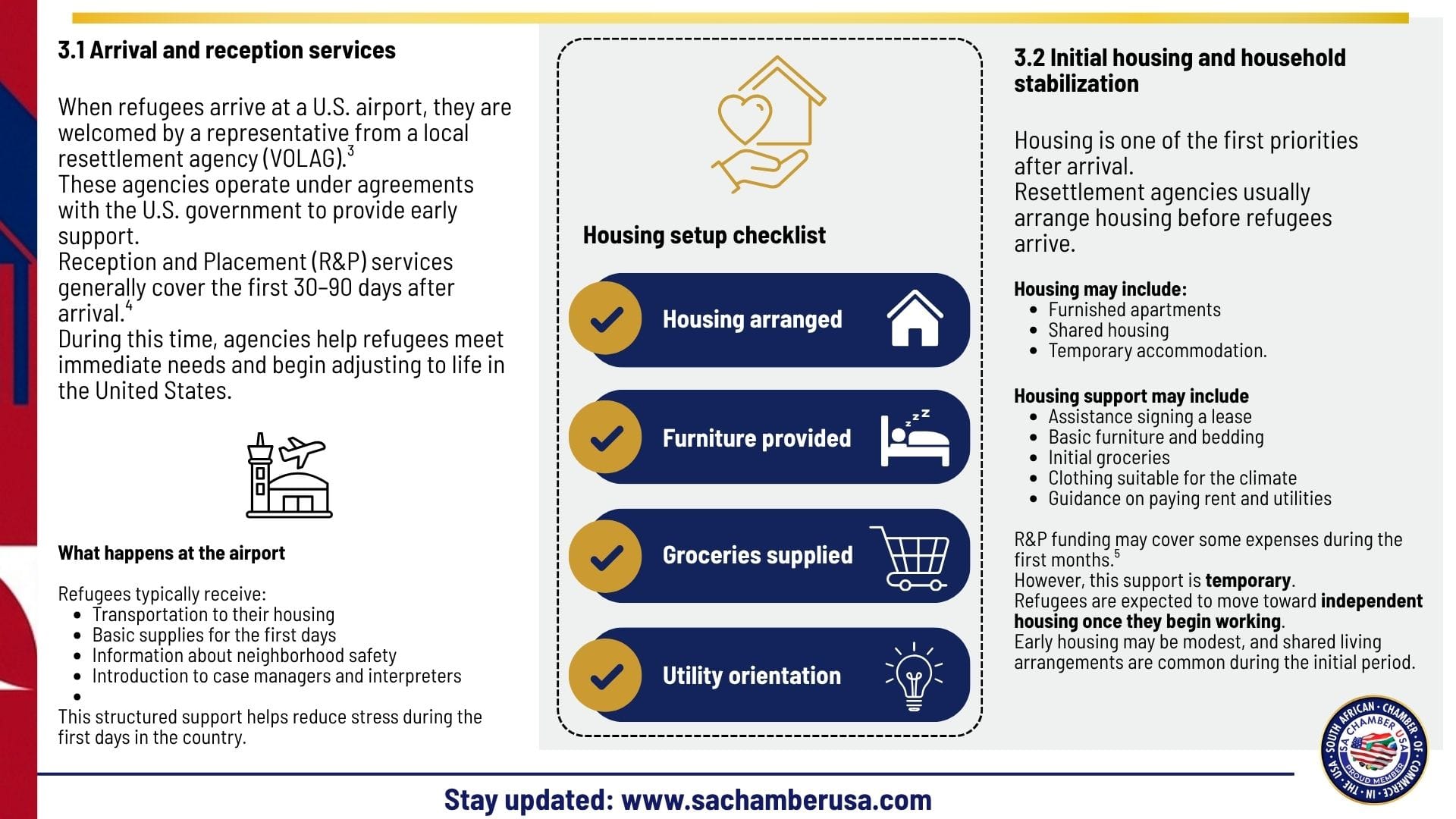
This manual is designed to guide South Africans preparing to relocate to the United States by providing practical information, cultural insight, and clear explanations of legal, financial, and social systems. Relocation involves more than physical movement; it requires preparation, adaptability, and understanding of new responsibilities. The guide explains how to navigate immigration requirements, employment expectations, financial systems, healthcare, education, and cultural adjustment. It also recognises the emotional realities of resettlement, encouraging readers to prepare not only logistically but also personally. By outlining both opportunities and responsibilities, this manual helps newcomers make informed decisions, avoid preventable challenges, and build stable, independent lives in the United States while maintaining their cultural identity and values.
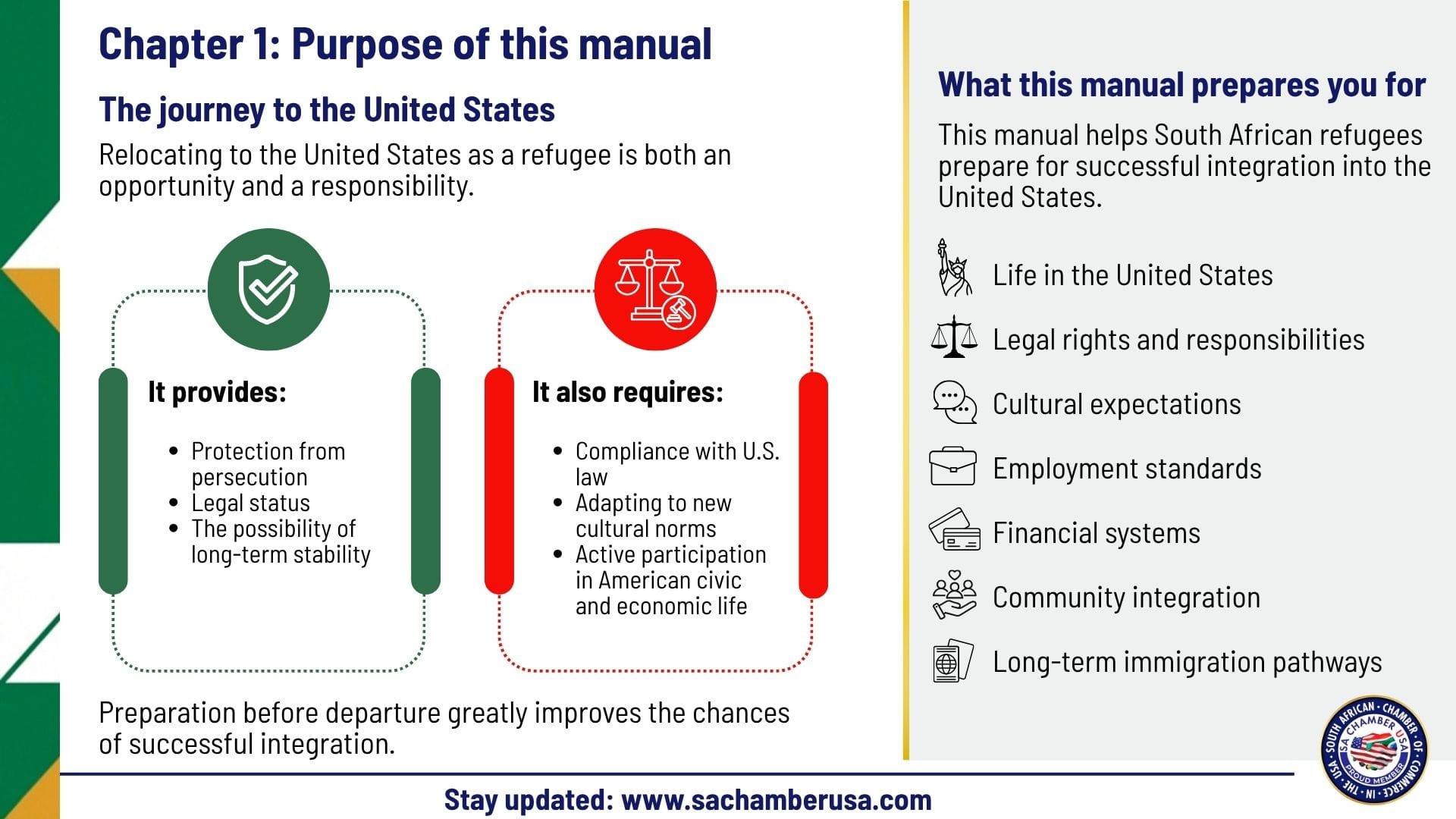
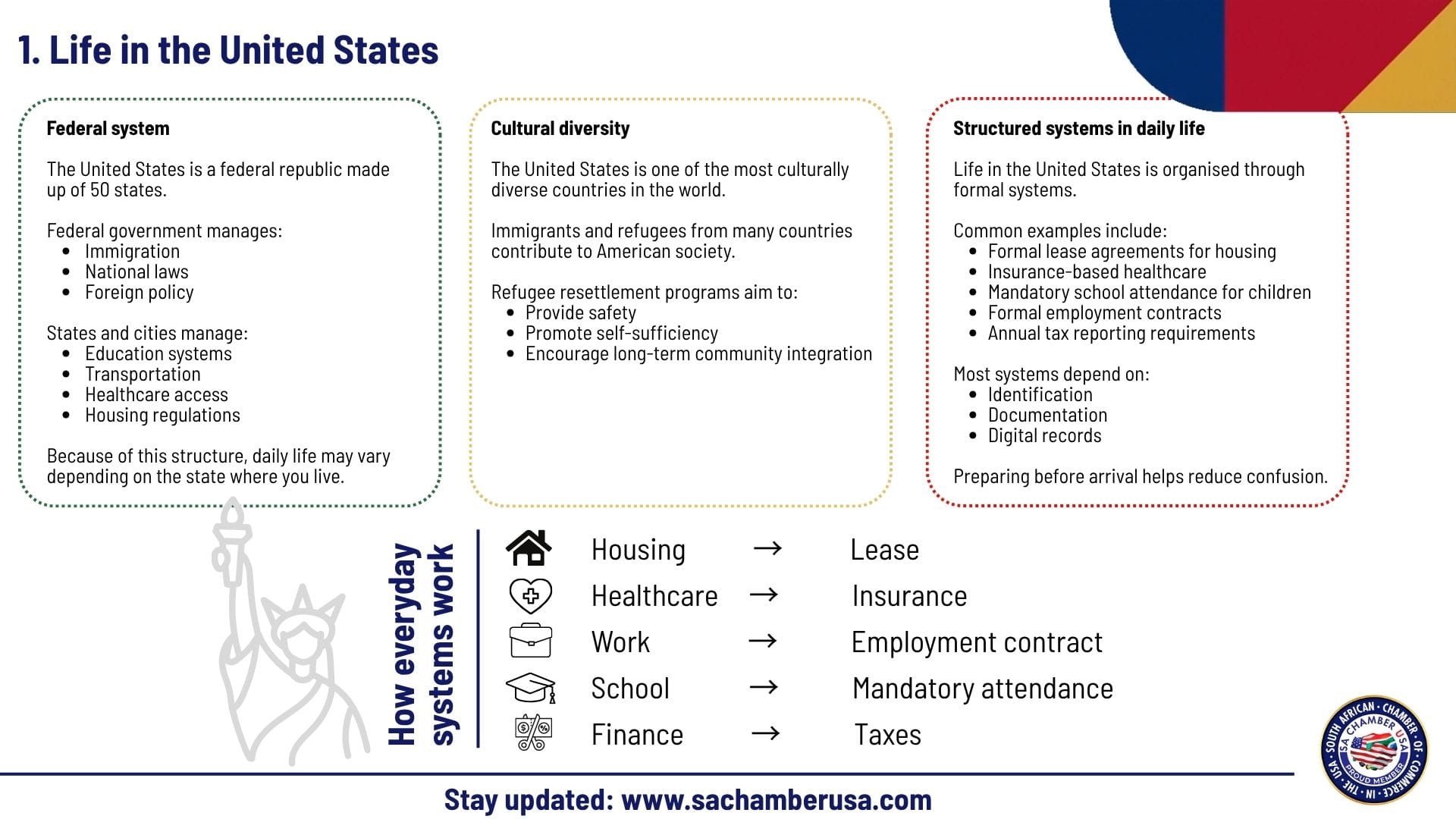
This manual is designed to prepare South Africans for relocation to the United States by providing practical guidance on legal responsibilities, cultural adaptation, and everyday systems. It recognises that moving to a new country involves not only administrative requirements but also emotional and cultural transitions. The guide aims to reduce uncertainty by explaining the structures, expectations, and systems newcomers will encounter. It highlights the importance of preparation before departure, informed decision-making, and understanding the responsibilities tied to immigration status. By outlining differences between South African and American systems, the manual supports smoother adjustment and encourages readers to approach resettlement with realistic expectations and practical strategies.
Click anywhere on the image to enlarge
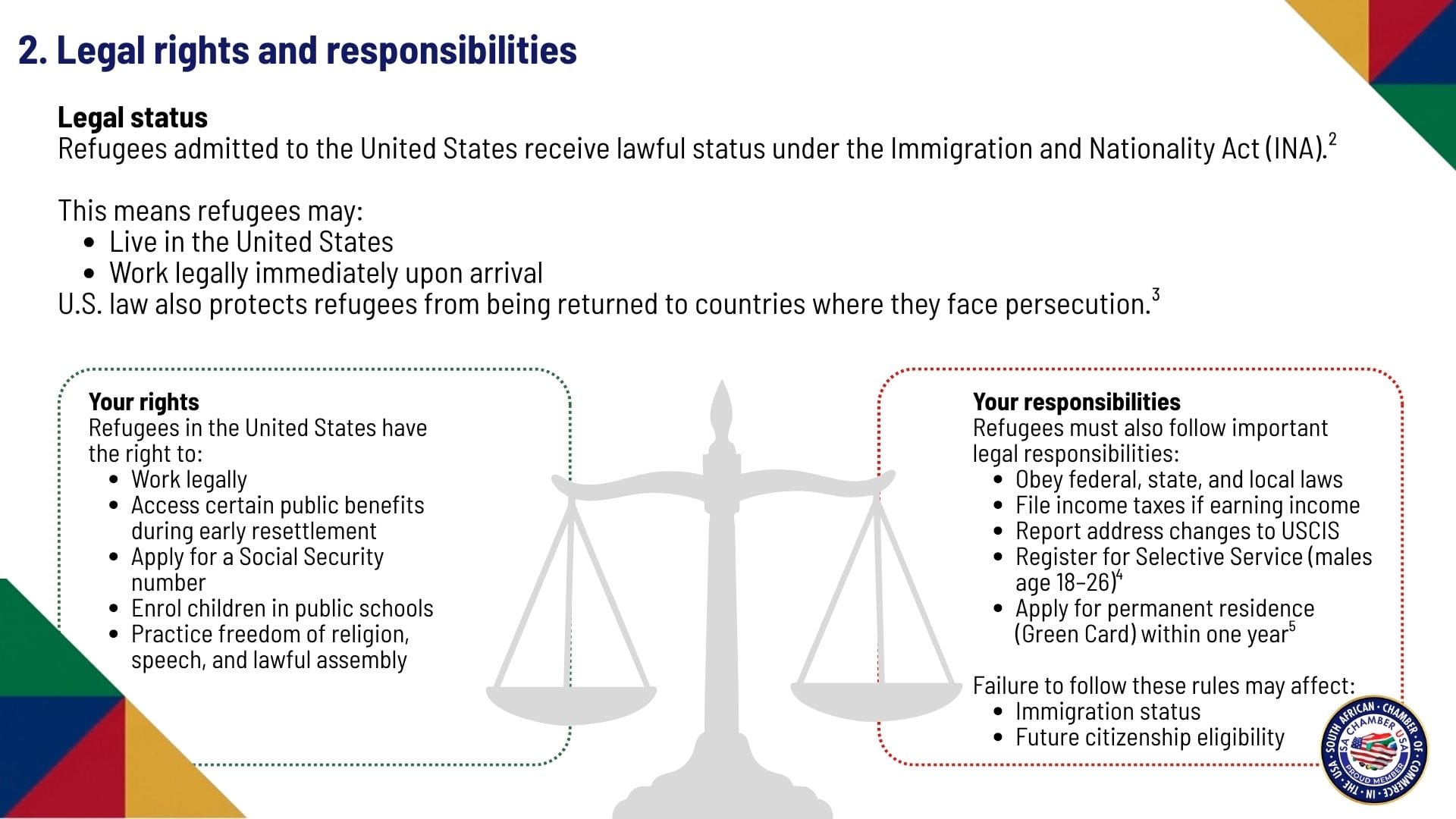
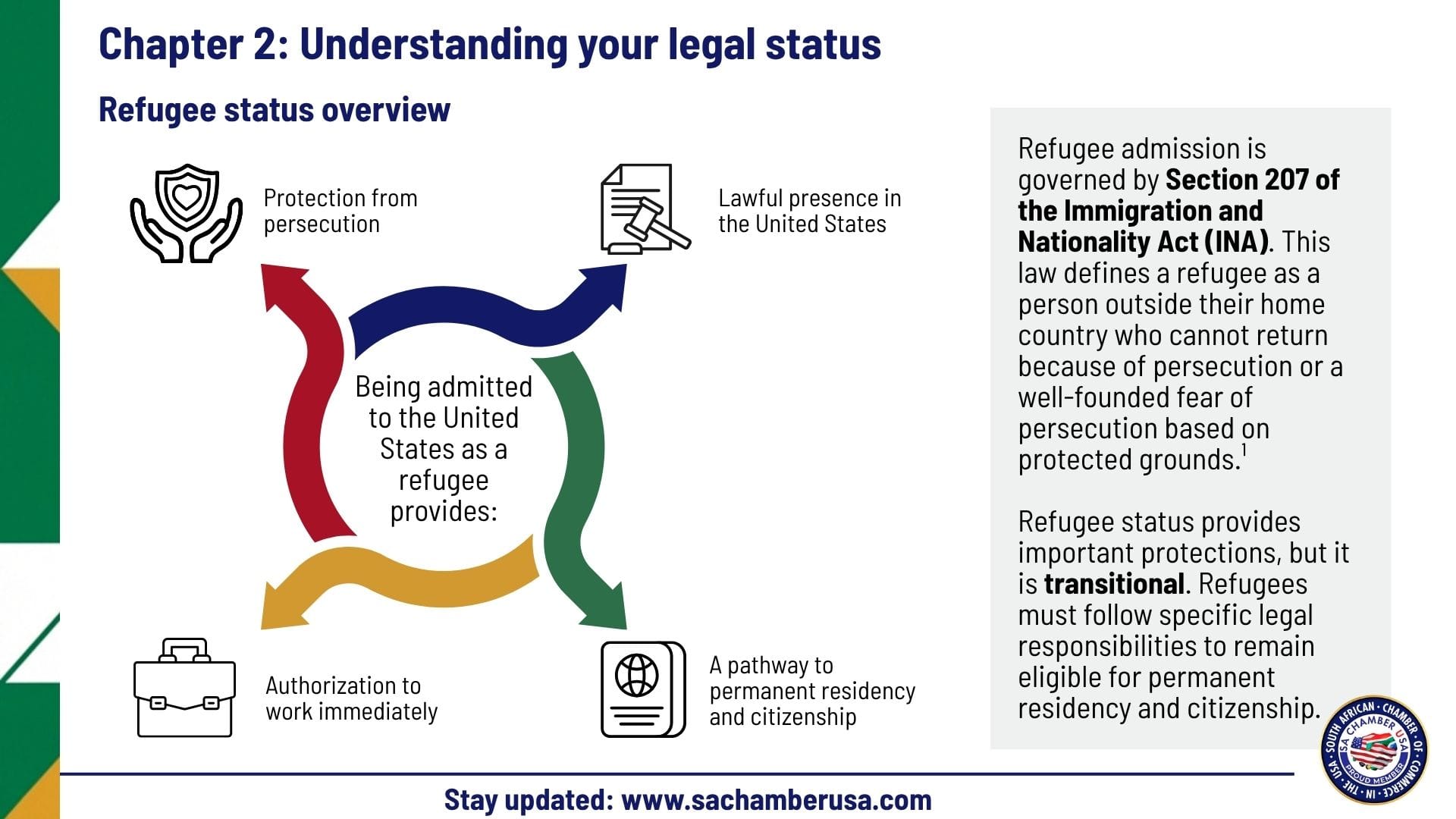
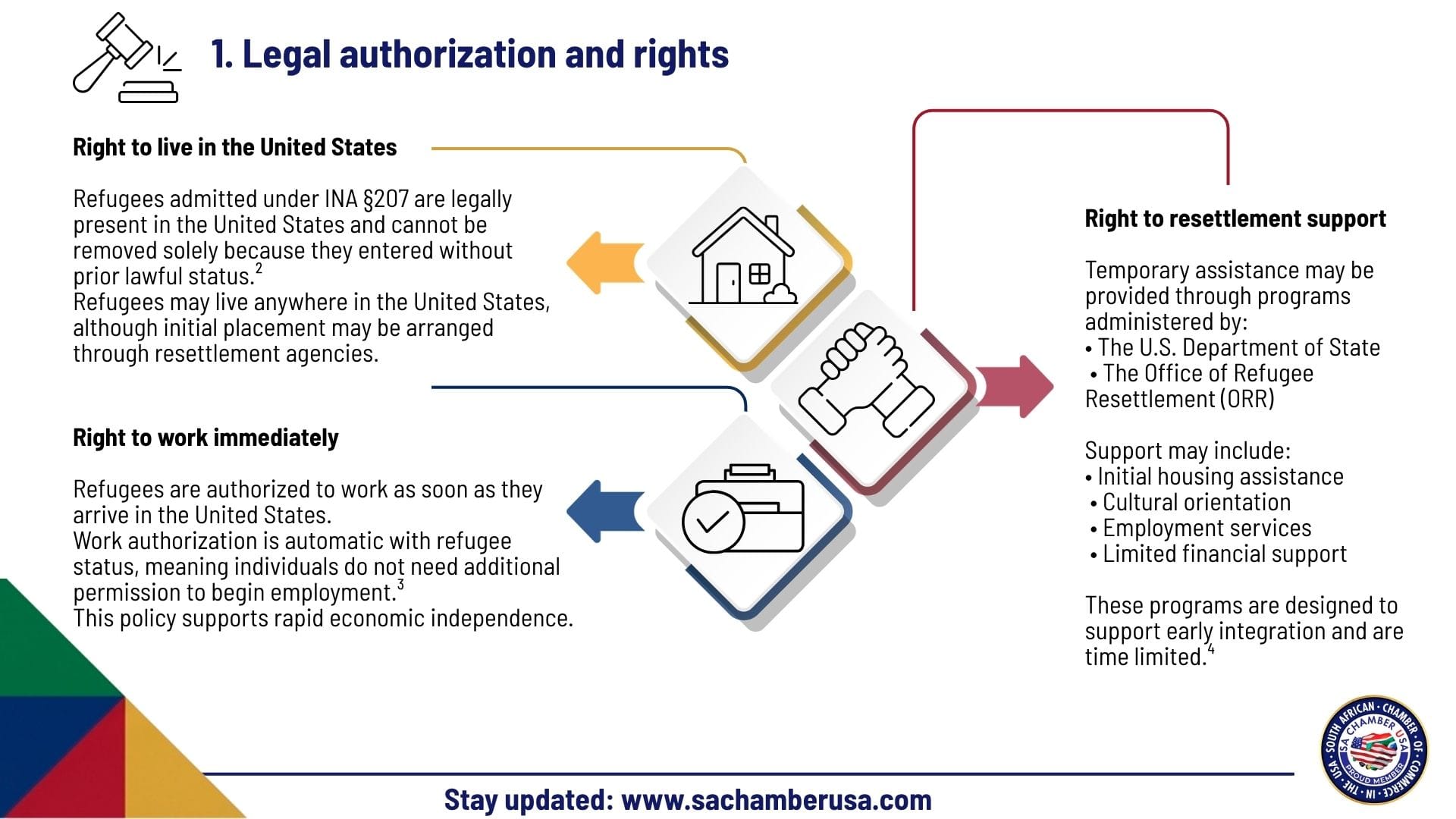
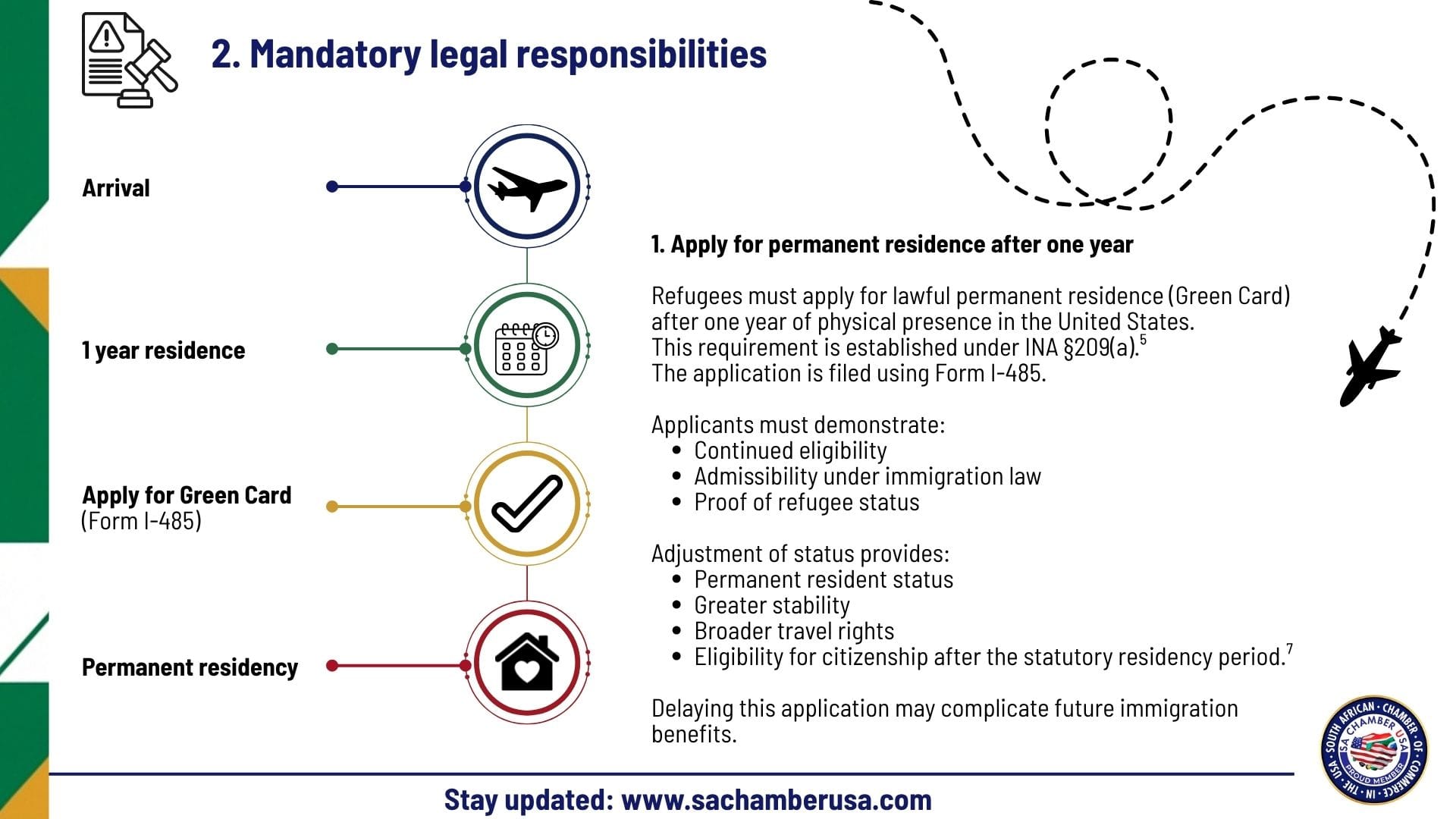
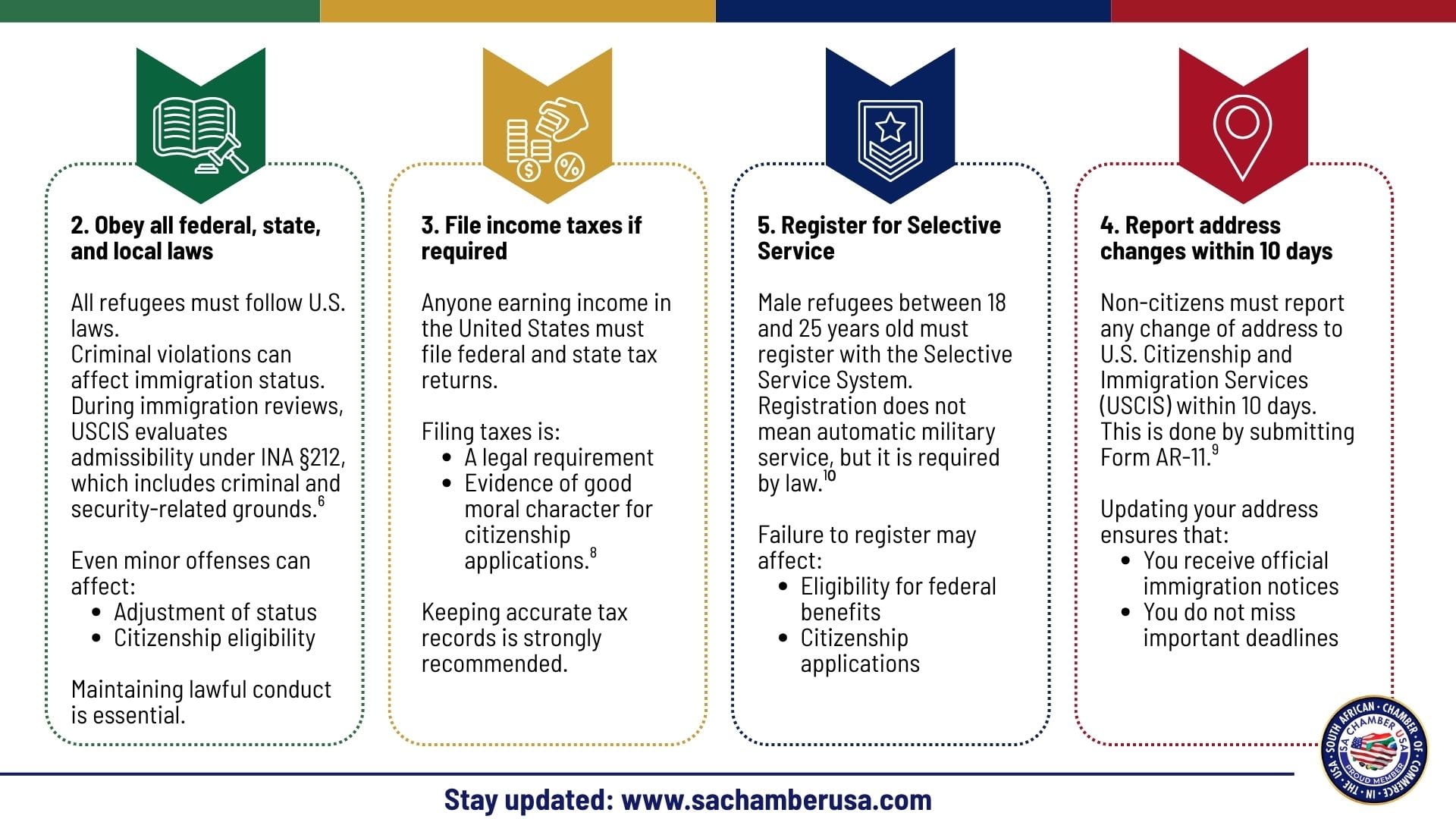
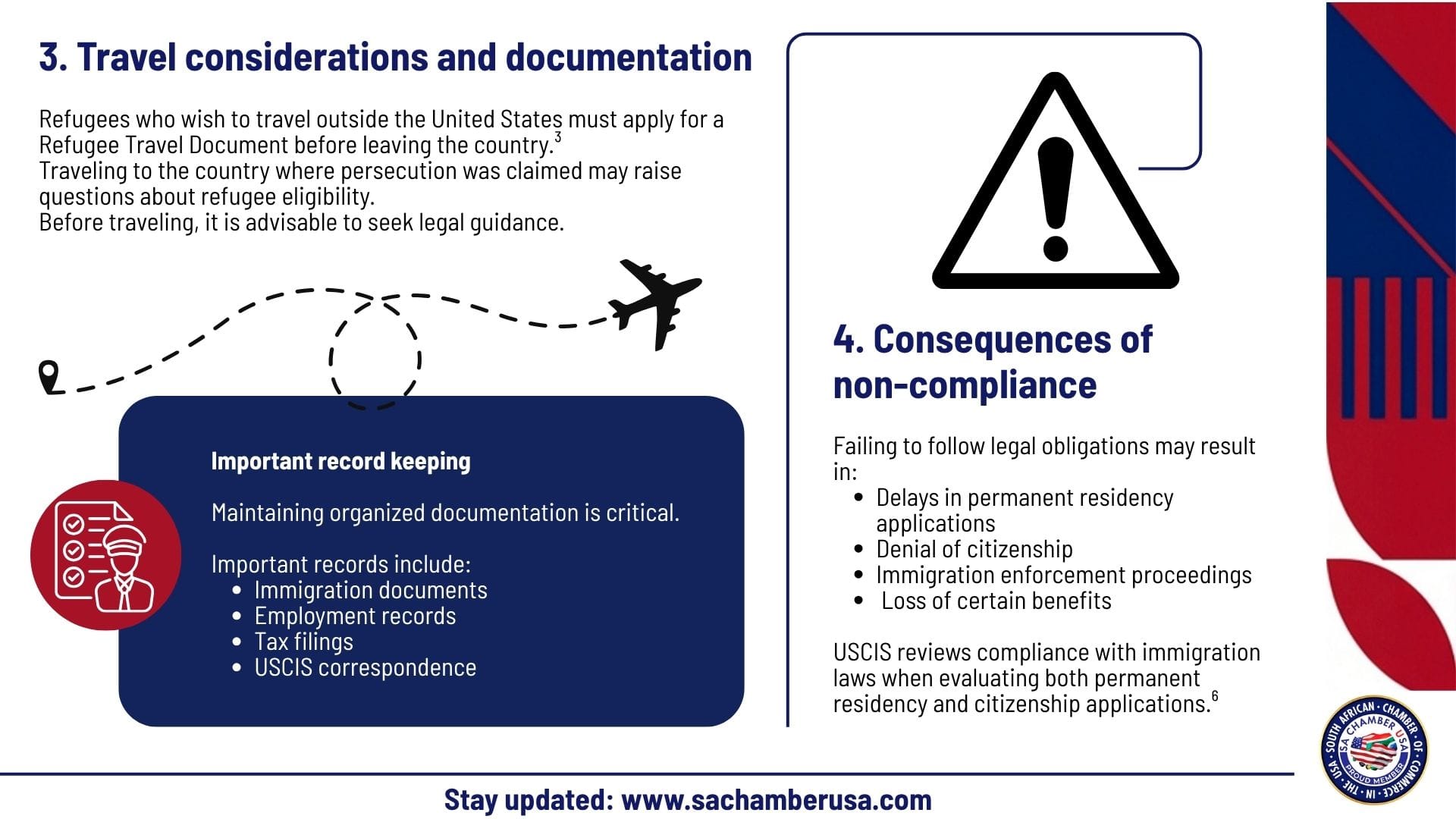
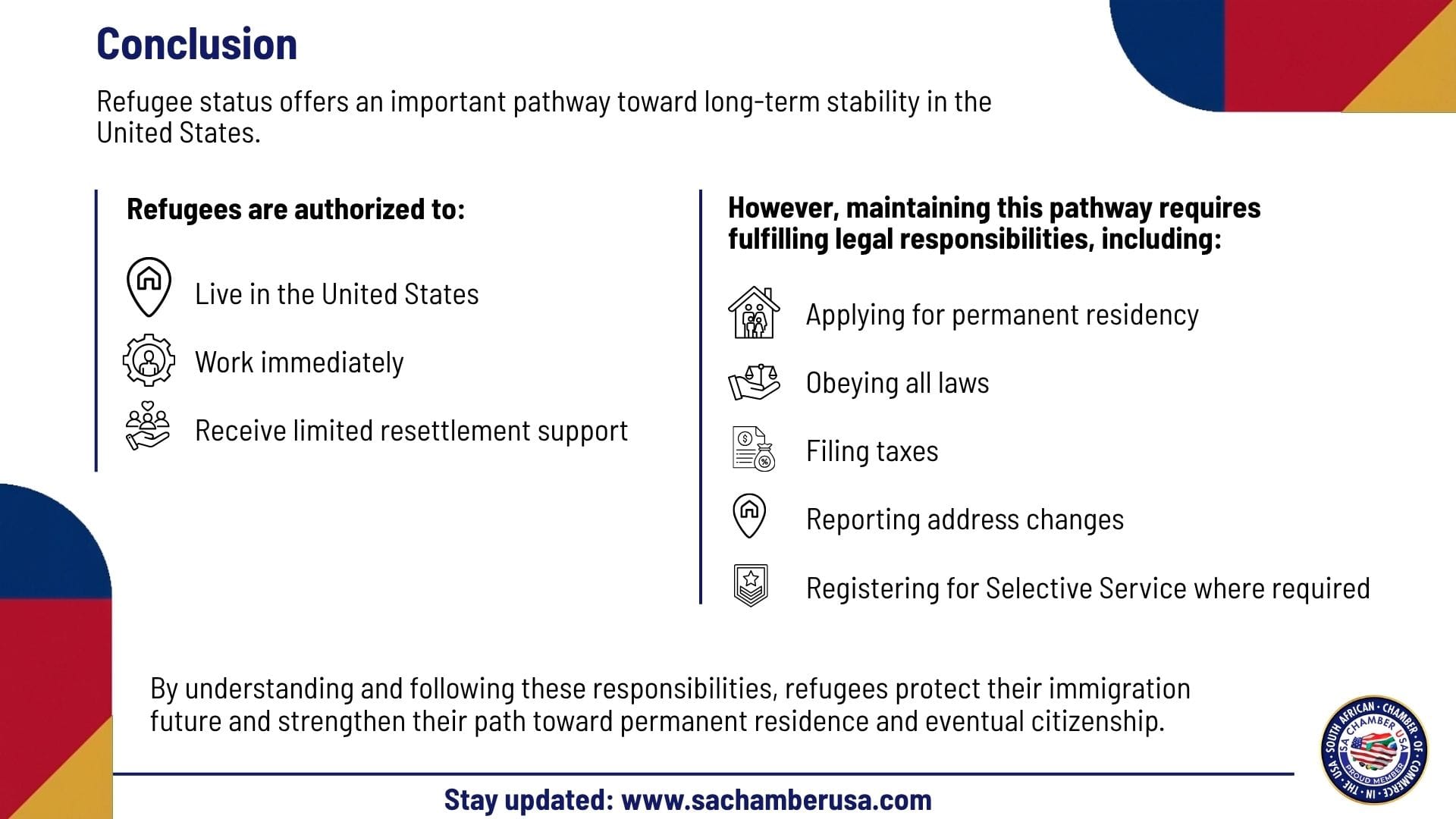
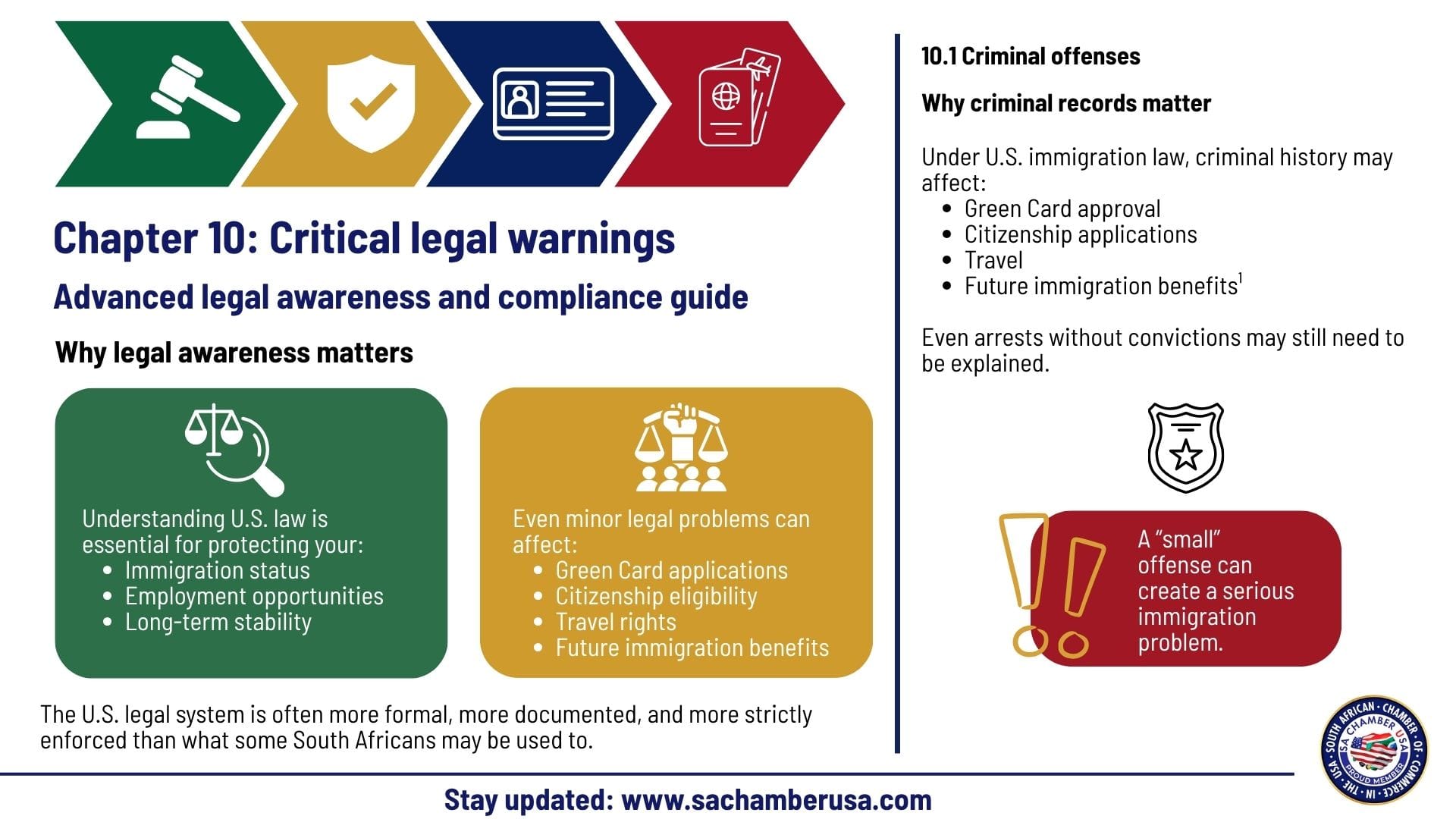
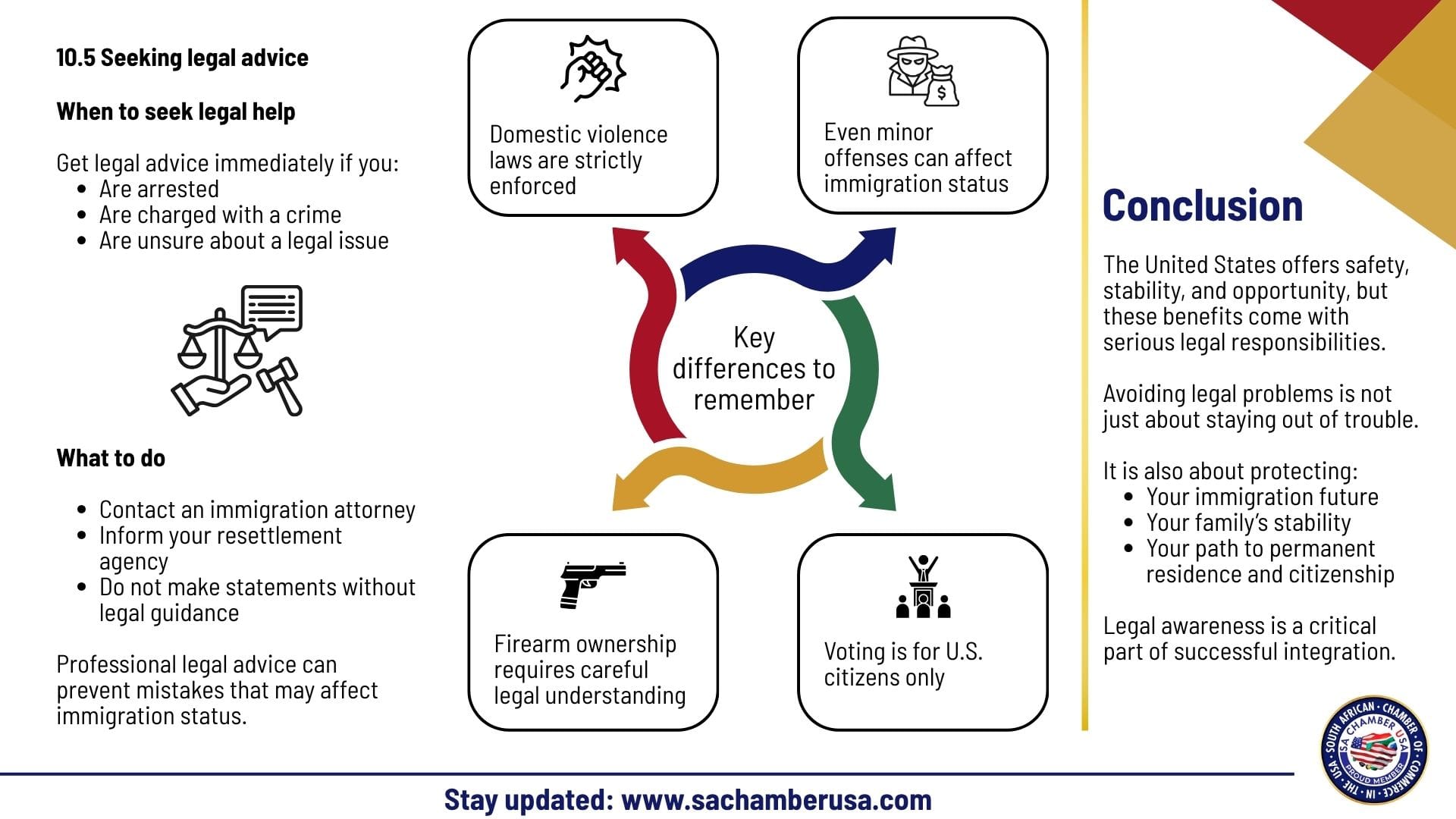
This section explains that legal compliance is fundamental to successful integration in the United States. It highlights the rights granted to immigrants, including freedom of speech, religion, and lawful participation in society, while emphasising the responsibilities required to maintain lawful status. These responsibilities include obeying laws, filing taxes, updating addresses, and understanding immigration timelines. The section stresses that failure to meet these obligations can affect future immigration outcomes, including eligibility for permanent residency and citizenship. It encourages newcomers to understand the legal framework early to avoid preventable mistakes and protect long-term opportunities.
Click anywhere on the image to enlarge
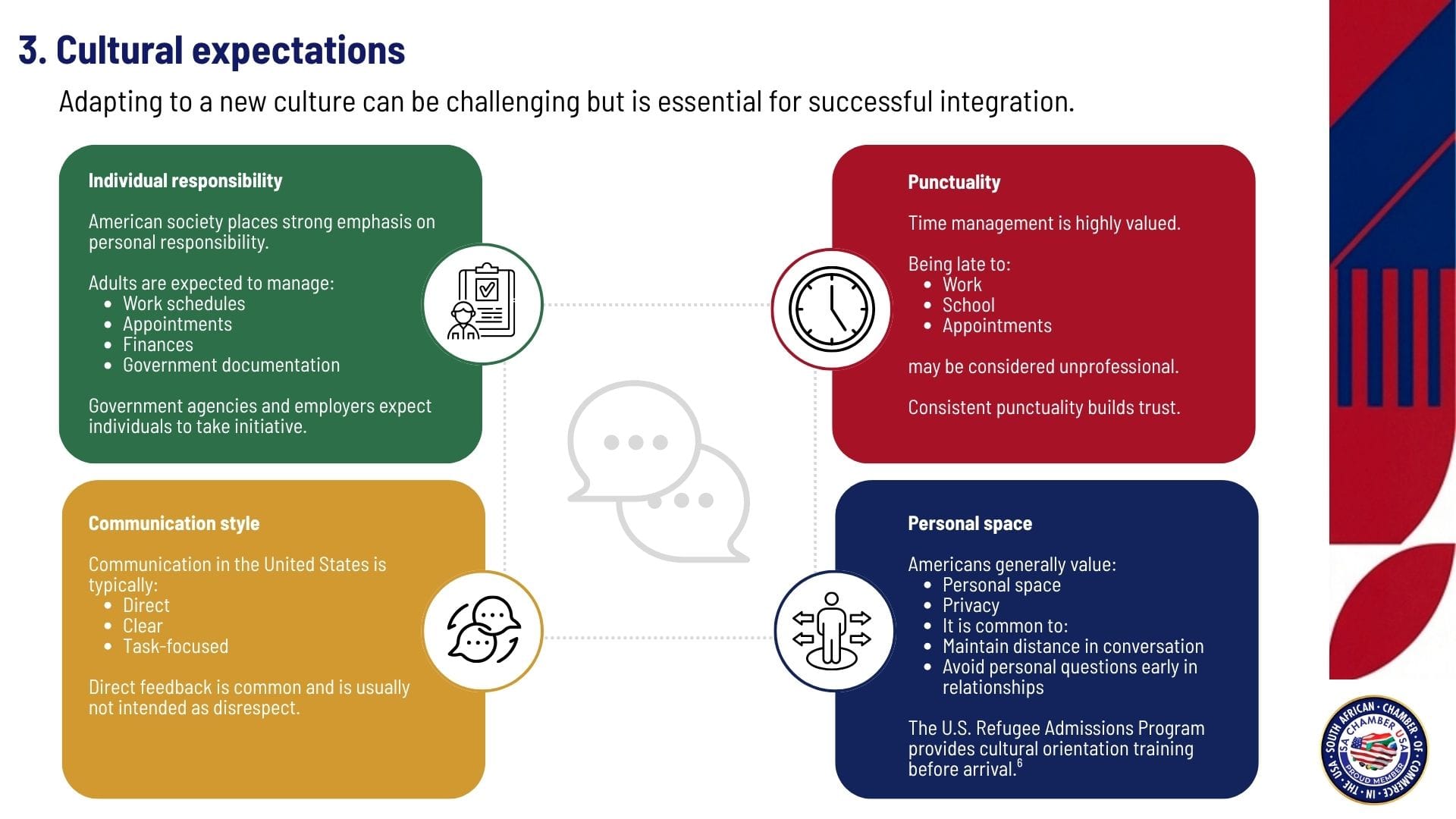
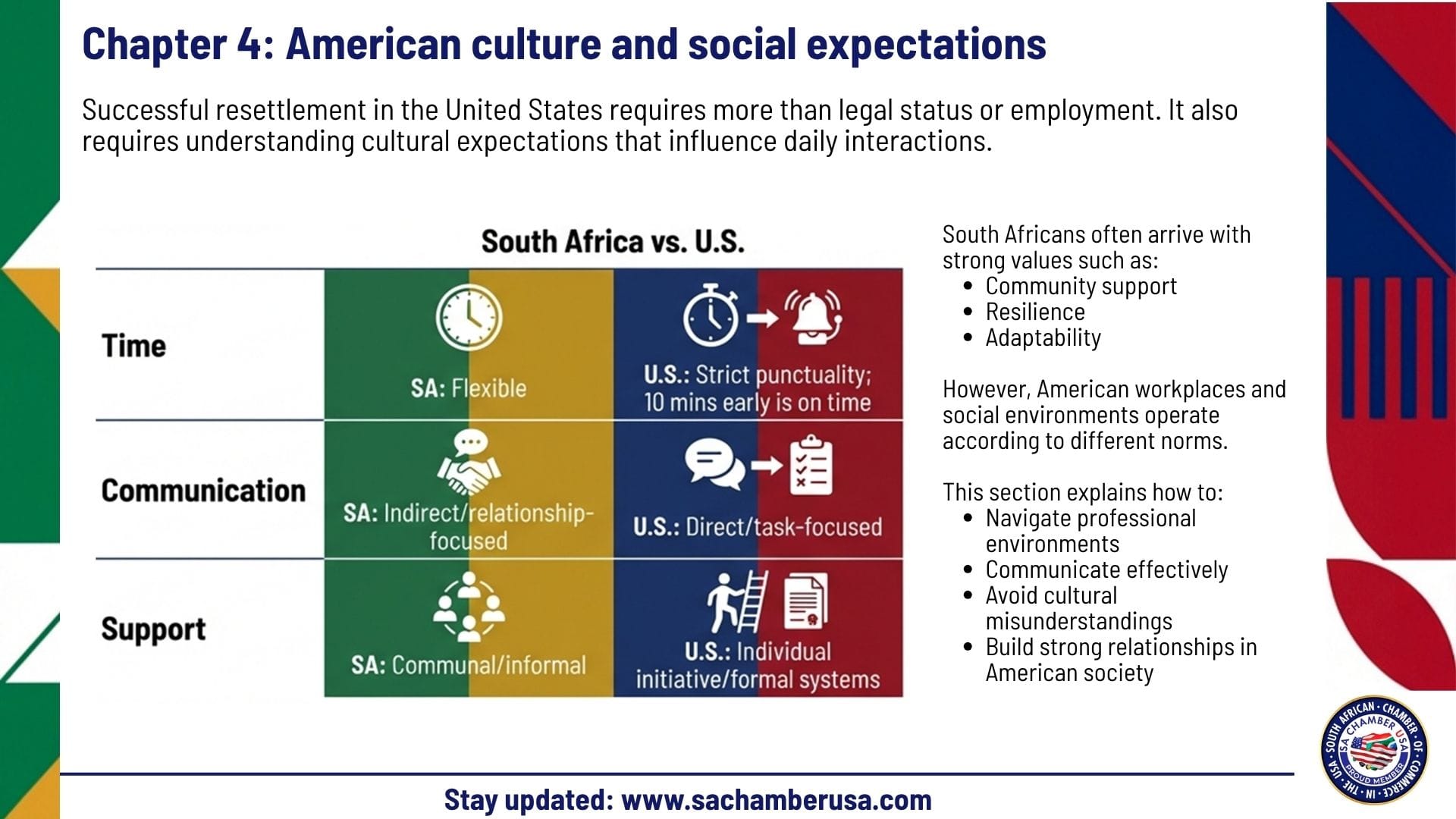
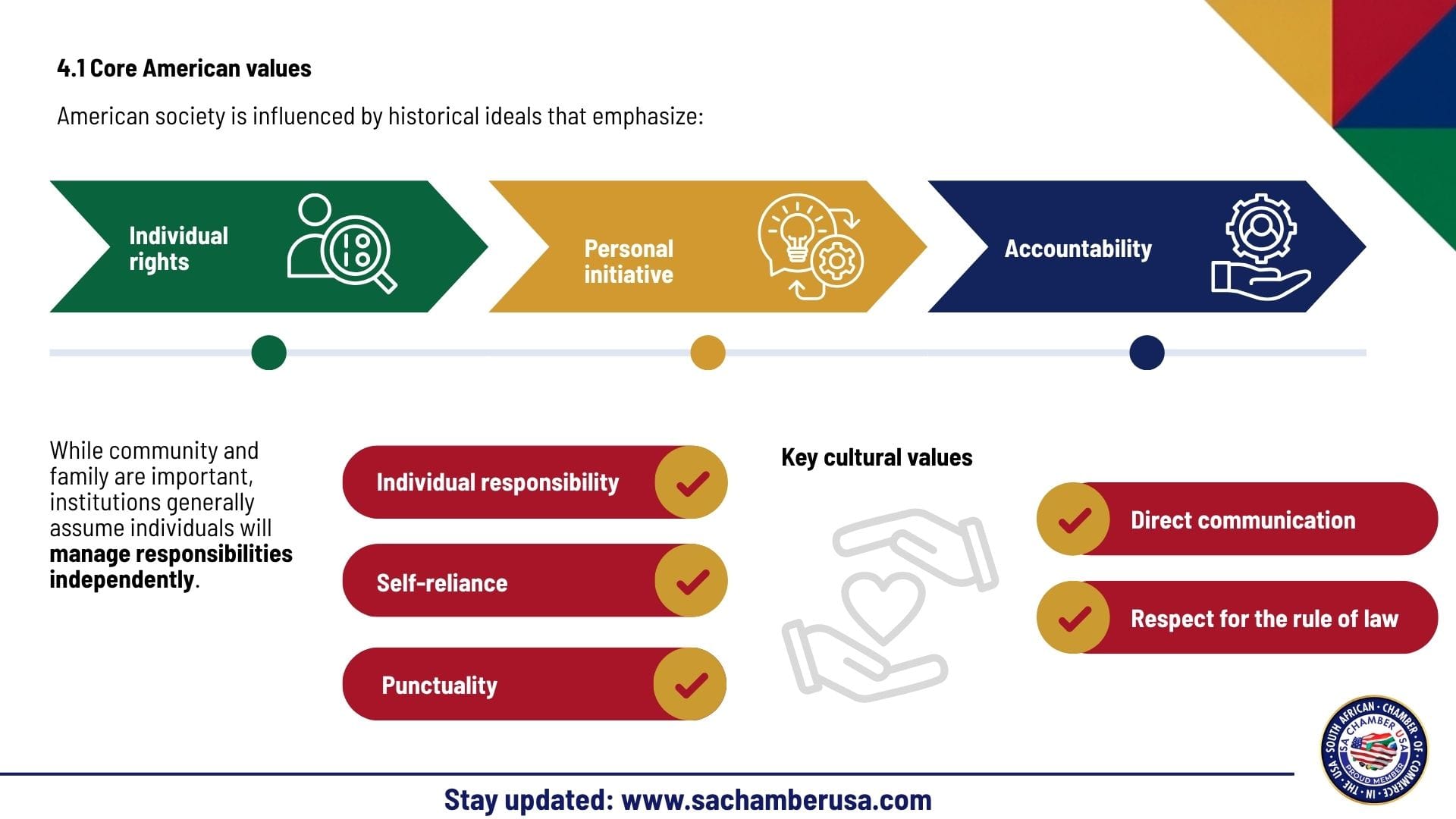
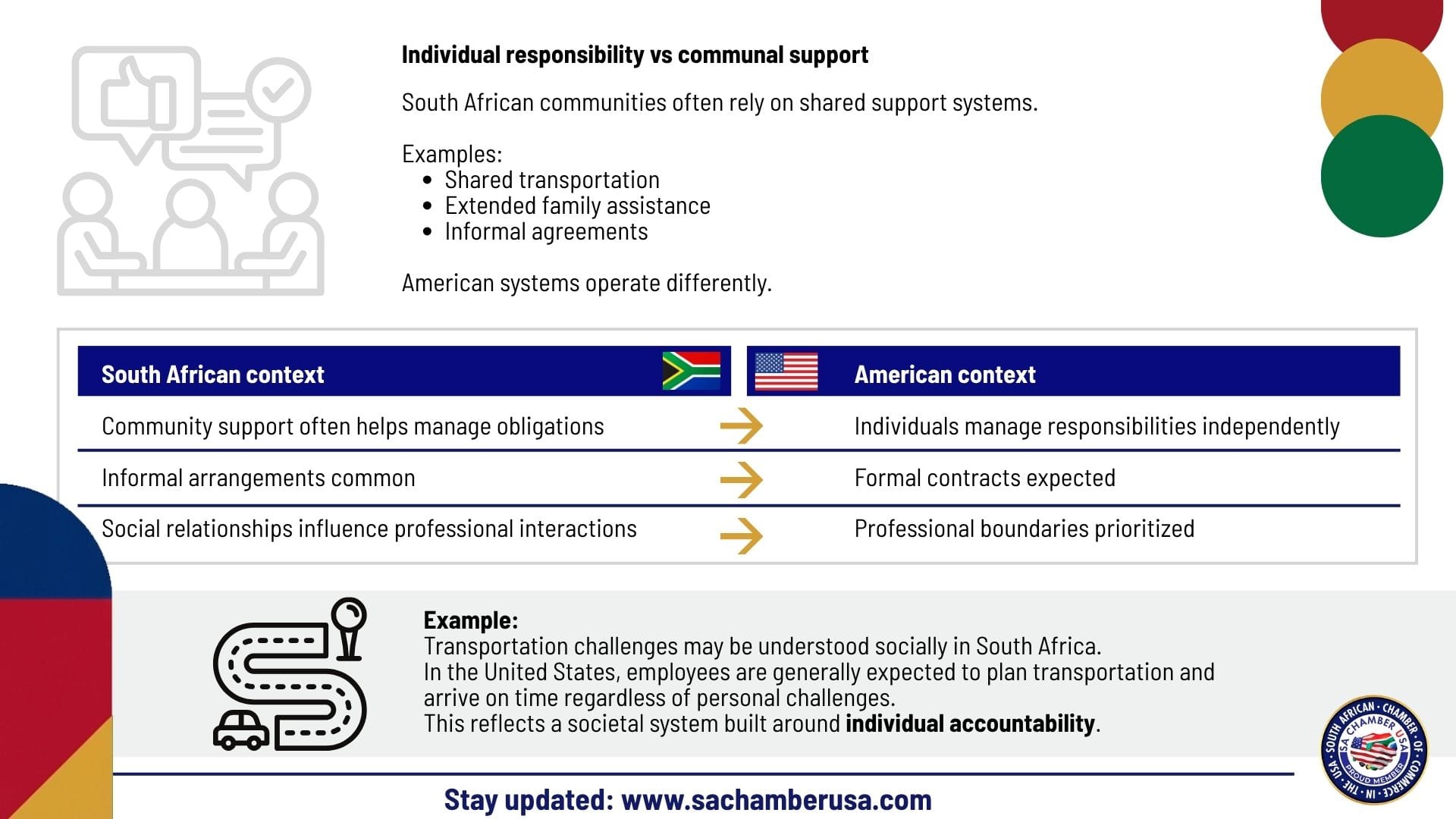
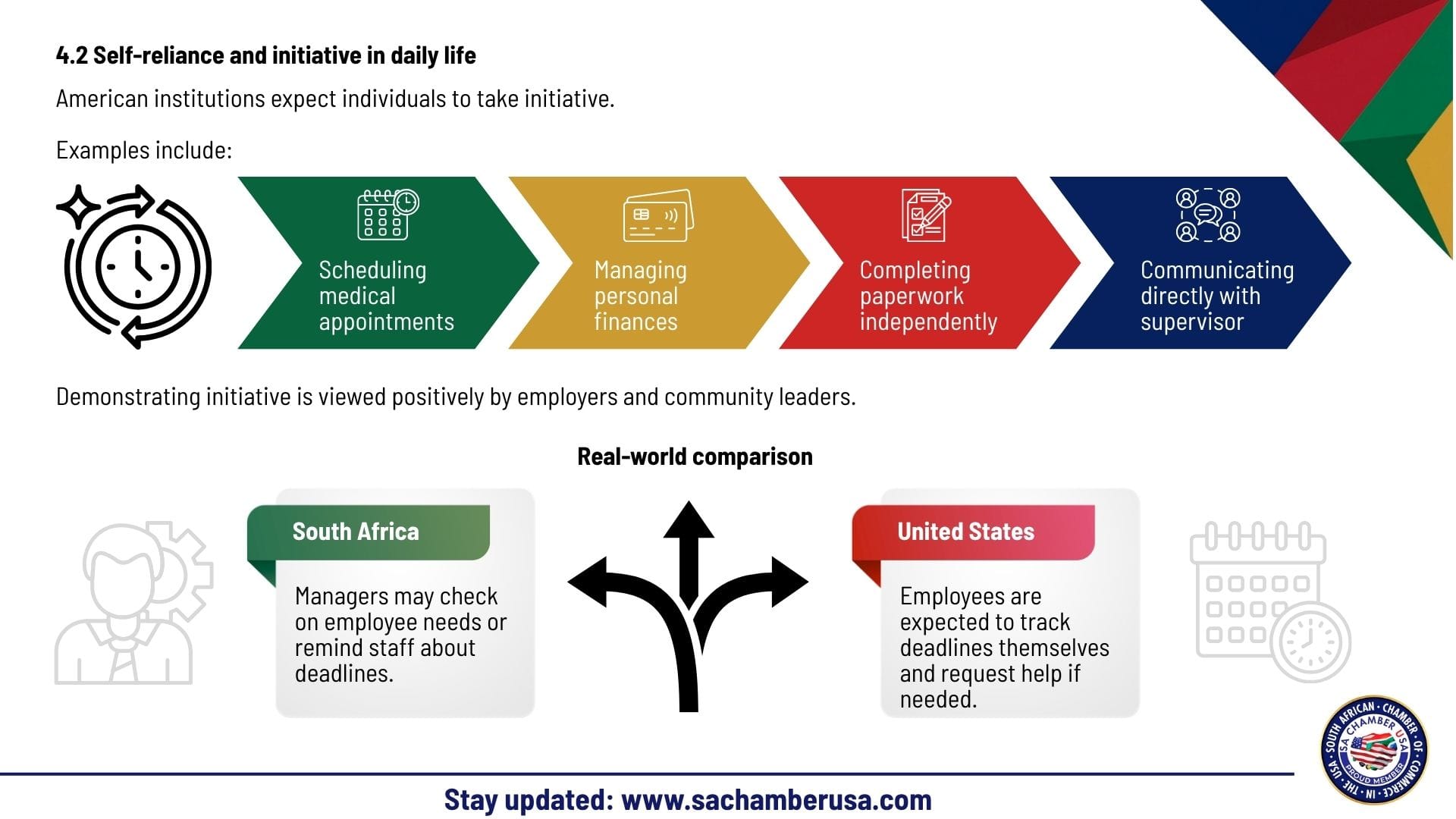
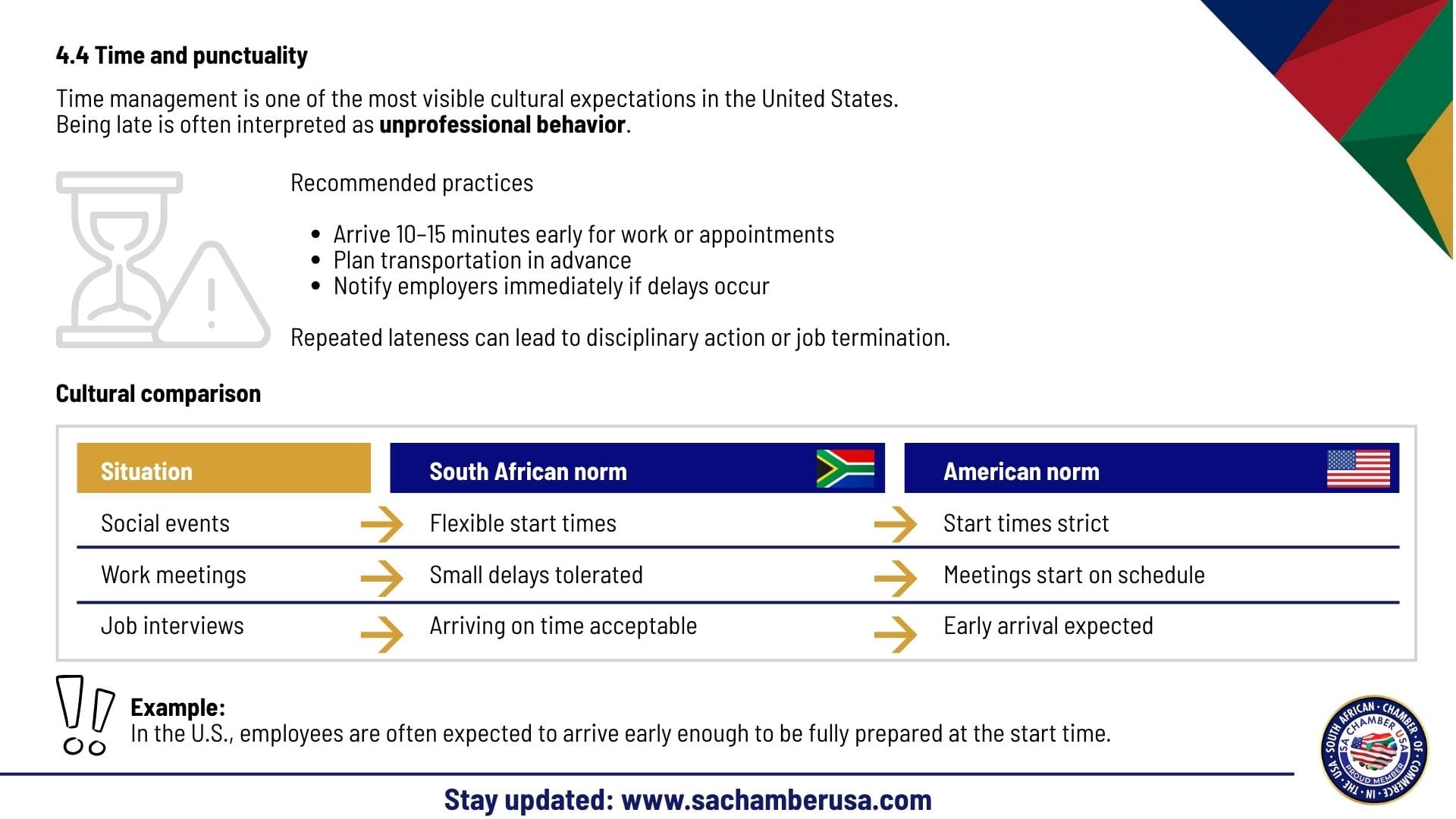
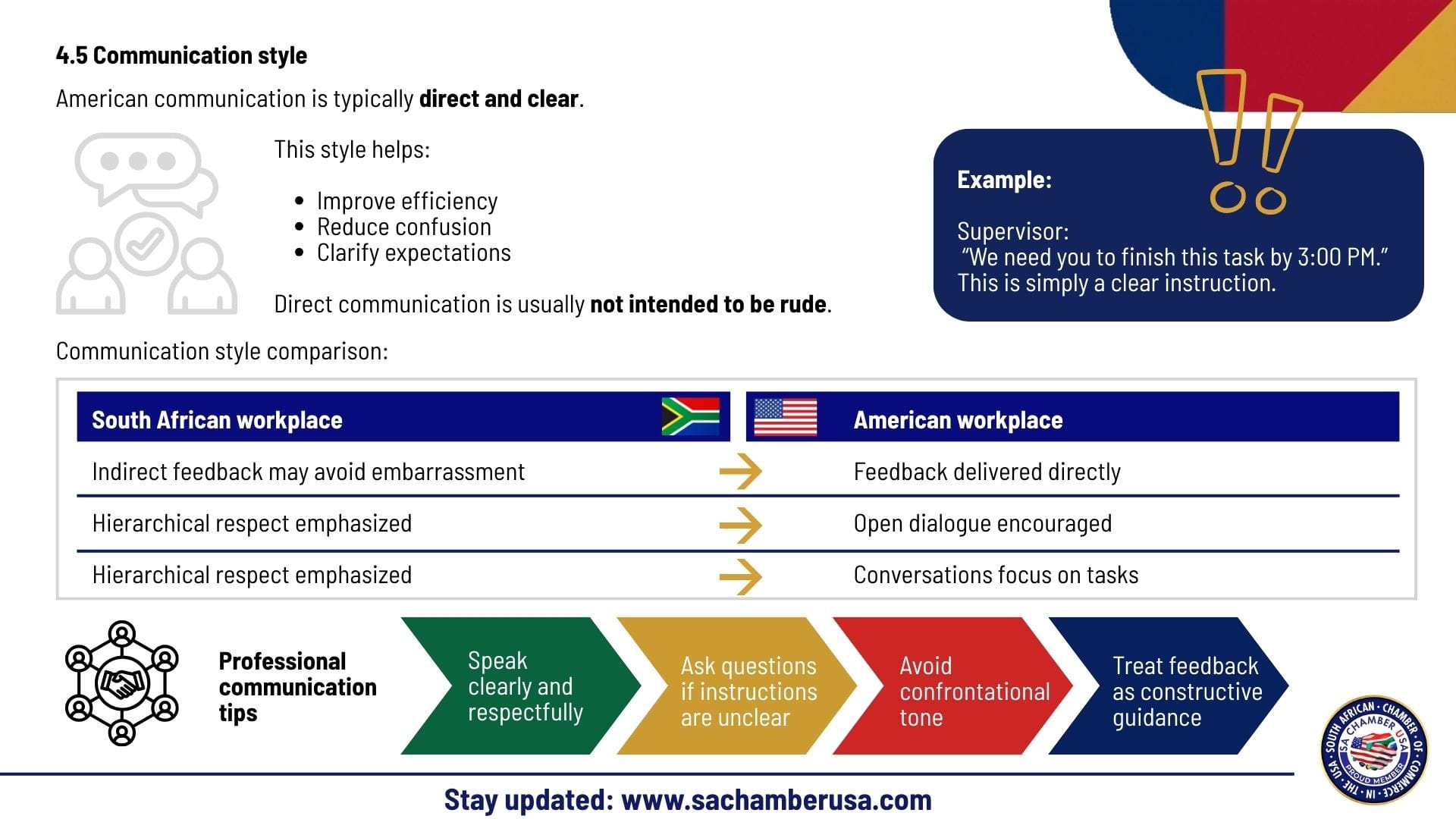
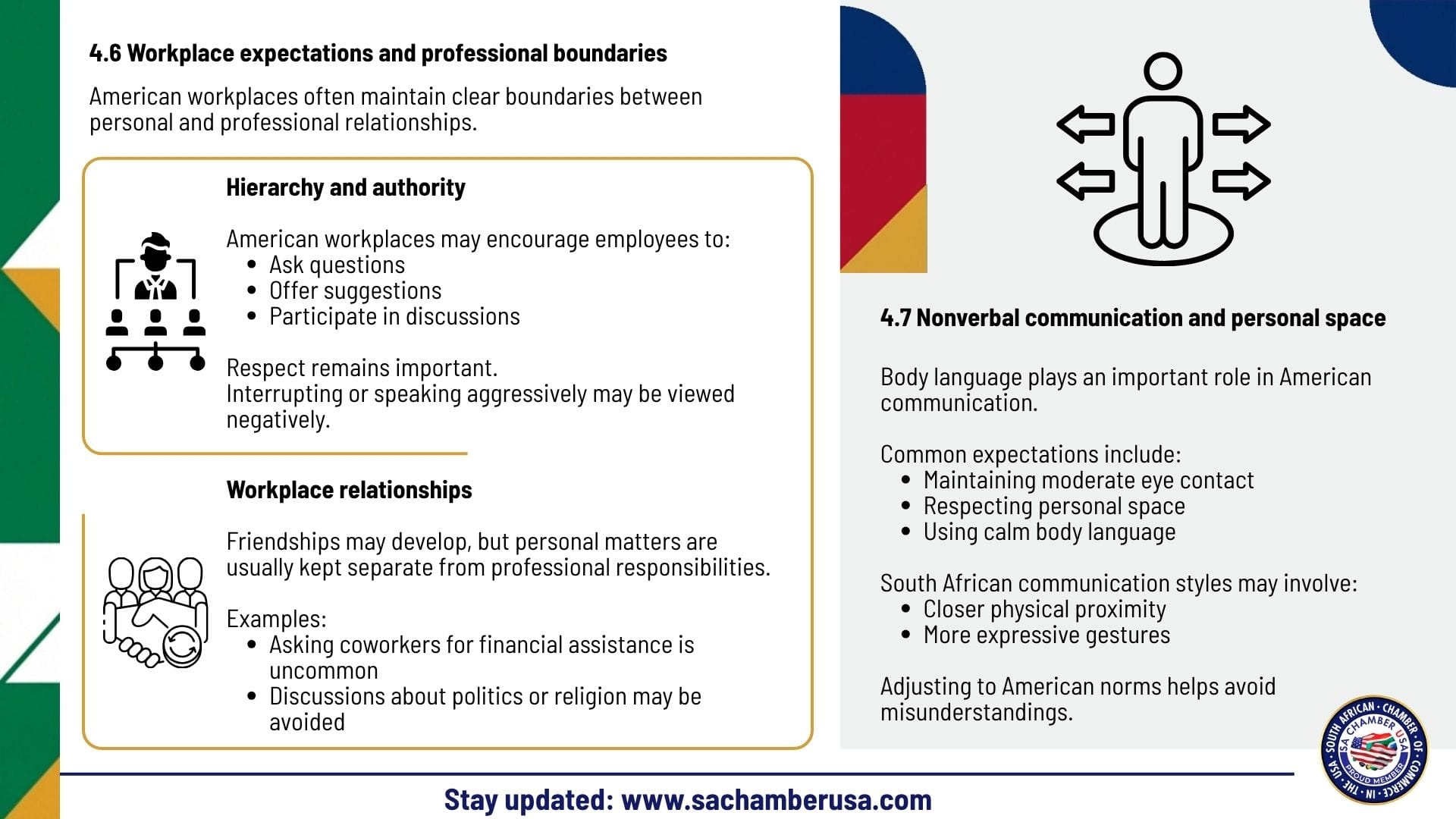
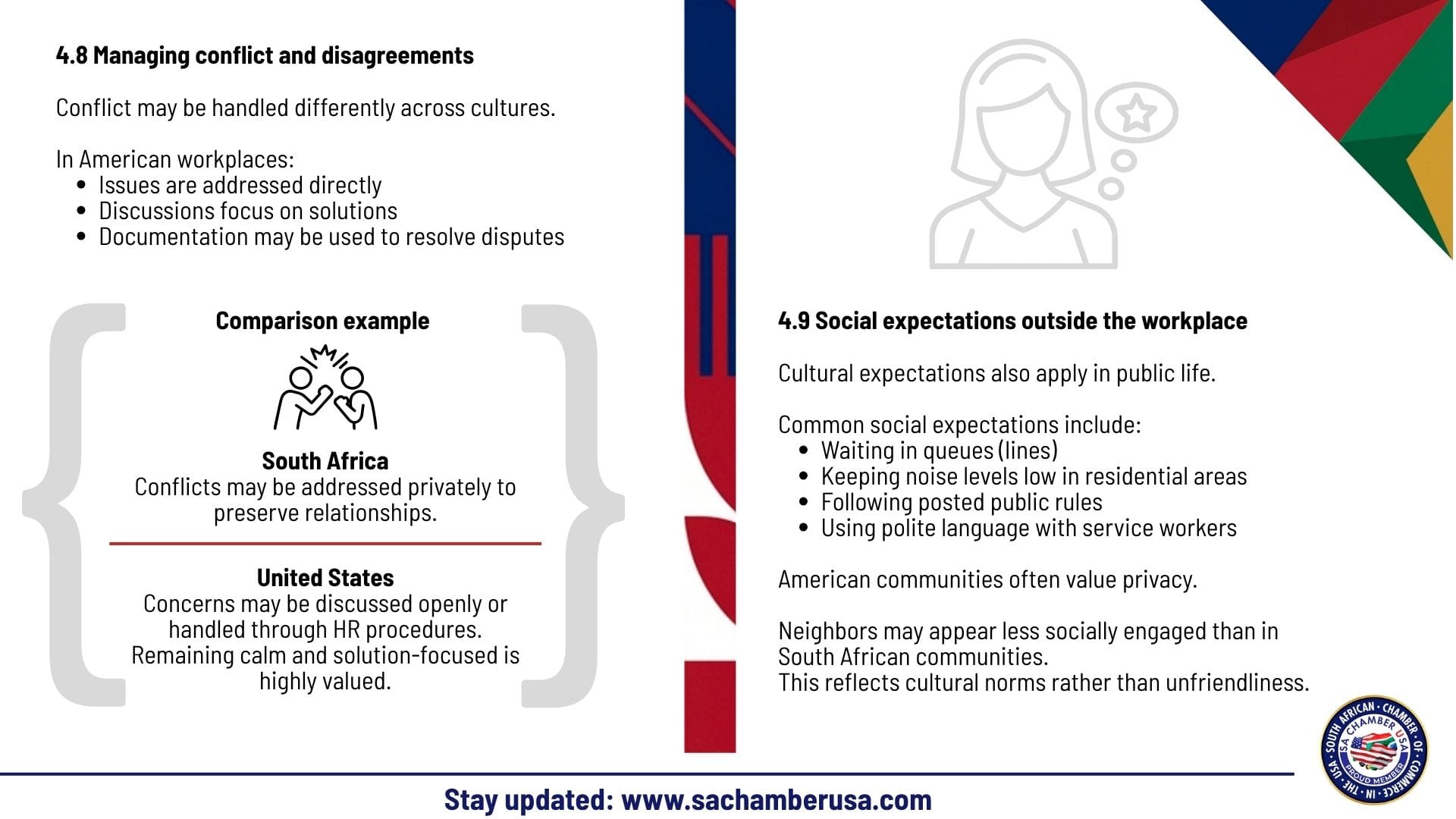
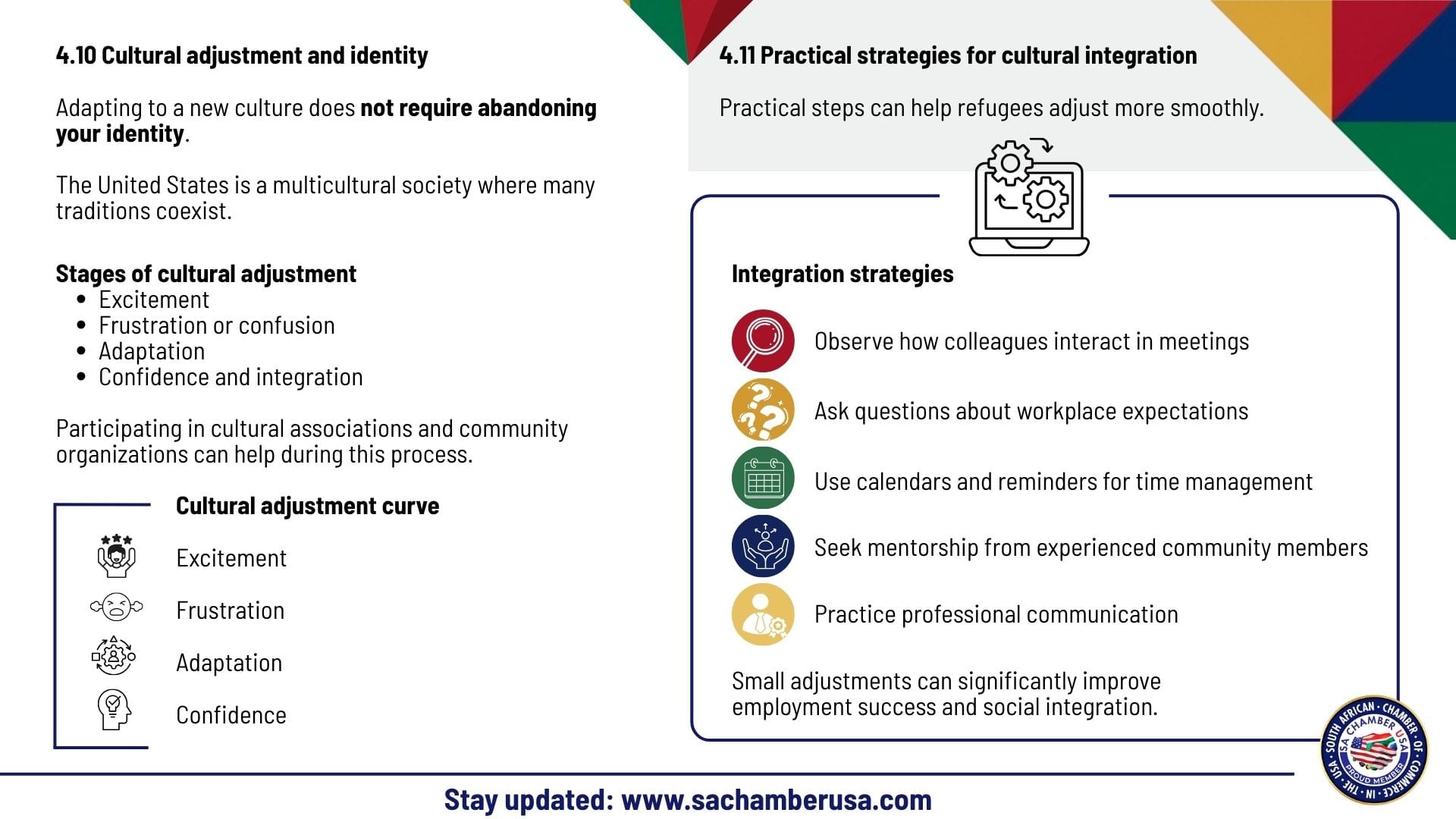
This section explores the cultural differences South Africans may encounter when adapting to life in the United States. It discusses expectations around personal responsibility, communication styles, punctuality, and professional conduct. American society often emphasises individual initiative, direct communication, and time management, which may differ from norms in South Africa. The section also addresses social boundaries and workplace norms, encouraging newcomers to interpret these differences as opportunities for growth rather than barriers. By understanding these cultural expectations, South Africans can navigate social and professional environments more effectively and reduce misunderstandings during the integration process.
Click anywhere on the image to enlarge
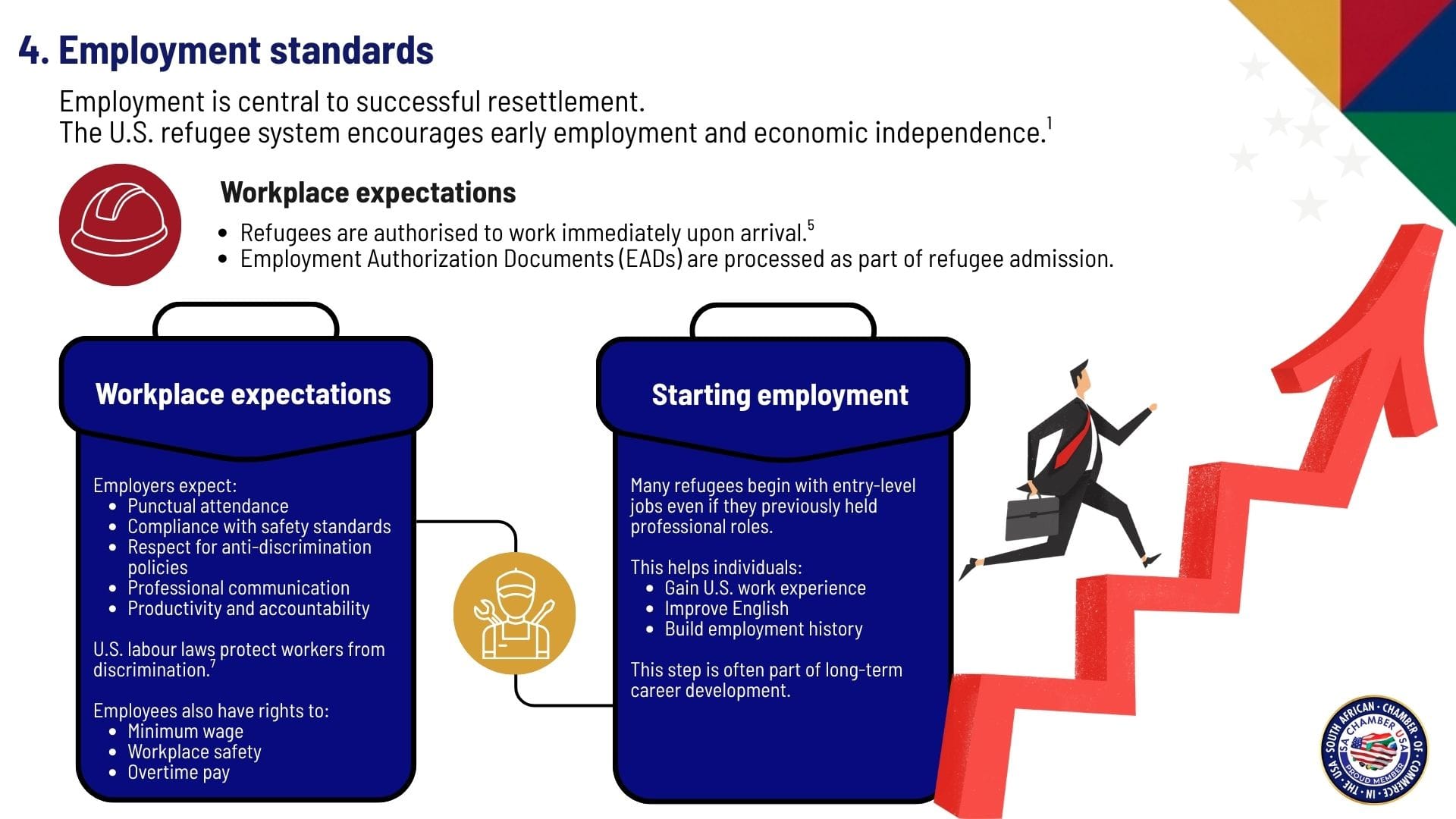
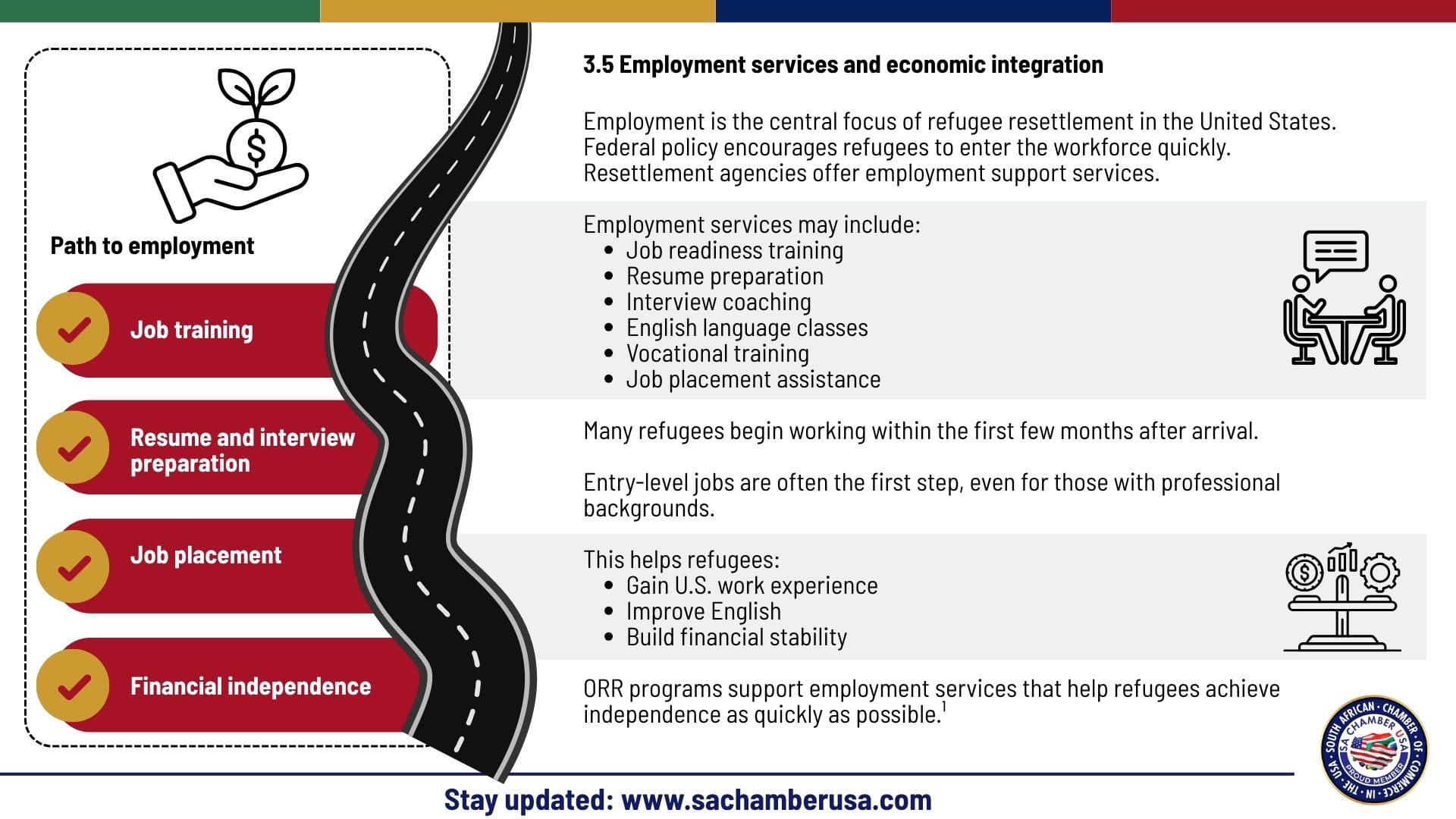
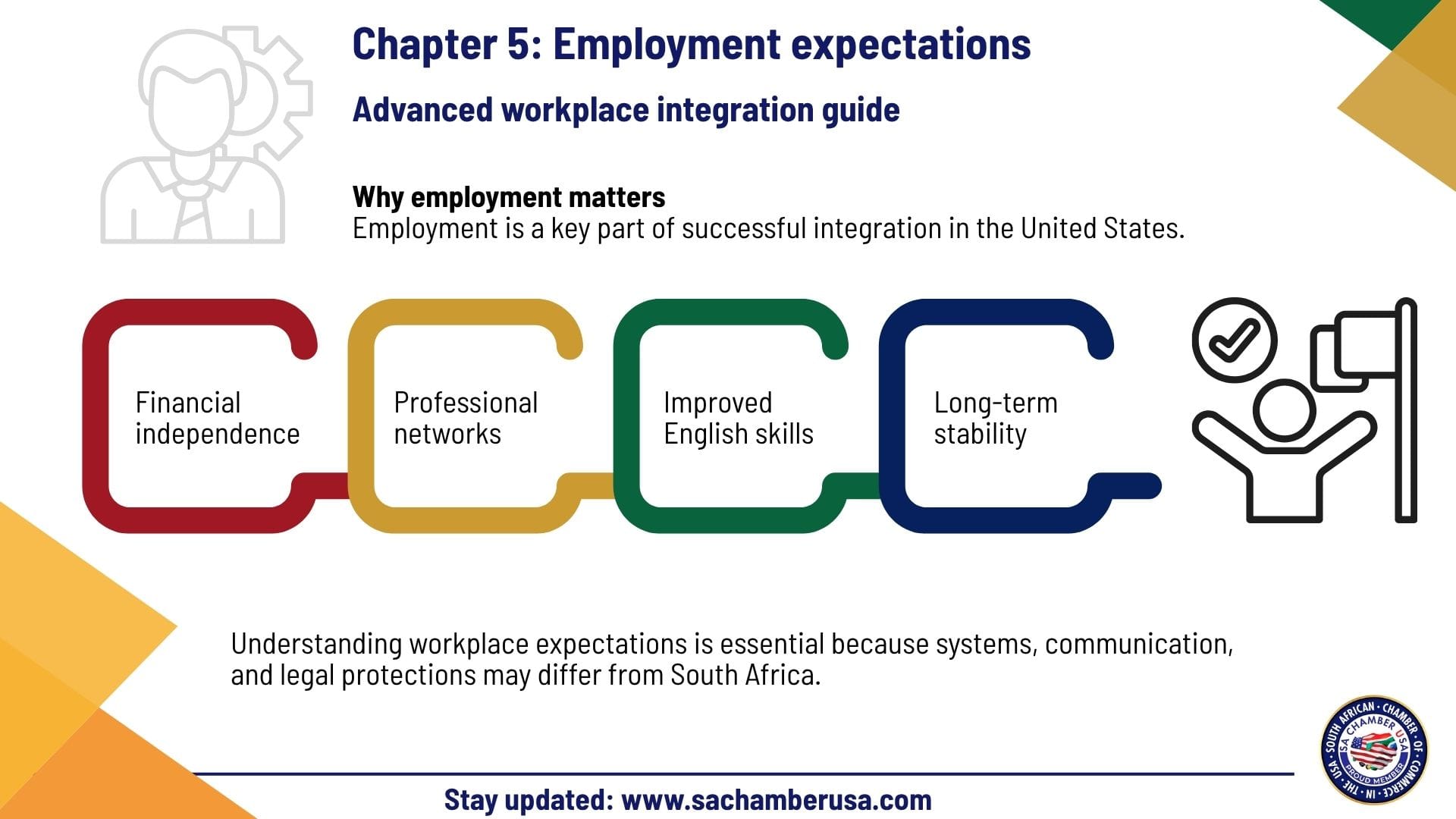
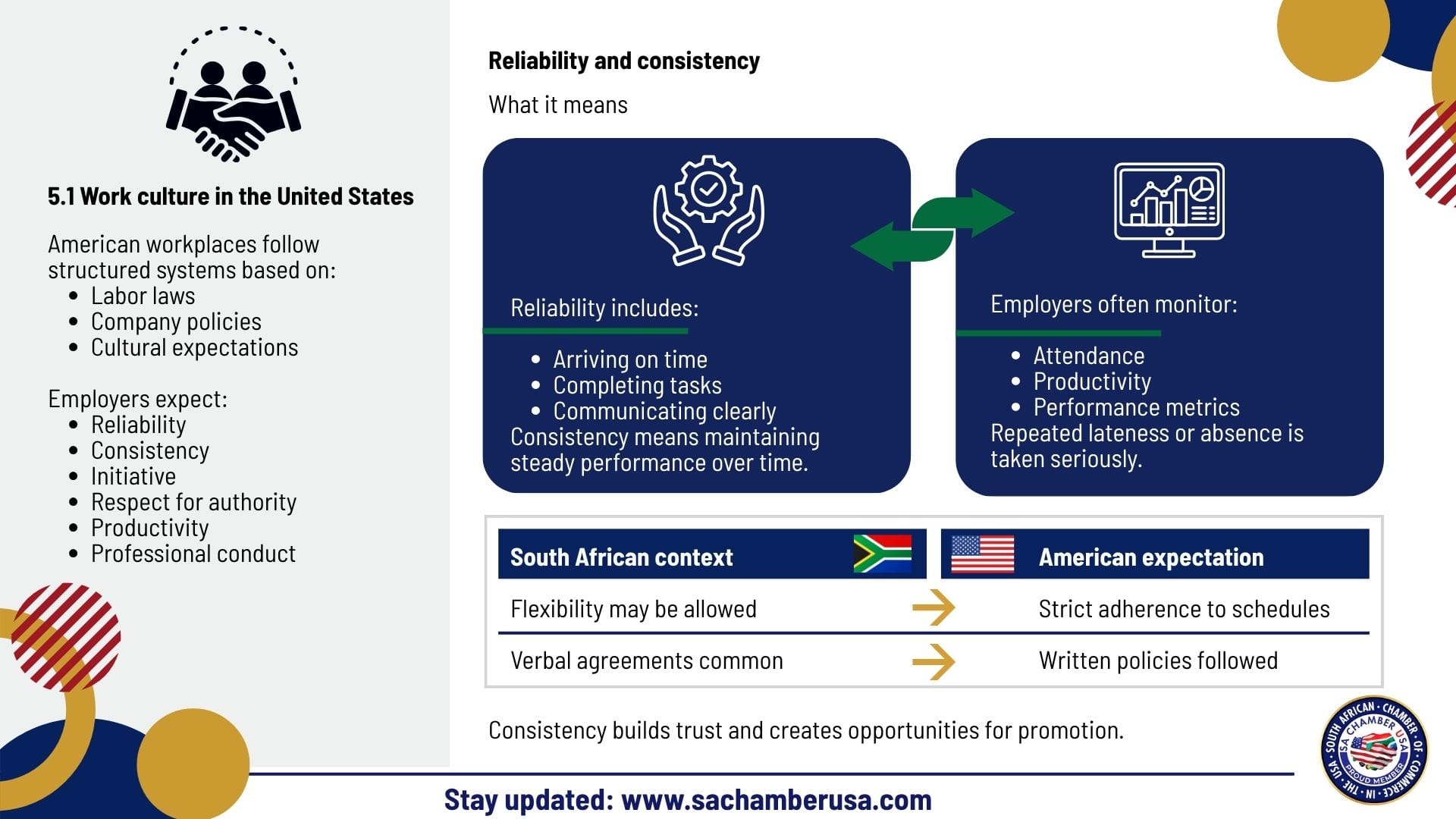
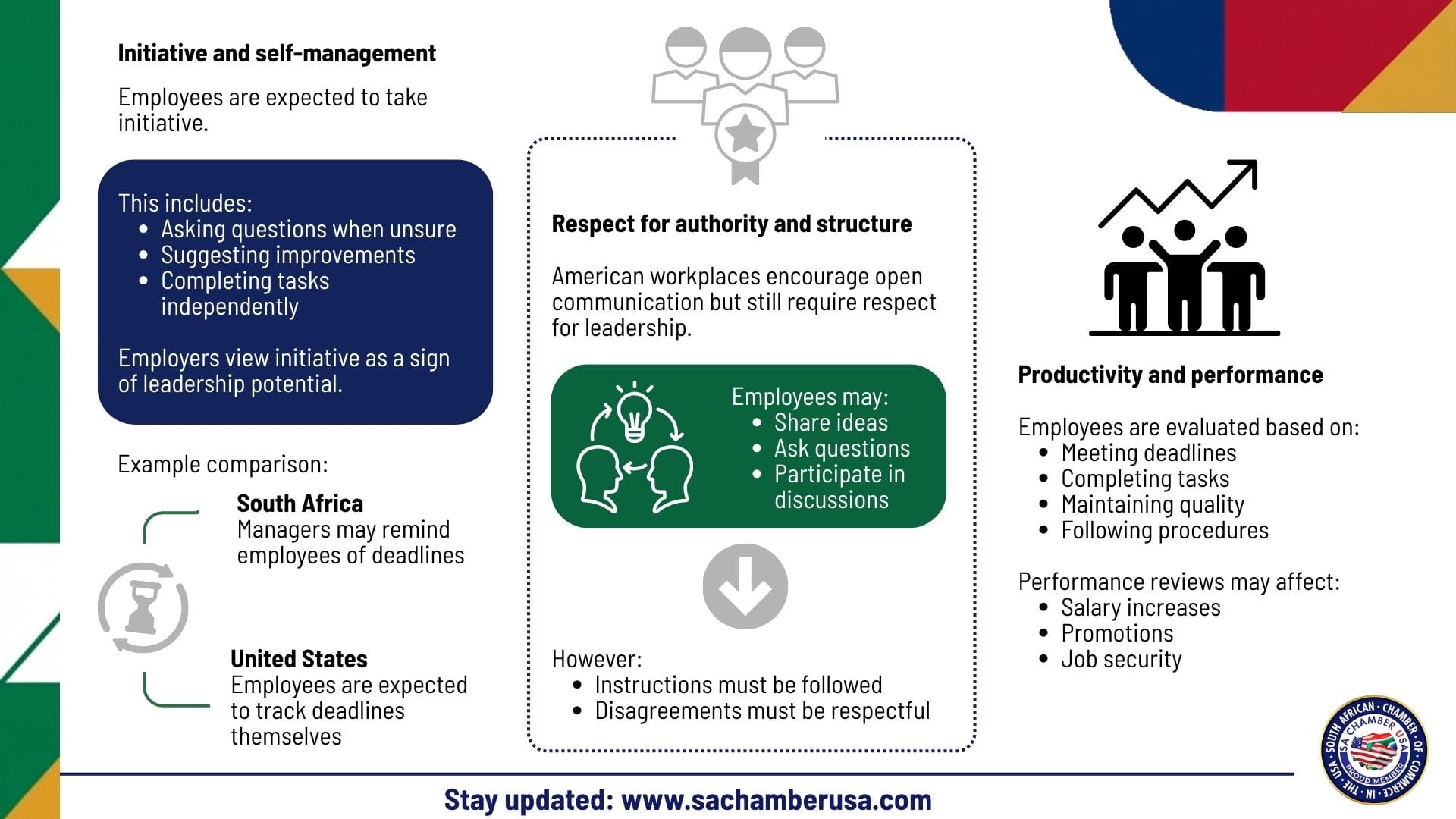
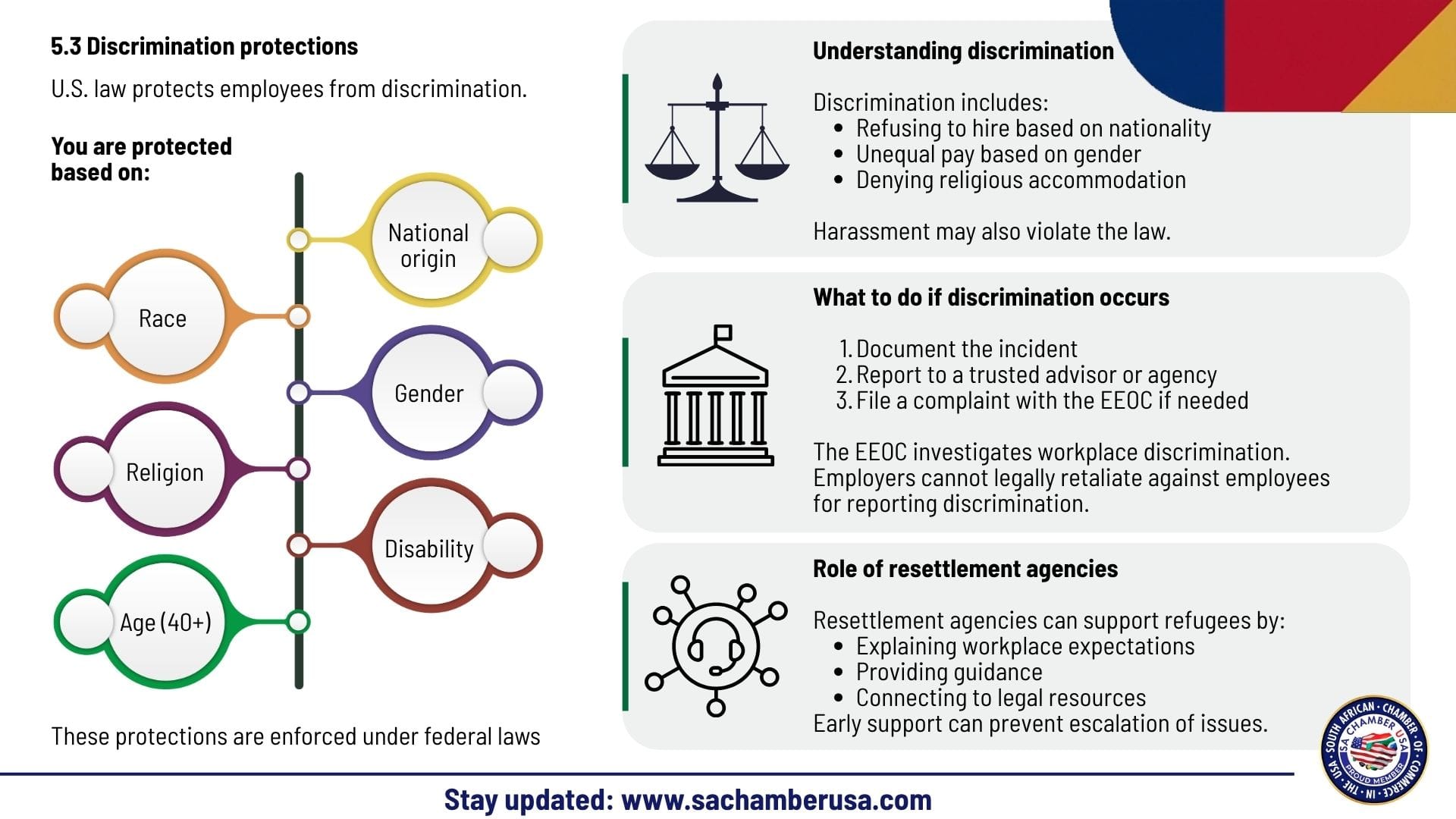
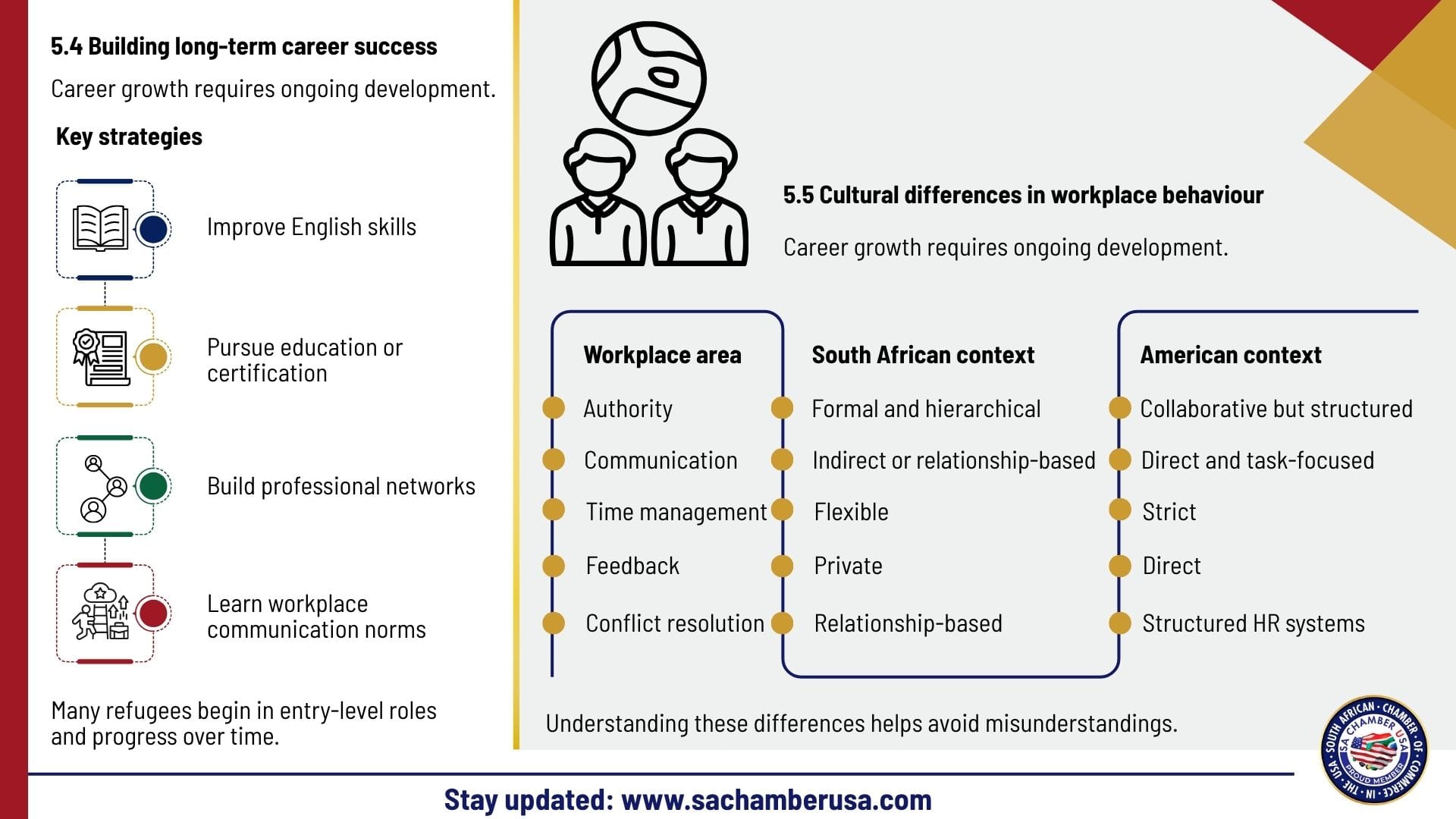
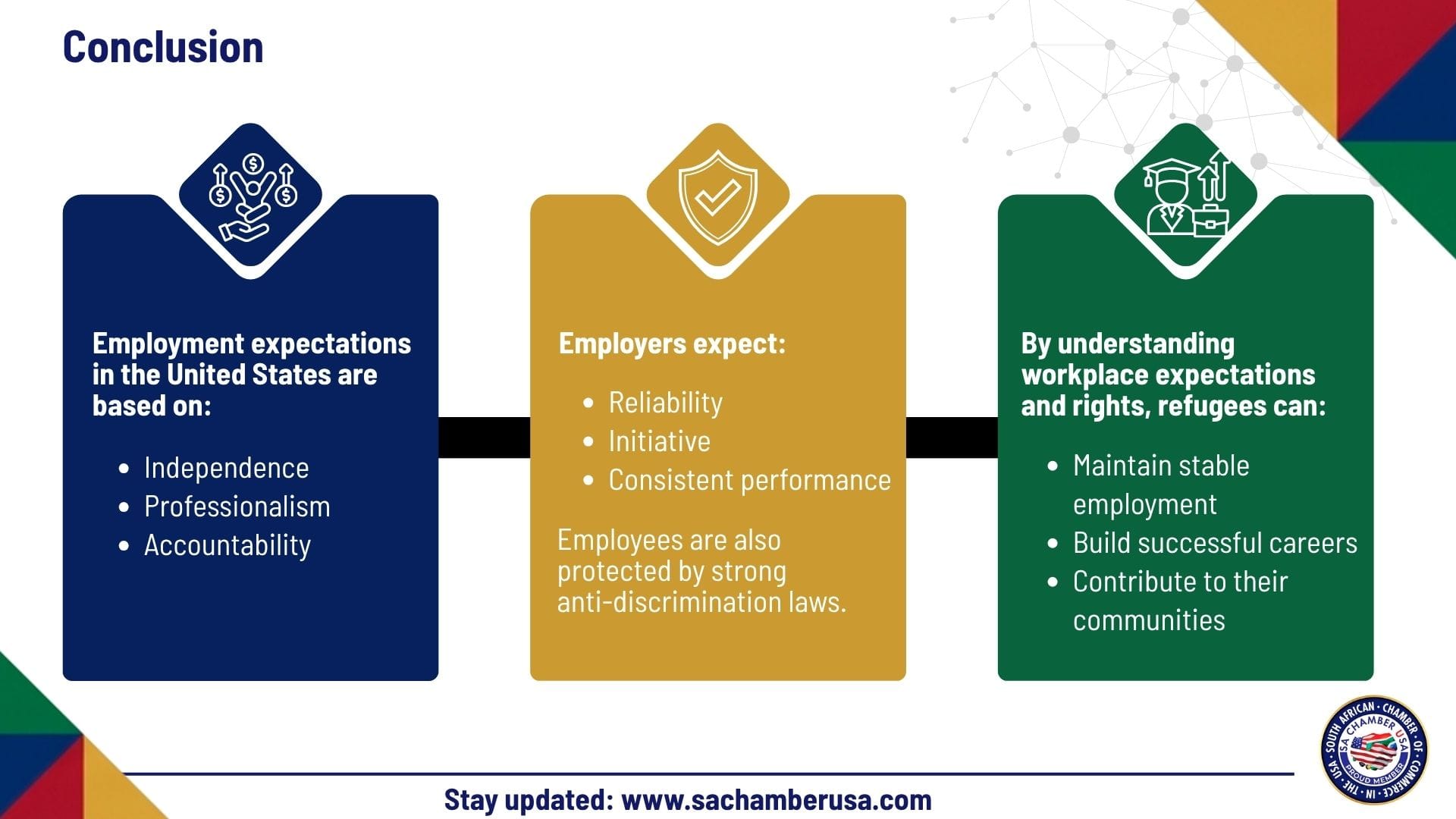
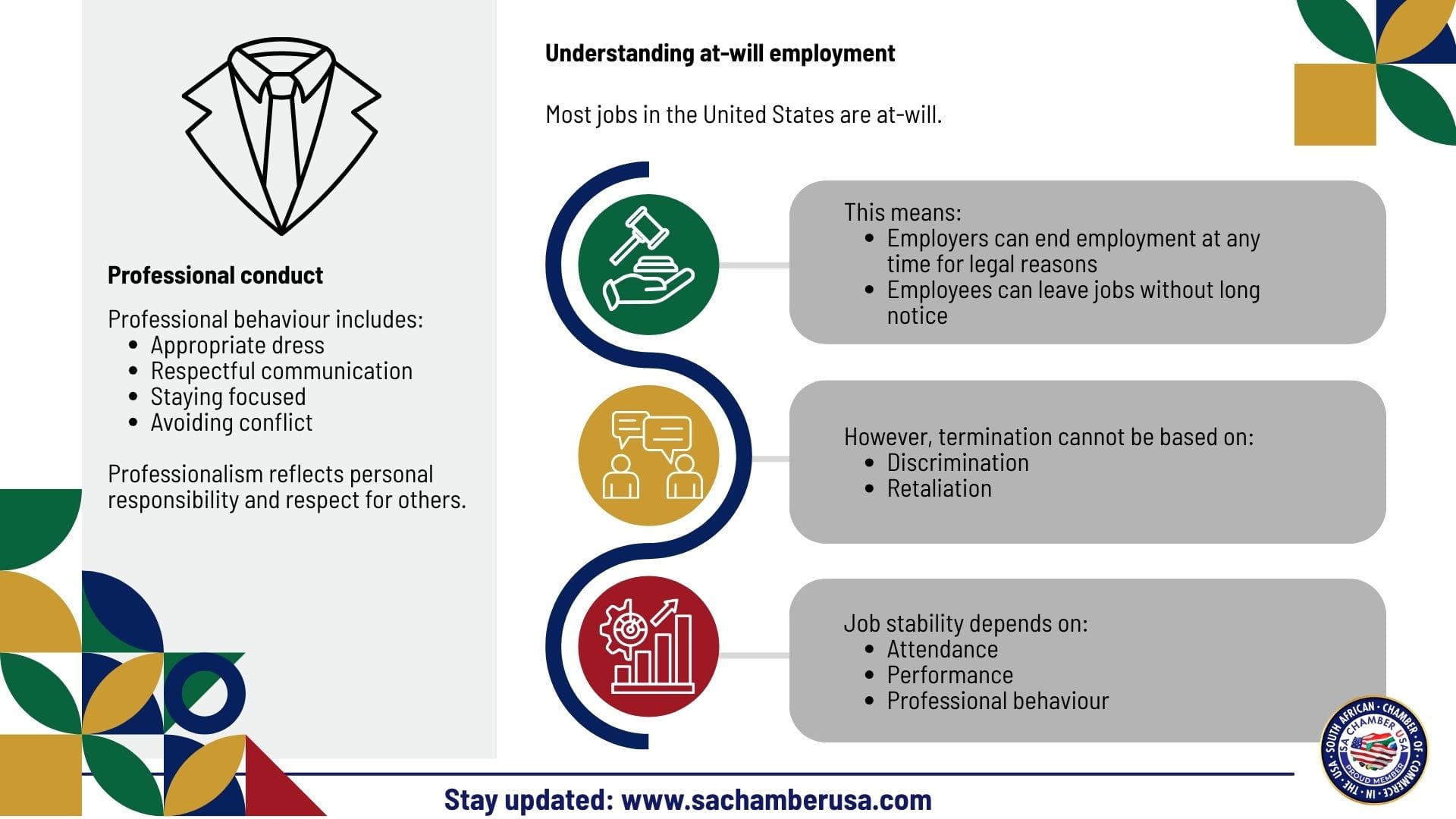
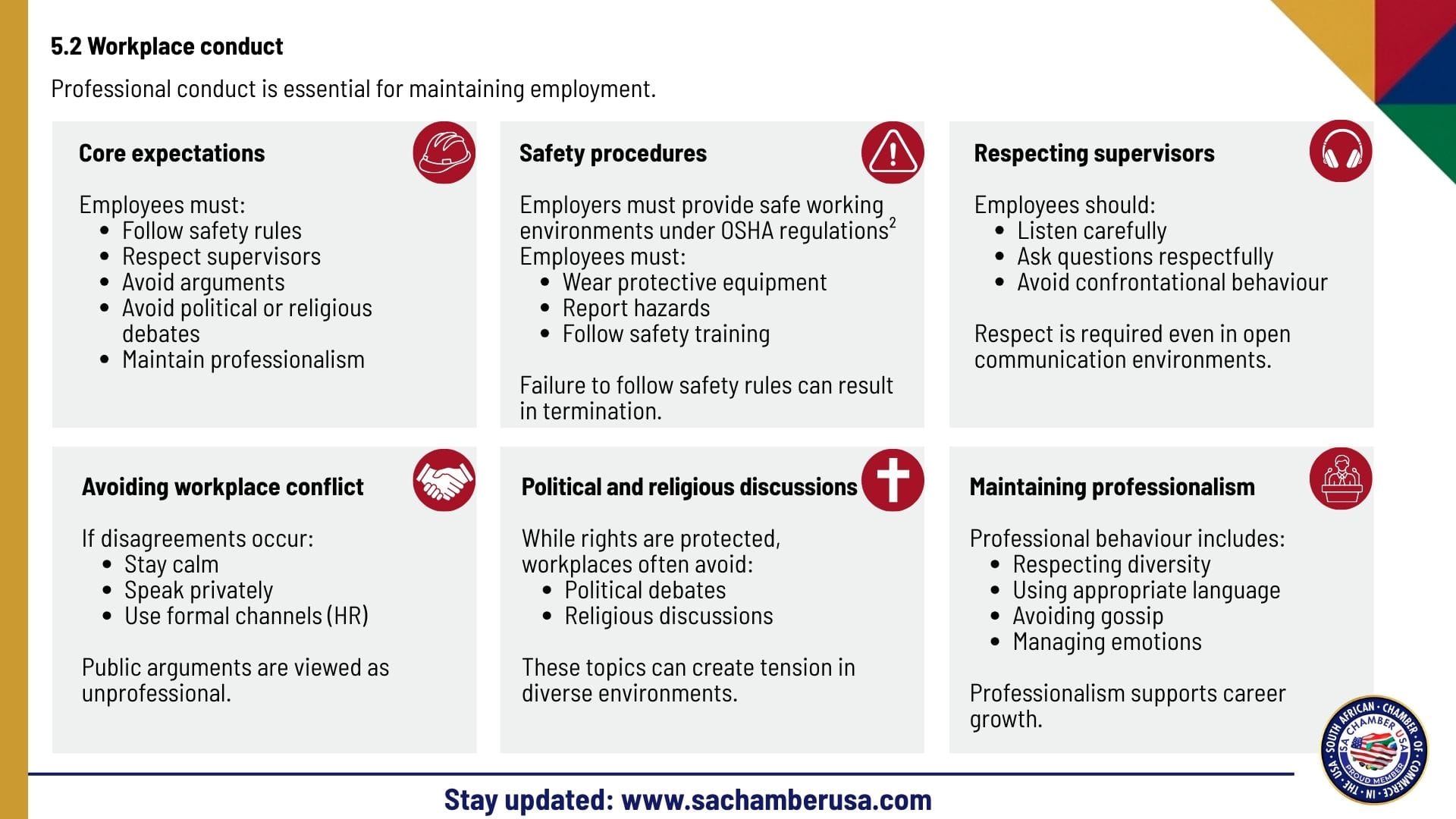
Employment plays a central role in successful resettlement. This section outlines workplace expectations in the United States, including punctuality, professionalism, communication, and accountability. It explains that refugees are authorised to work upon arrival and are expected to secure employment early as part of economic integration. The section also notes that many newcomers begin in entry-level positions to gain experience, improve language skills, and build employment history. Understanding workplace culture, legal protections, and performance expectations helps newcomers establish stable employment, build professional relationships, and progress toward long-term career goals.
Click anywhere on the image to enlarge
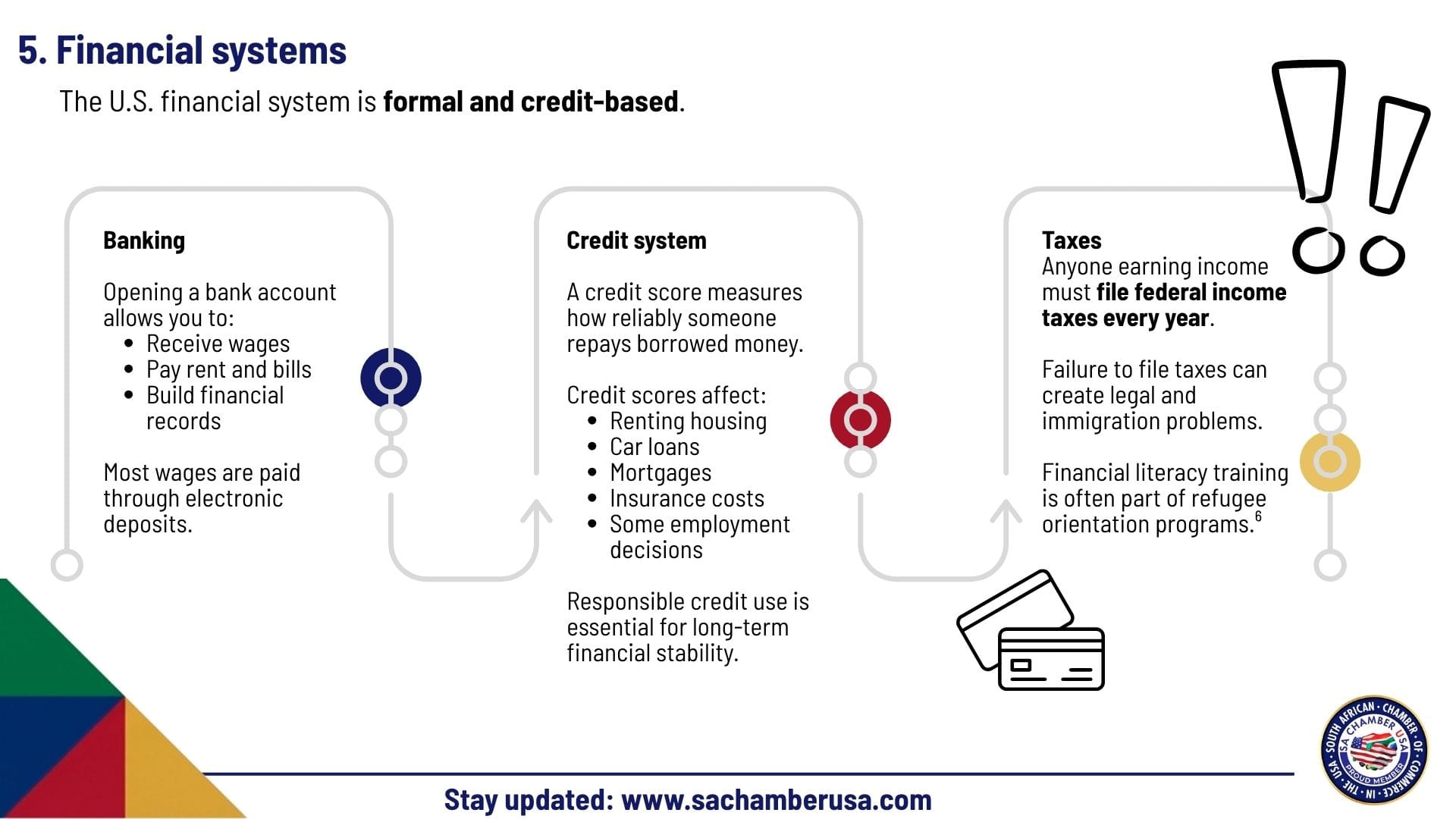
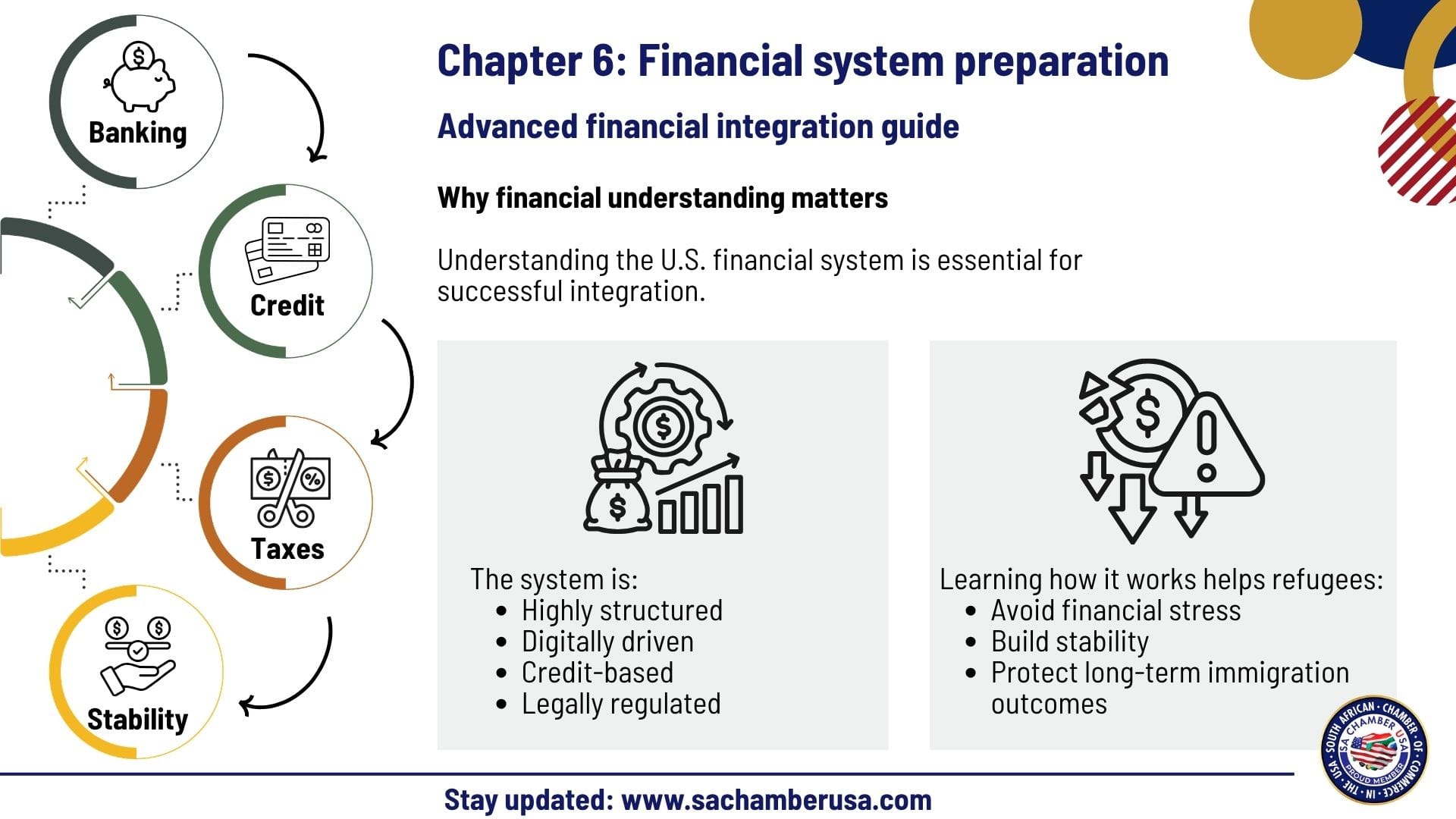
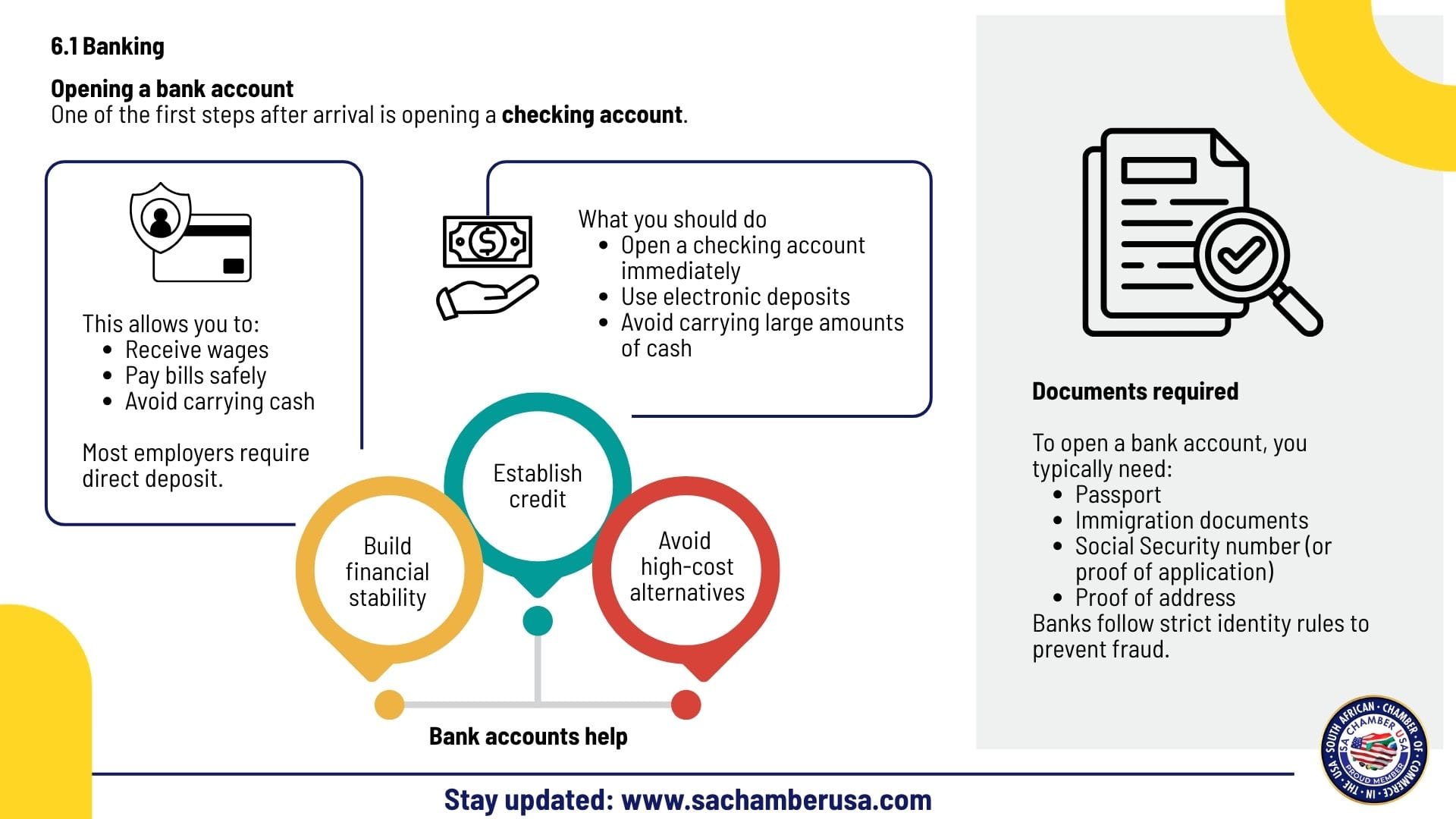
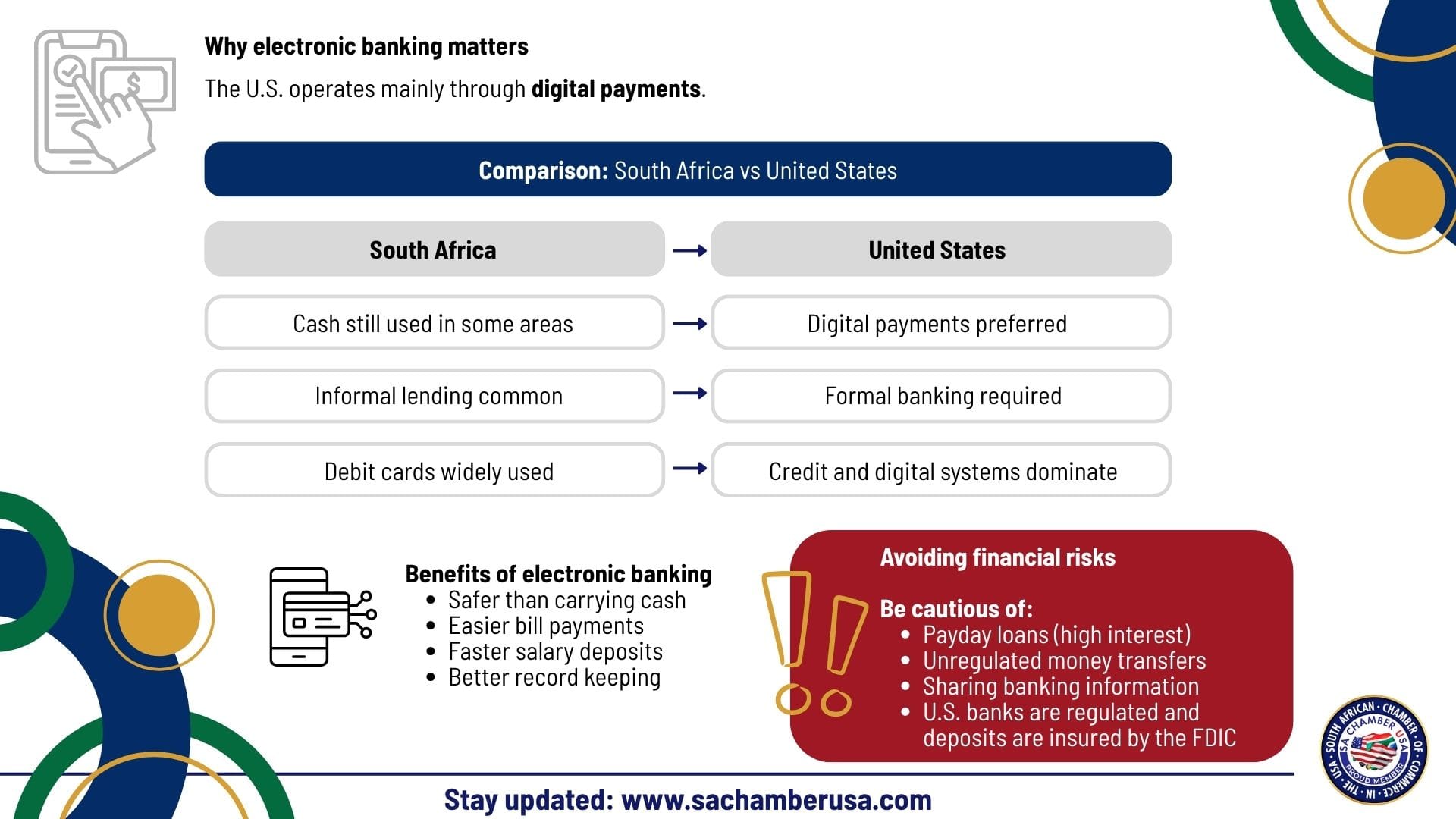
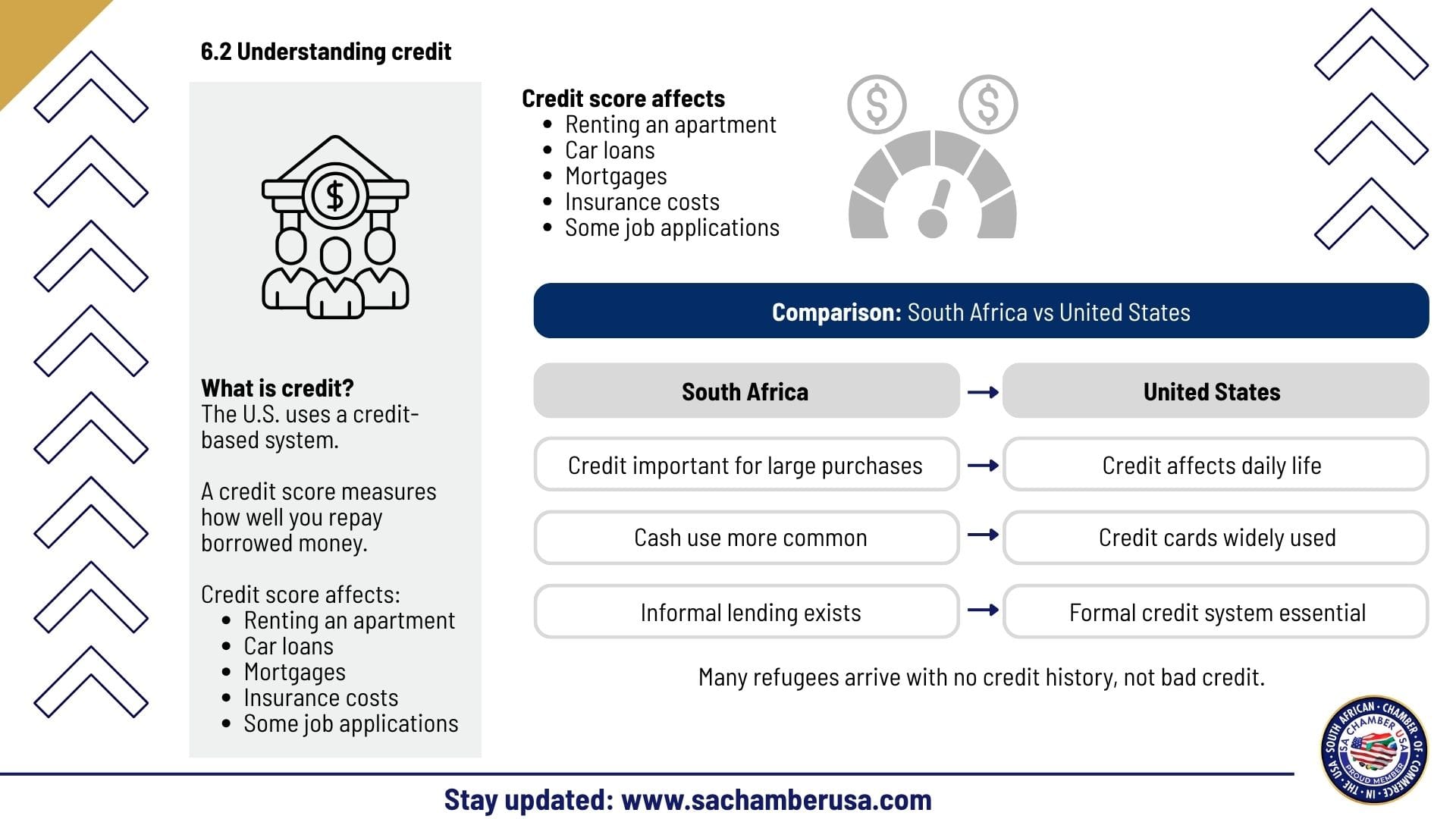
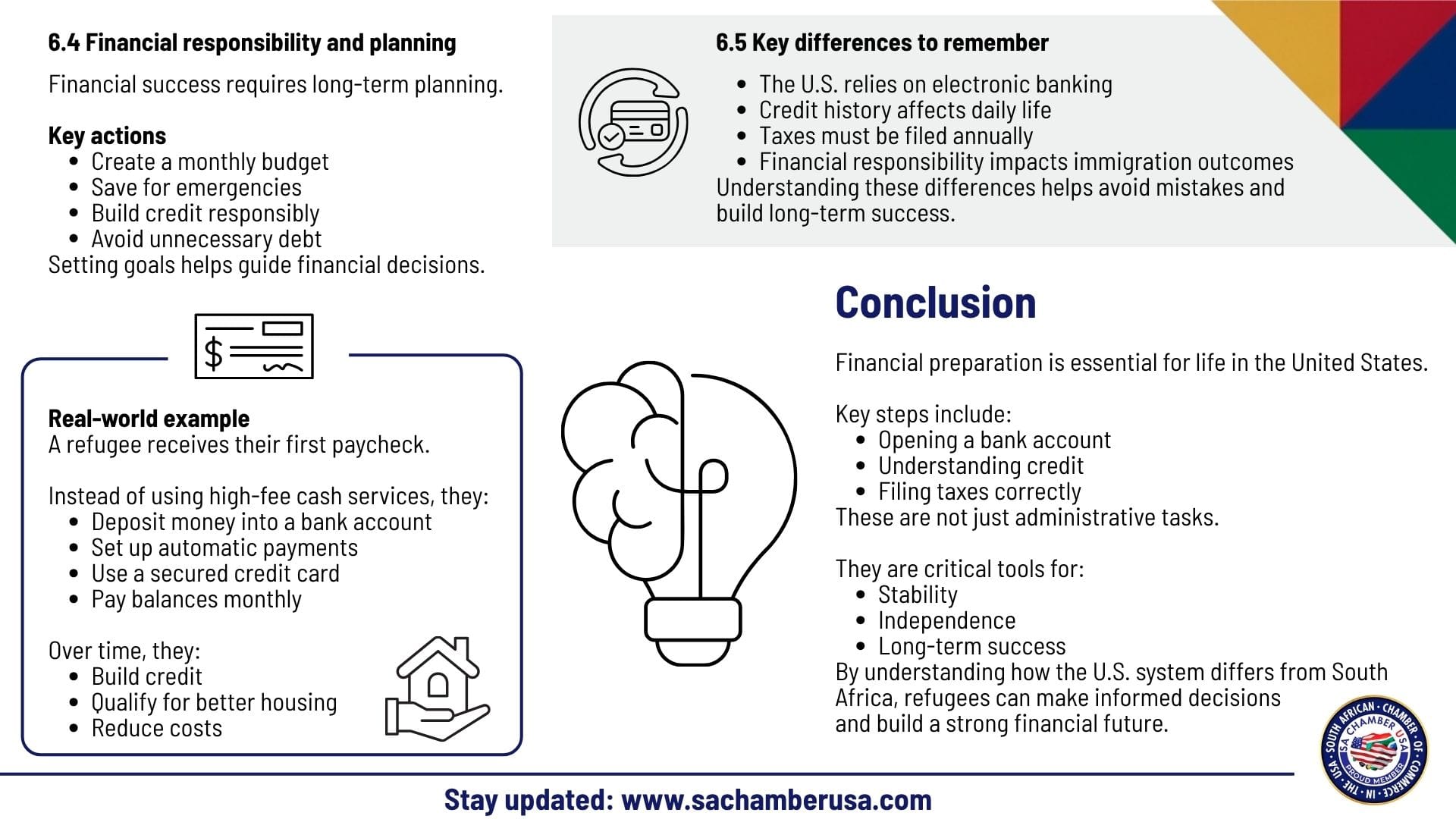
This section introduces the U.S. financial system, which is heavily structured around formal banking and credit. It explains the importance of opening a bank account, understanding electronic payments, and managing personal finances. The section also introduces the concept of credit scores and their impact on housing, loans, and insurance. It highlights that taxes must be filed annually and that financial responsibility plays a role in immigration outcomes. By learning how to manage money, avoid debt, and build credit responsibly, newcomers can establish financial stability and support long-term integration.
Click anywhere on the image to enlarge
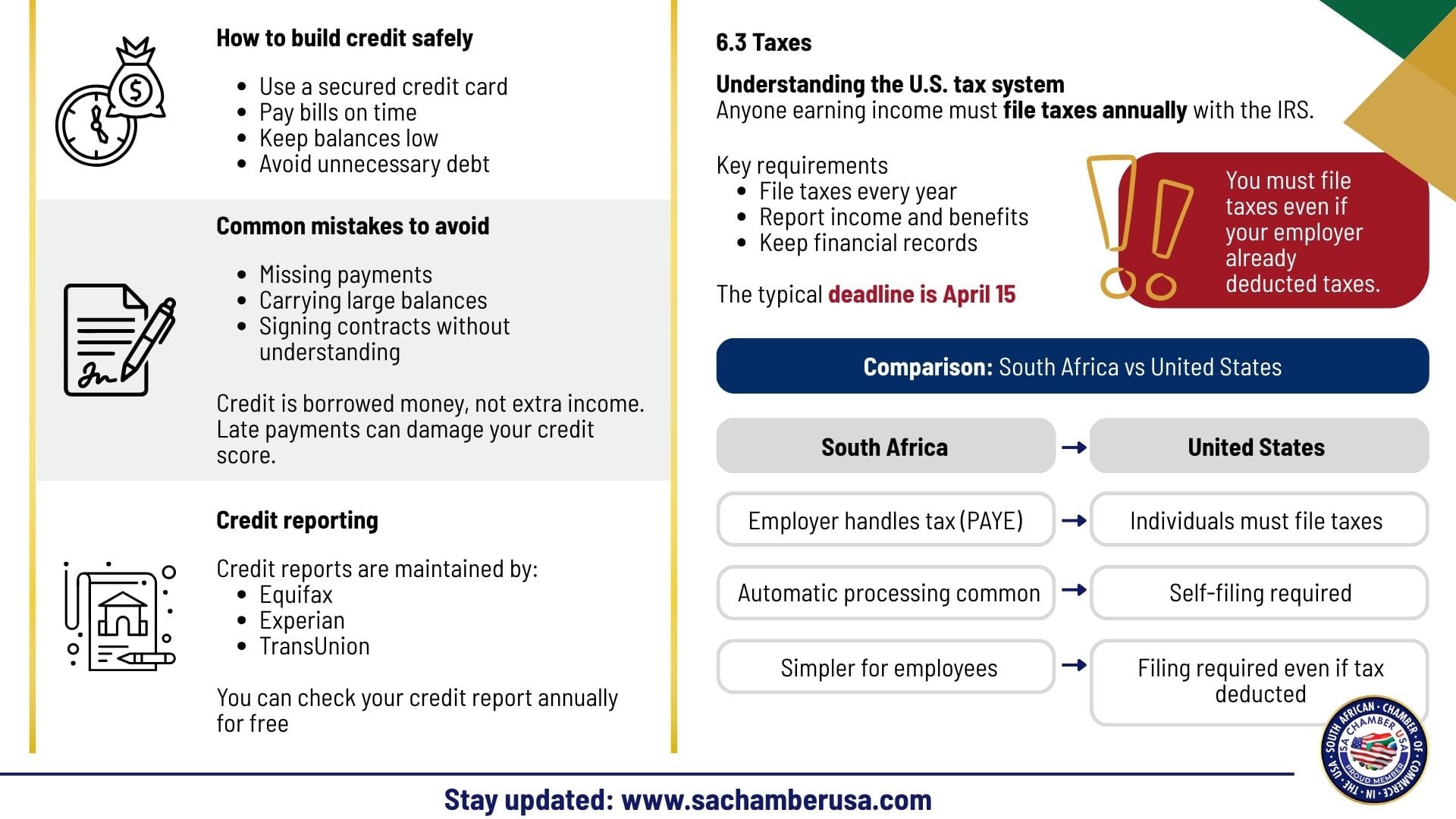
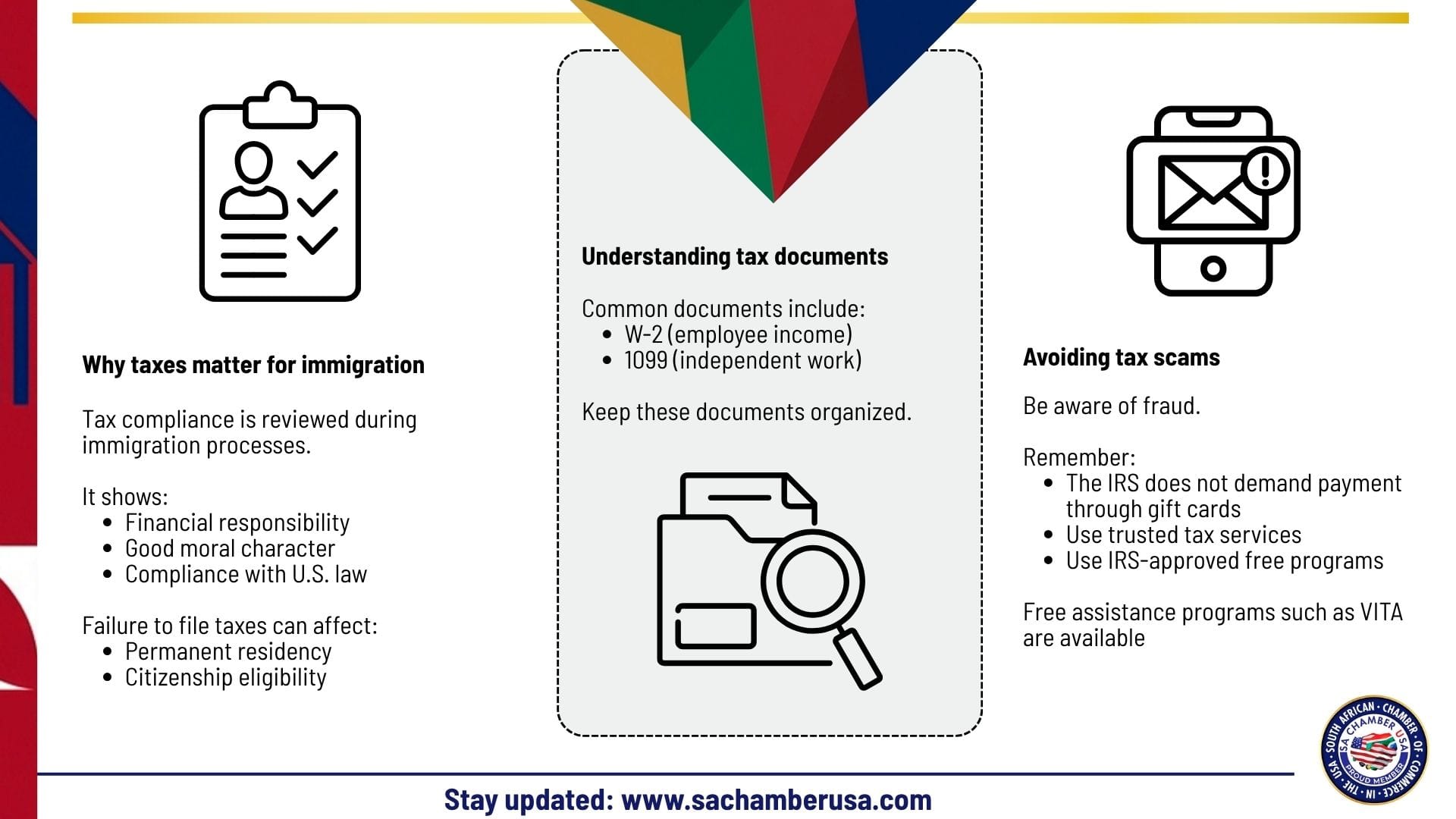
This section explains the U.S. tax system and the obligation to file annual tax returns. It outlines common tax documents, filing requirements, and the consequences of non-compliance. The section also addresses financial planning, including budgeting, saving, and responsible credit use. It warns against financial scams and emphasises the importance of accurate record-keeping. Understanding taxes and financial obligations supports both financial stability and immigration compliance, as tax records are often reviewed during immigration processes.
Click anywhere on the image to enlarge
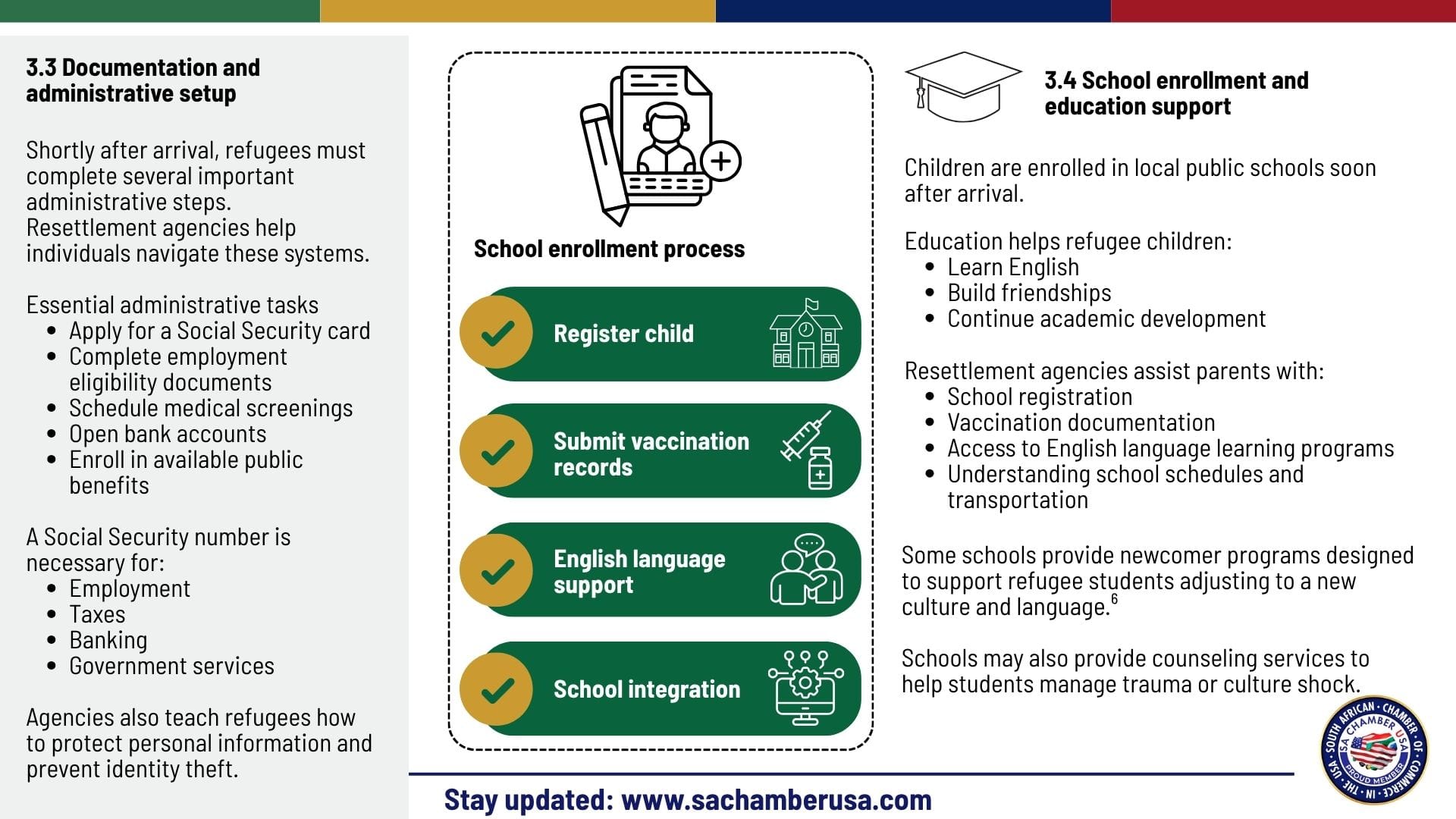
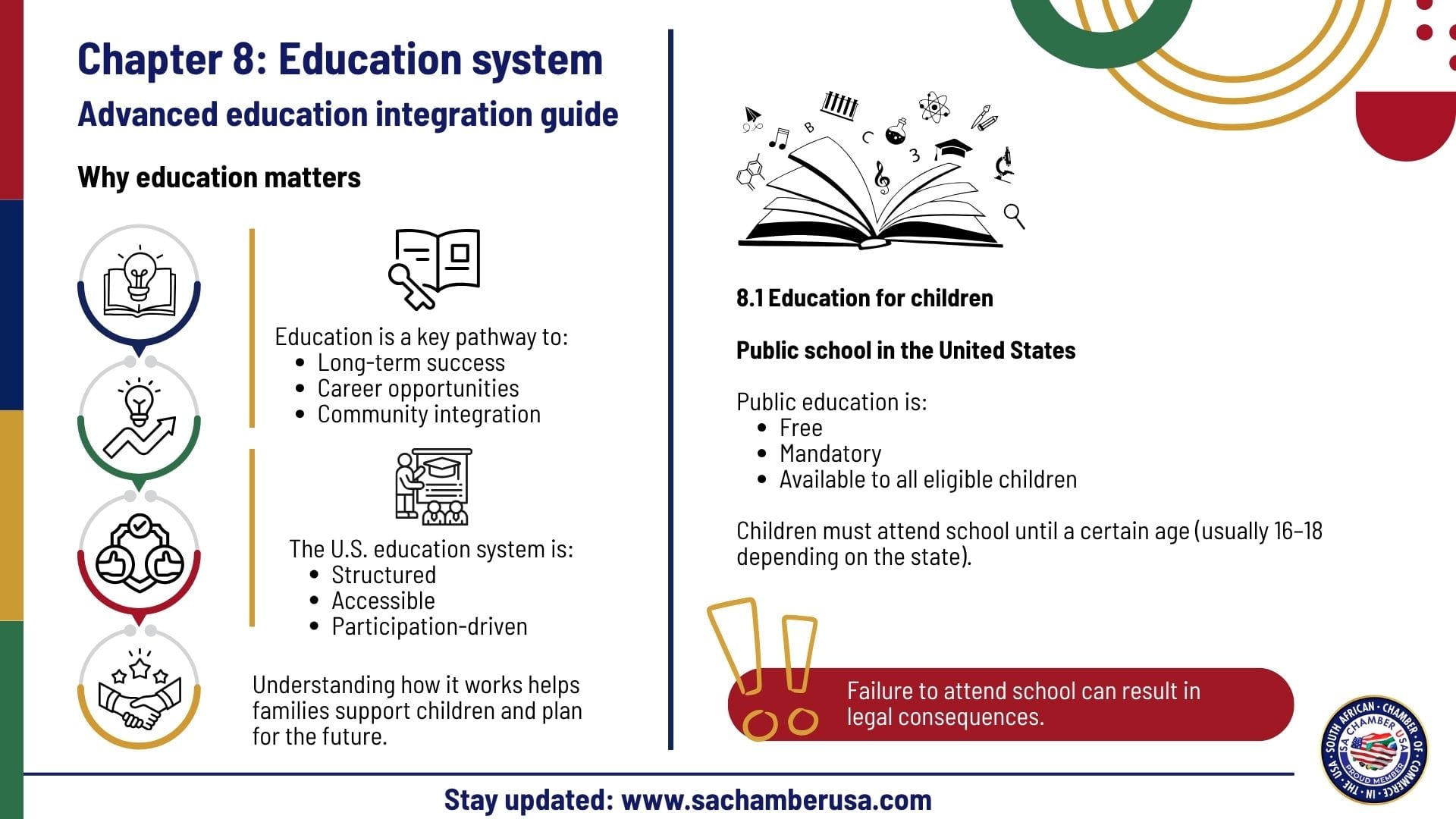
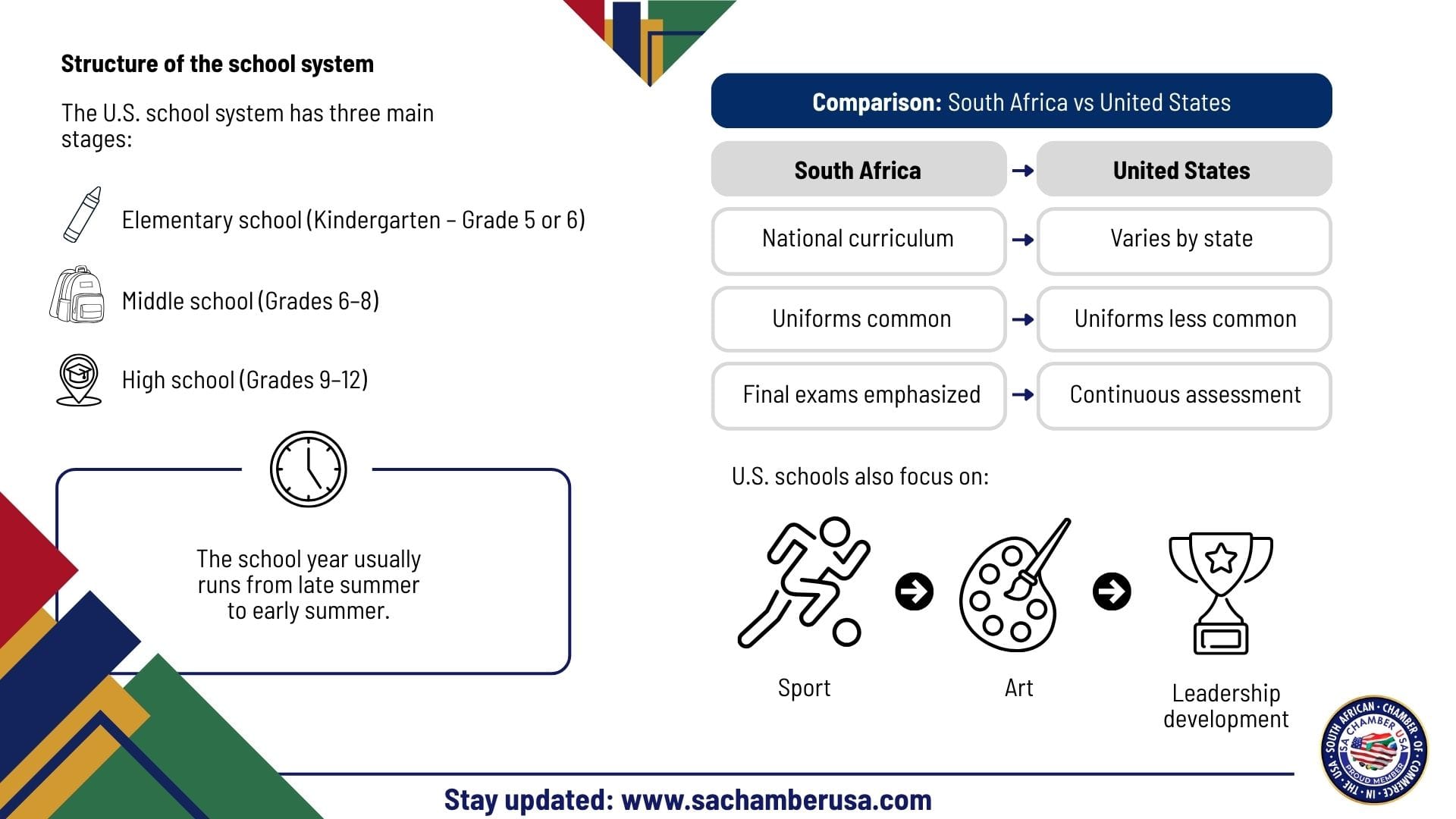
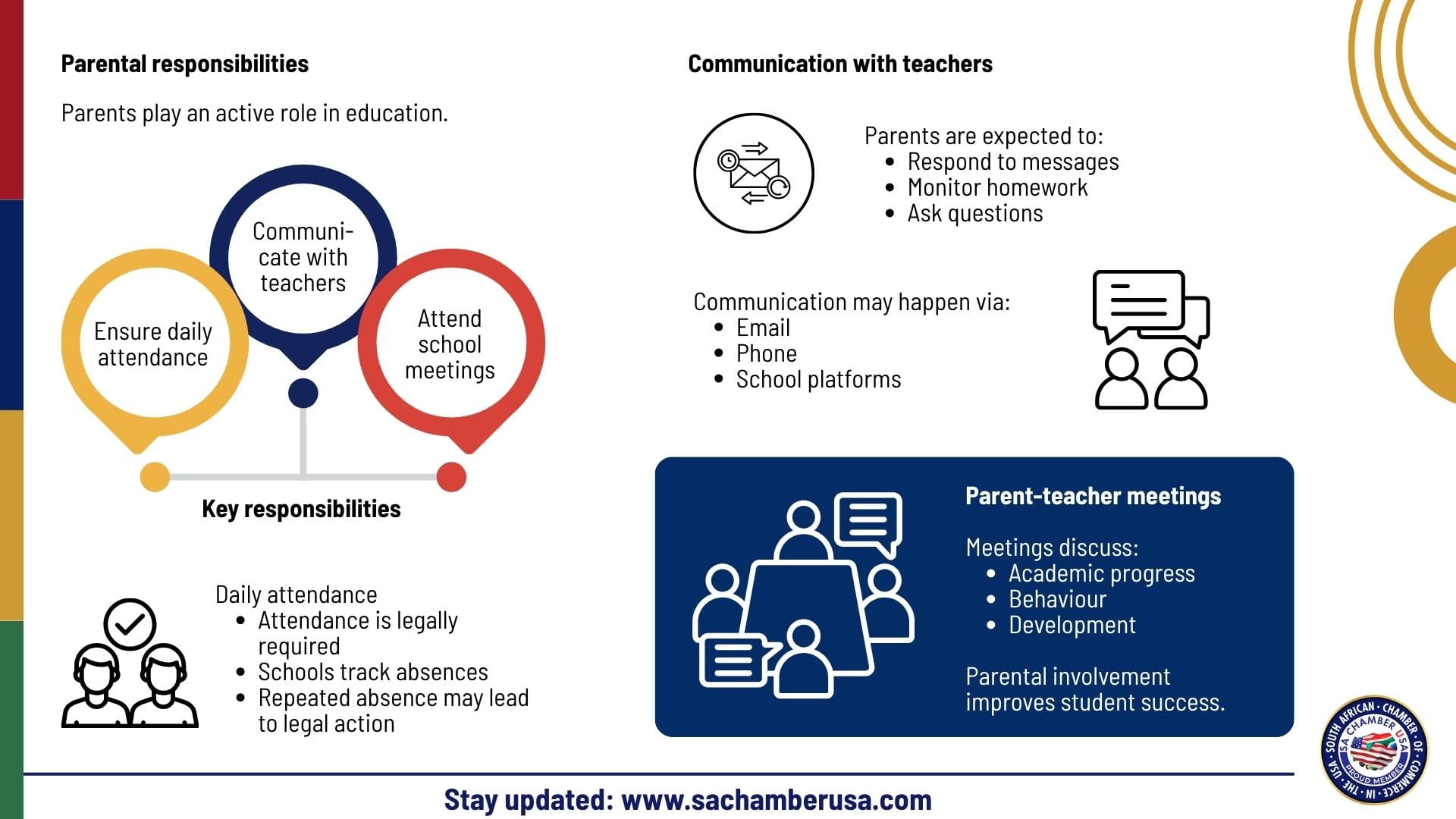
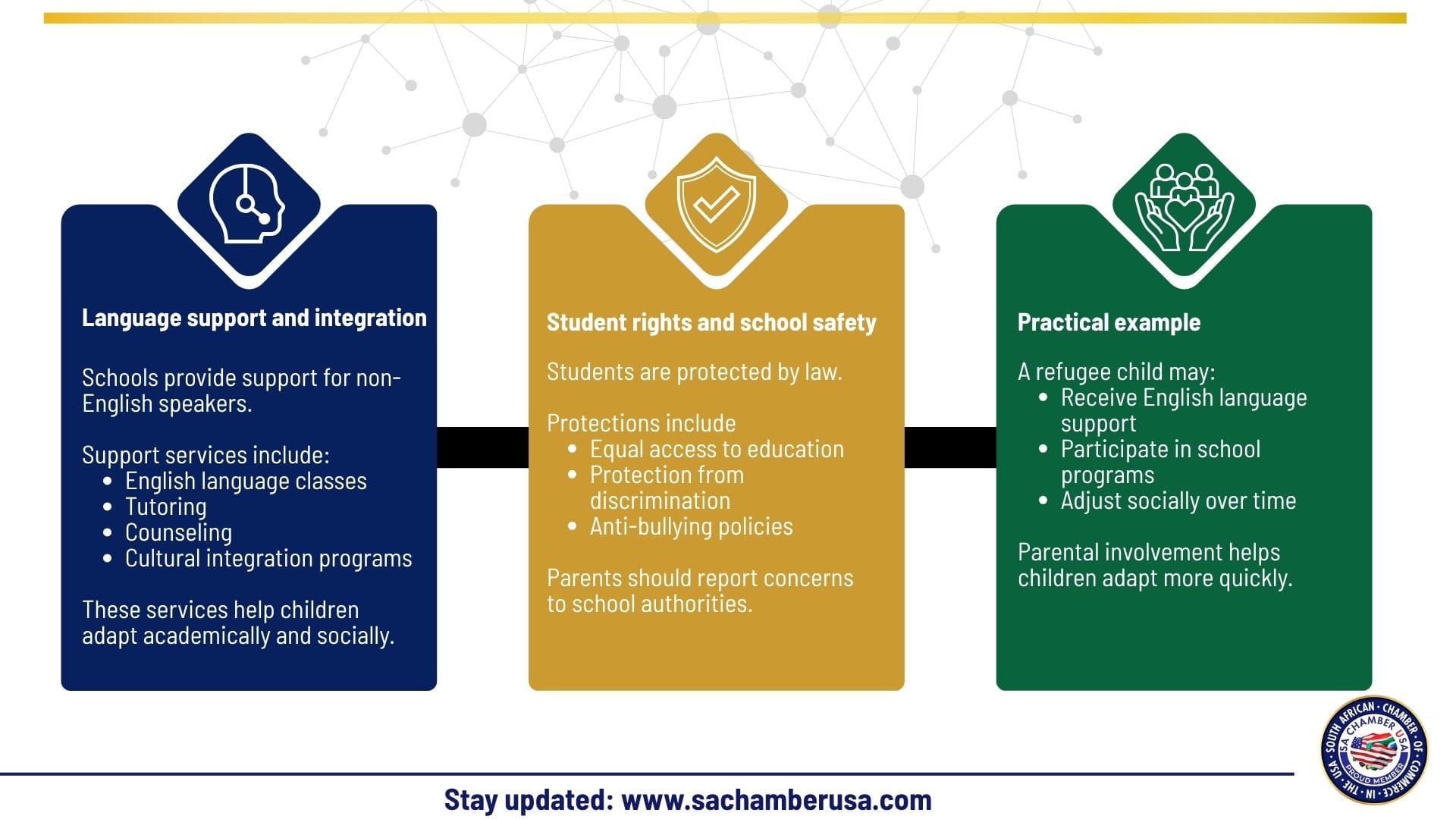
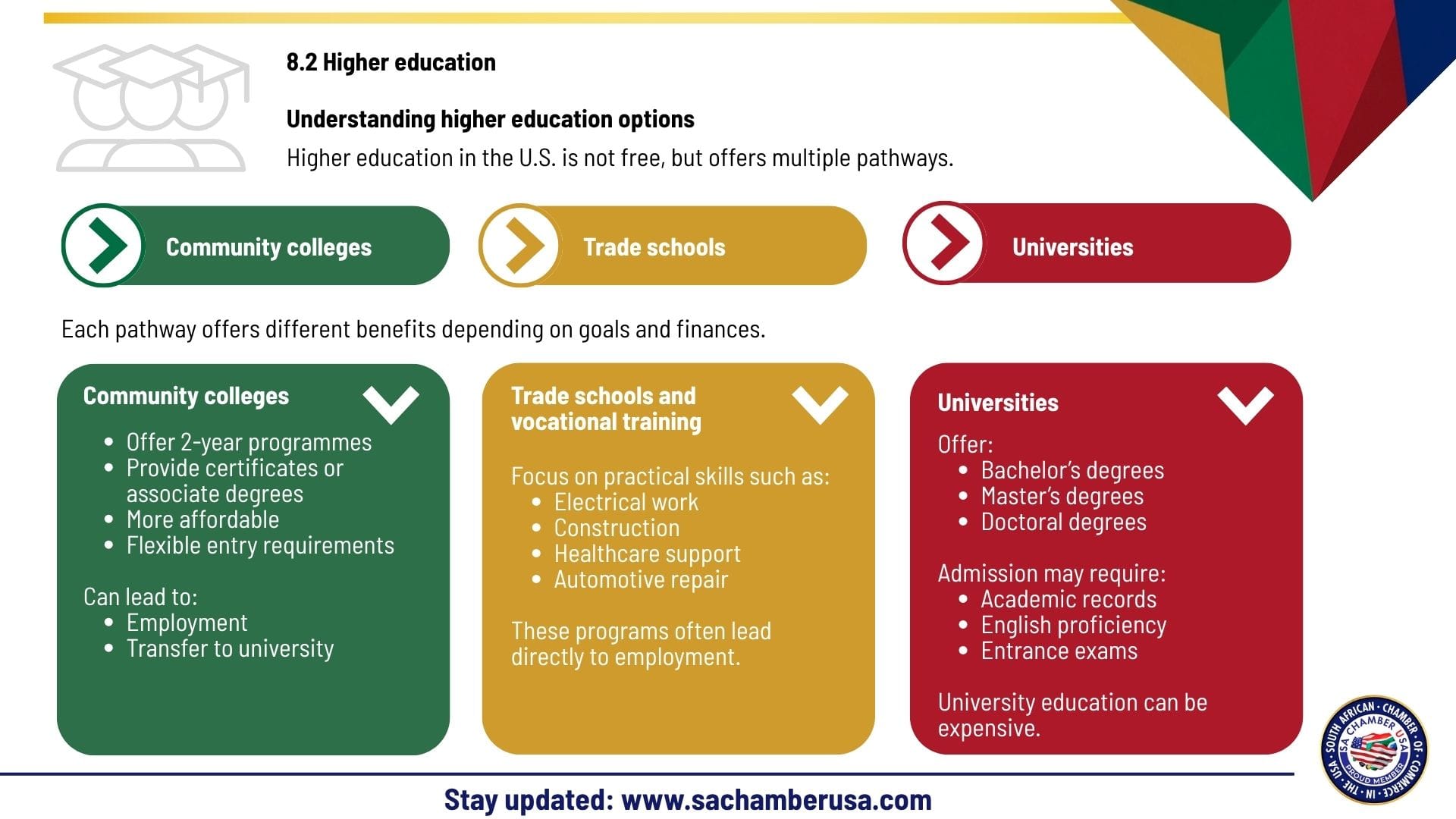
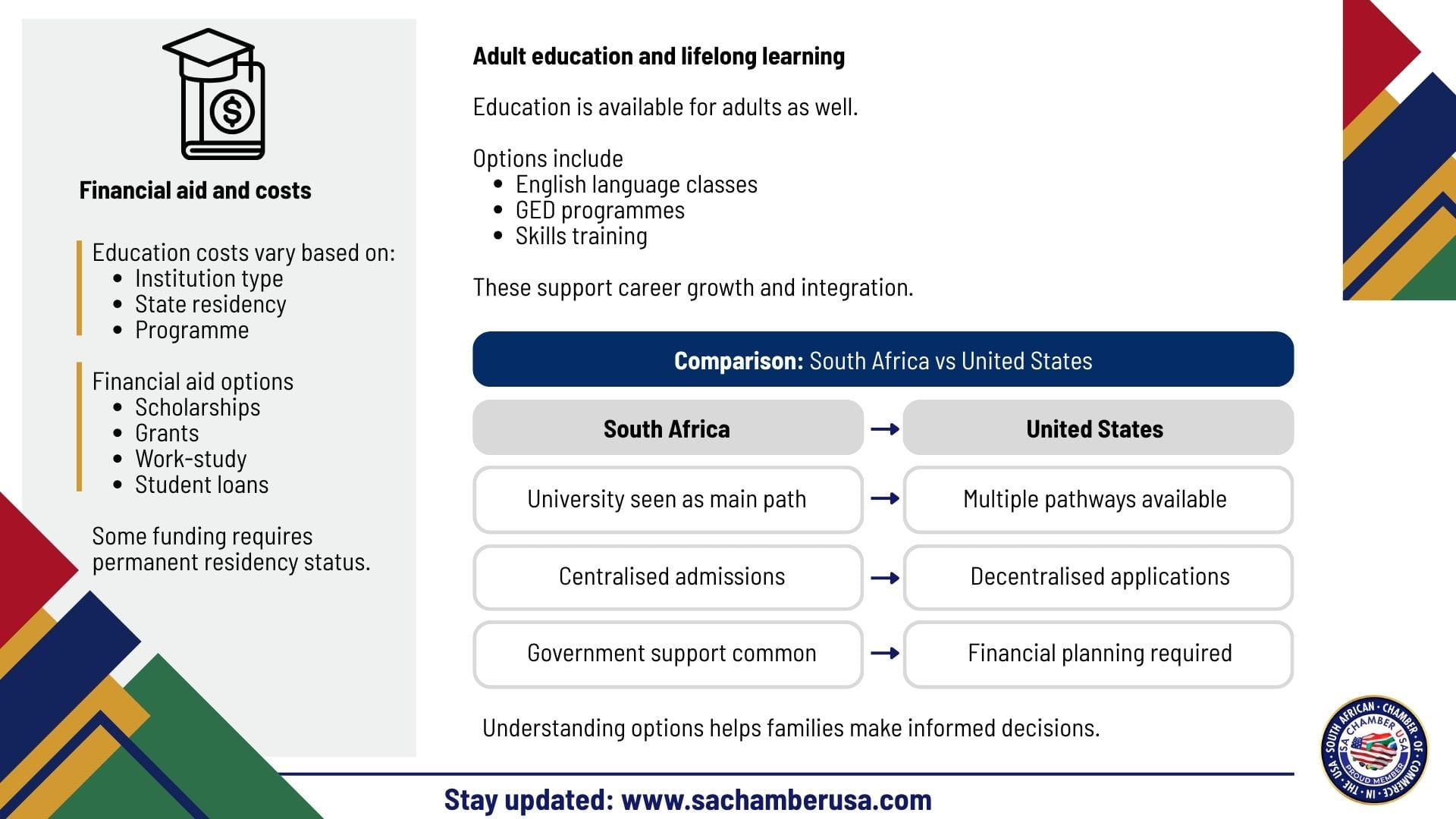
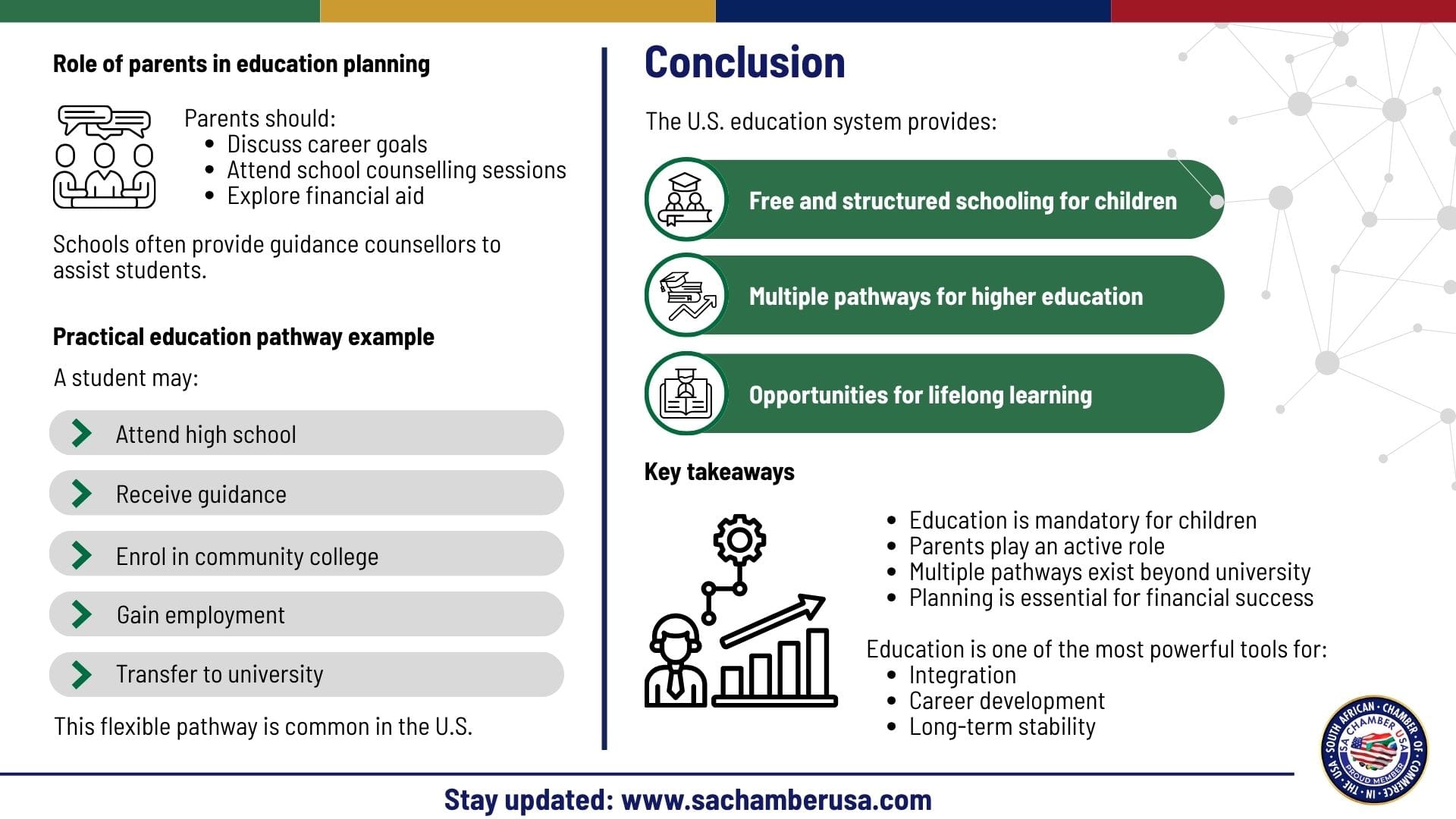
Education is presented as a key driver of long-term success. This section explains that education supports career advancement, integration, and personal development. It encourages newcomers to pursue further education, vocational training, and skills development to align with U.S. industry standards. The section also highlights the importance of English language development and ongoing learning. By investing in education, newcomers improve their employment prospects and strengthen their ability to navigate American systems.
Click anywhere on the image to enlarge
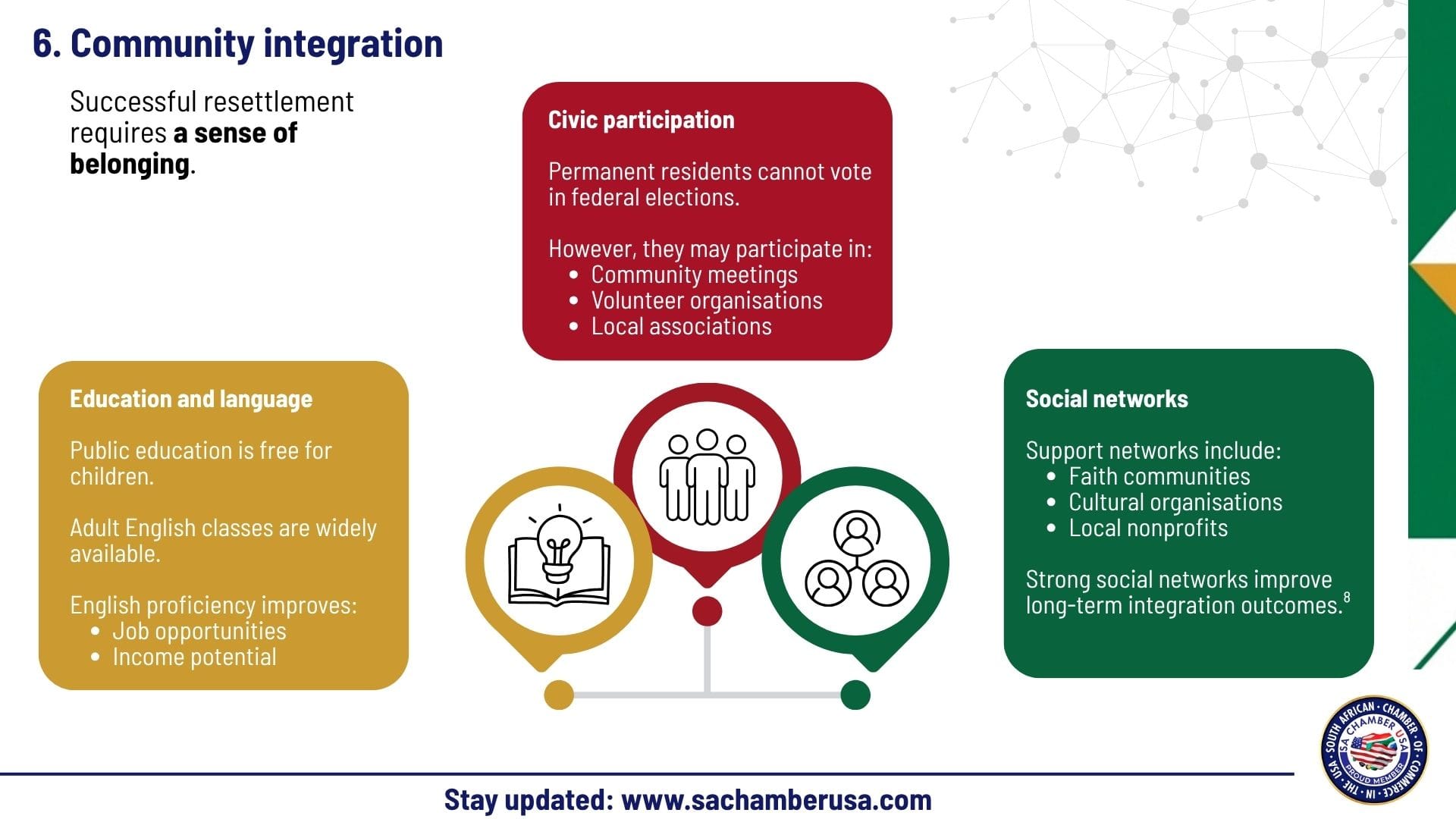
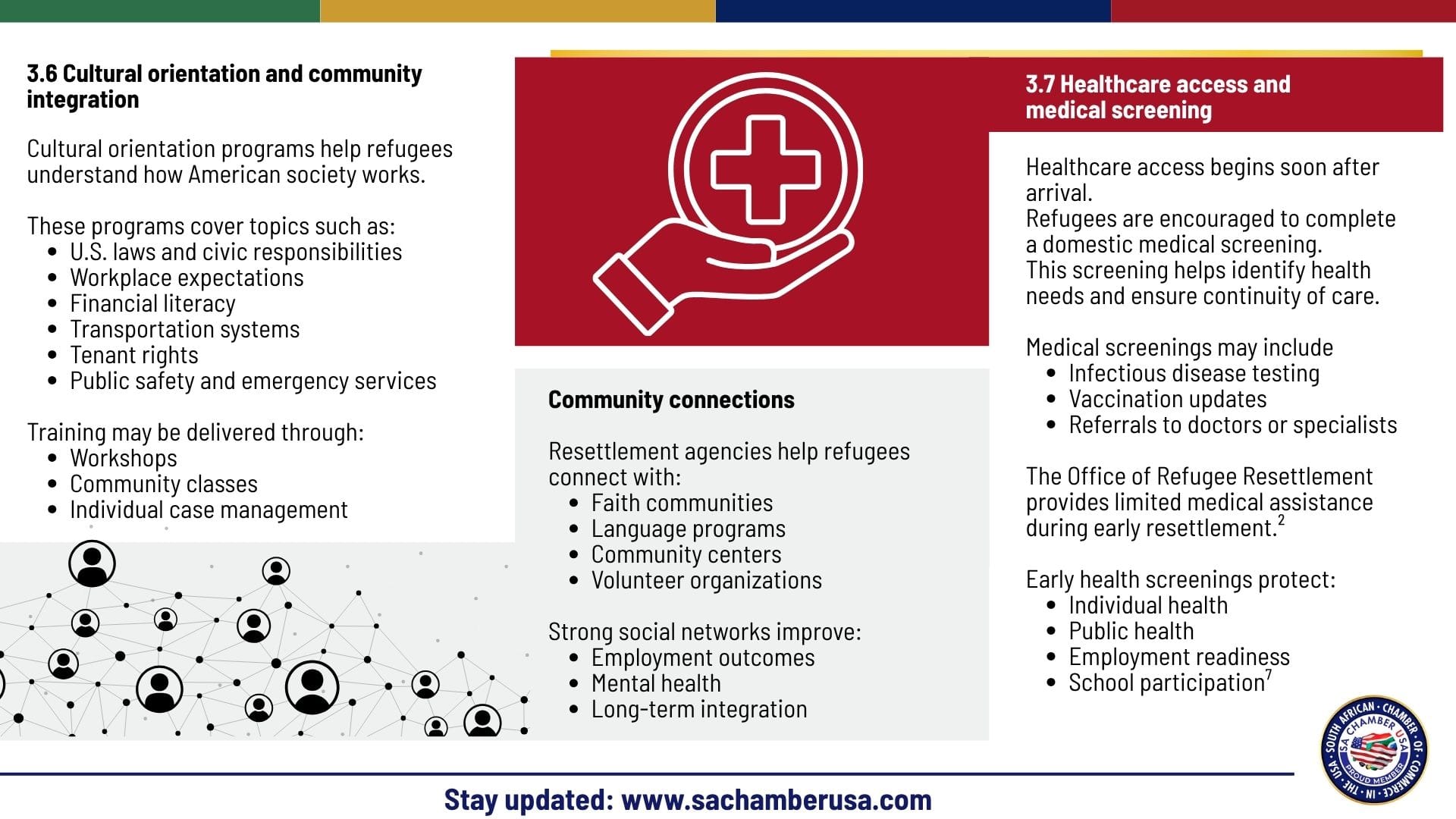
This section highlights the importance of community participation in successful integration. It encourages involvement in local communities through volunteering, social participation, and engagement with cultural or religious groups. Community involvement helps build social networks, reduce isolation, and create a sense of belonging. The section recognises that South Africans often value strong community ties and suggests that maintaining cultural traditions can support emotional well-being while contributing positively to American communities.
Click anywhere on the image to enlarge
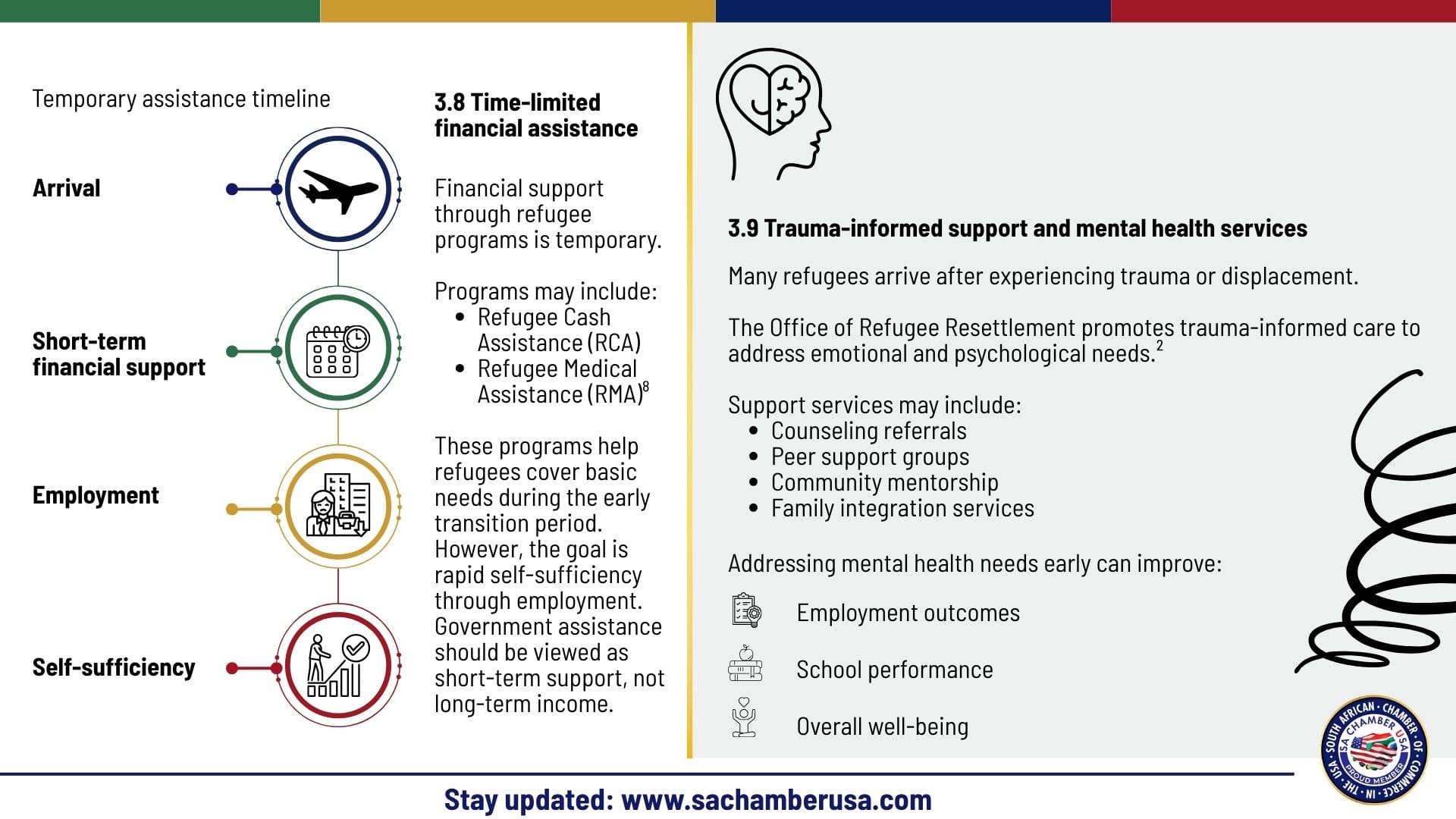
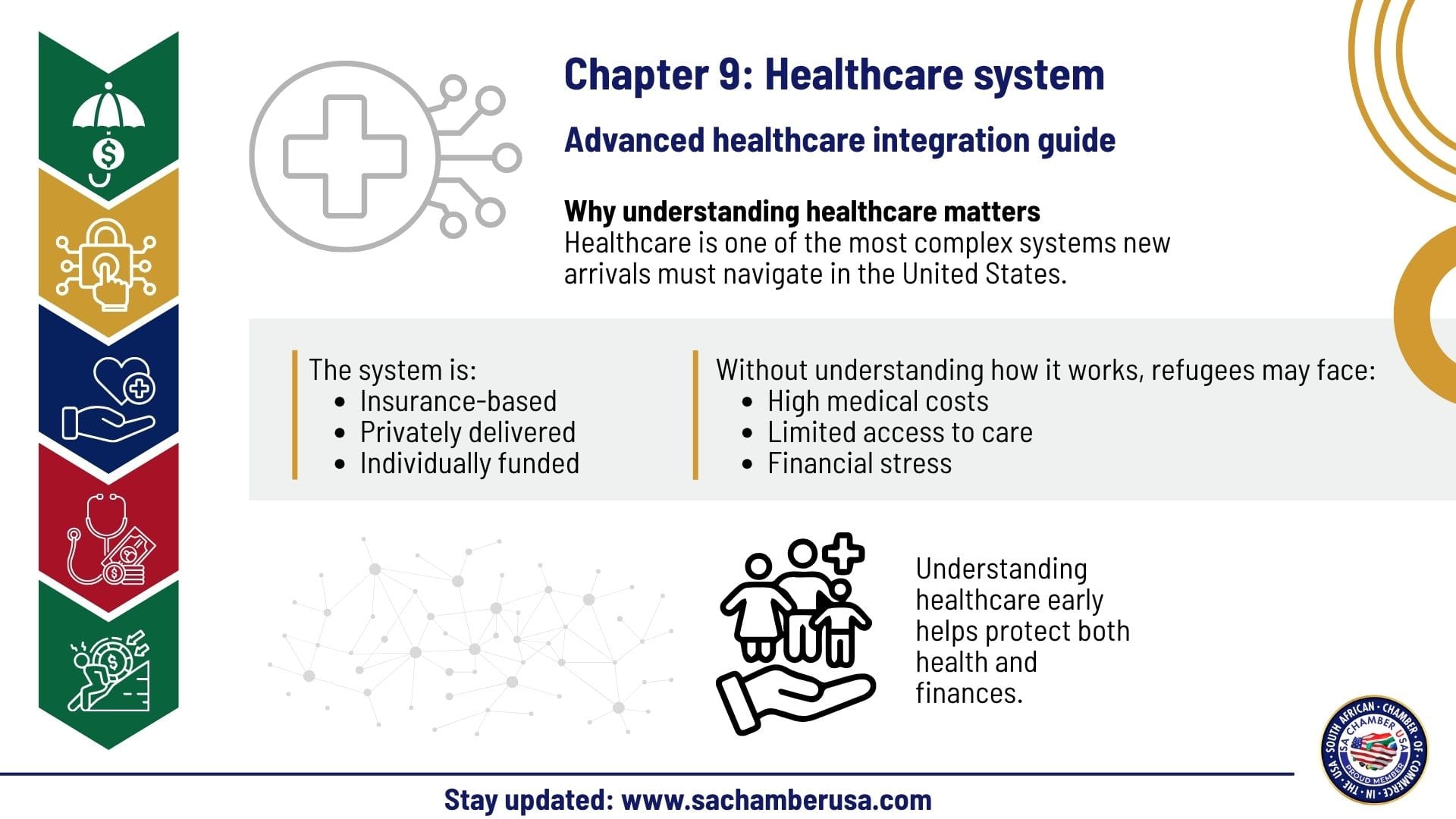
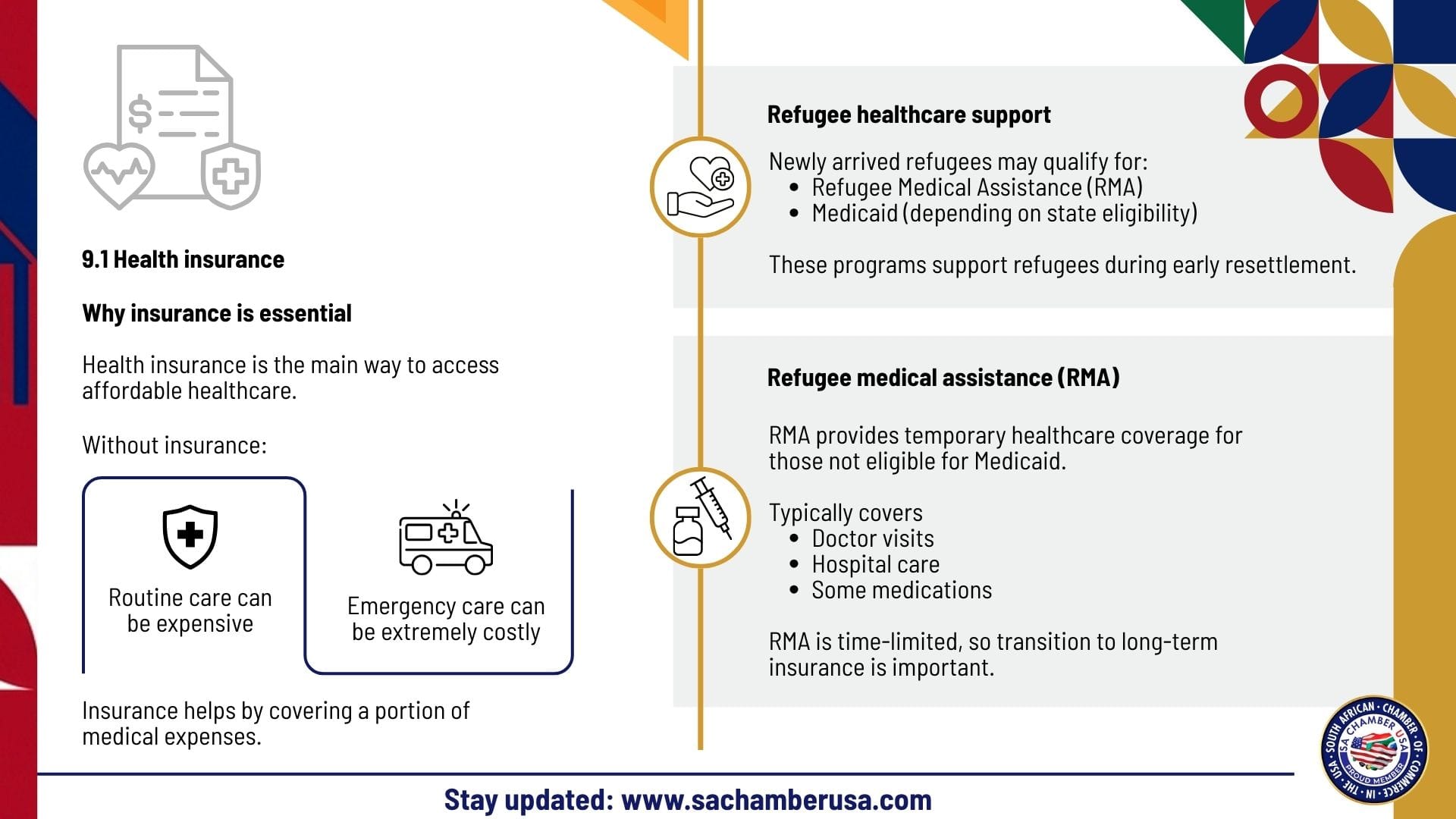
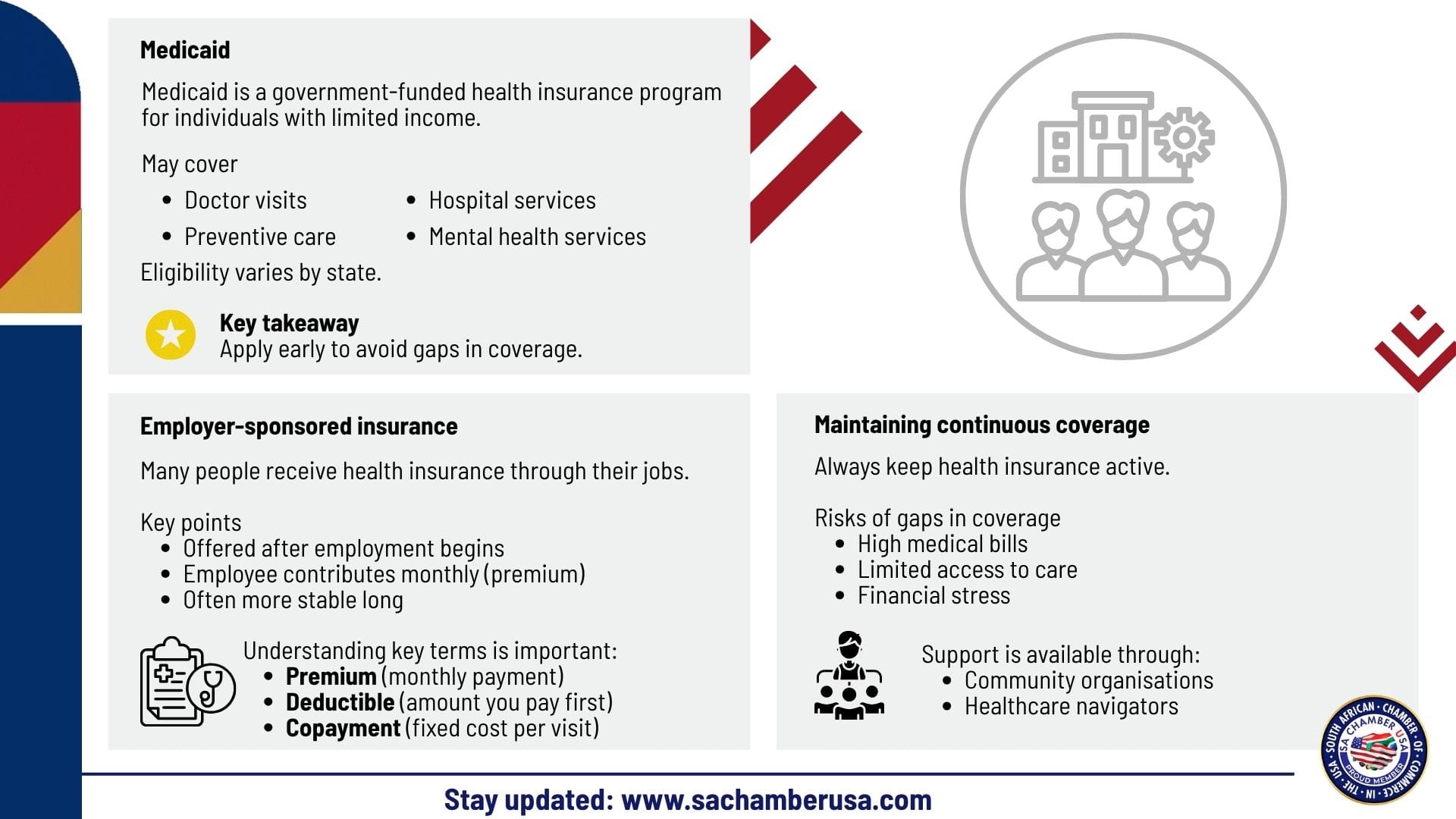
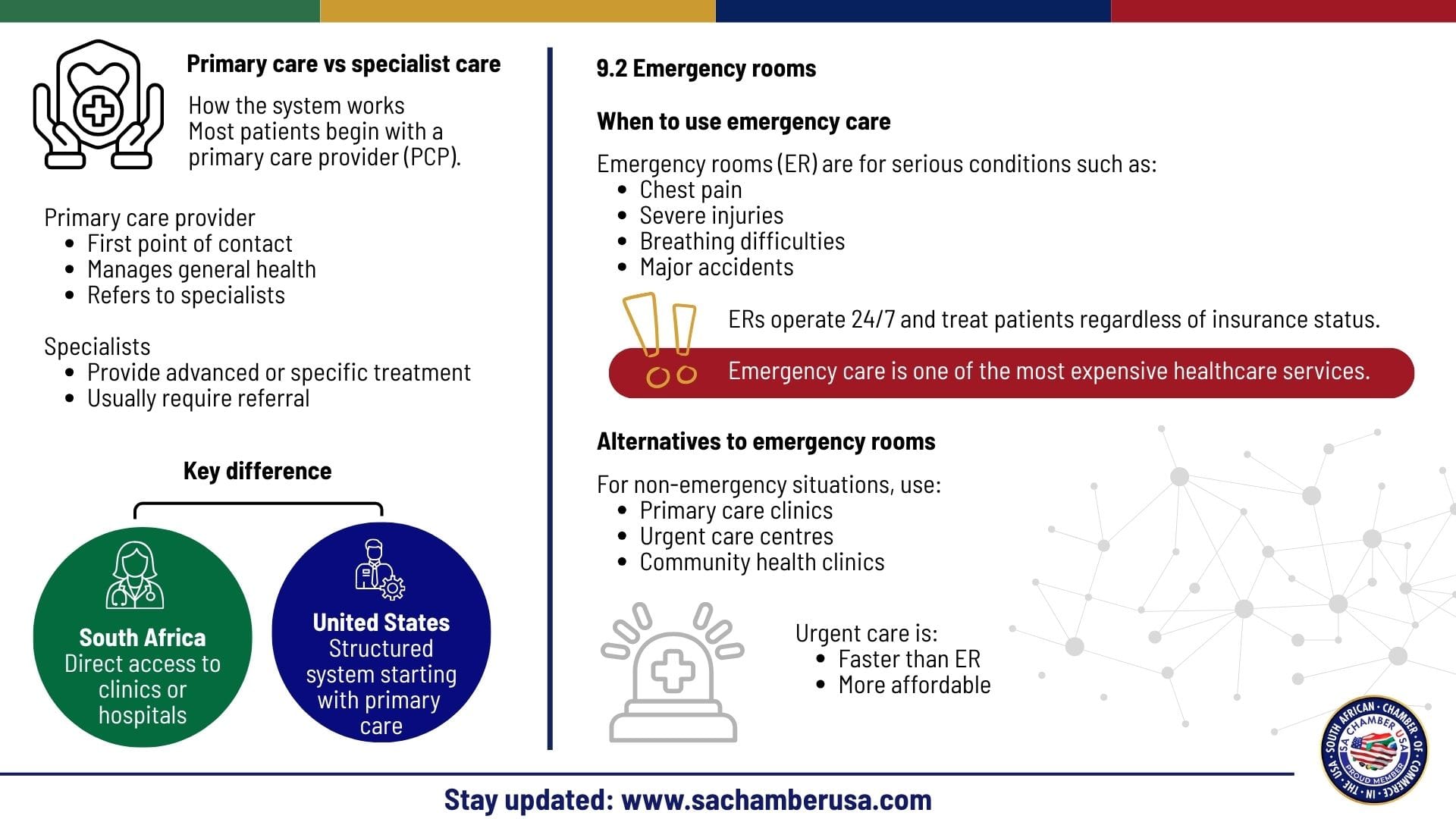
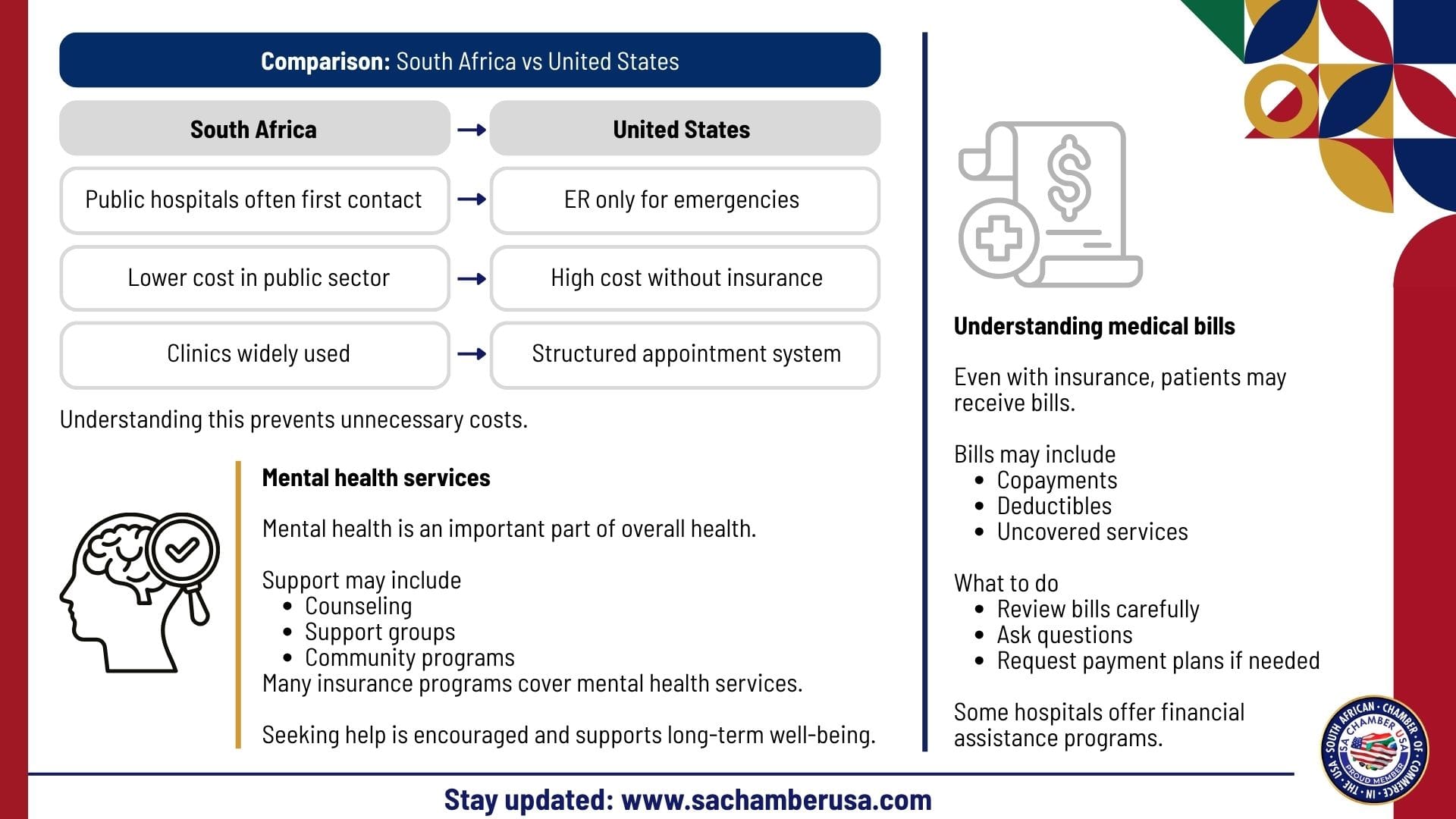
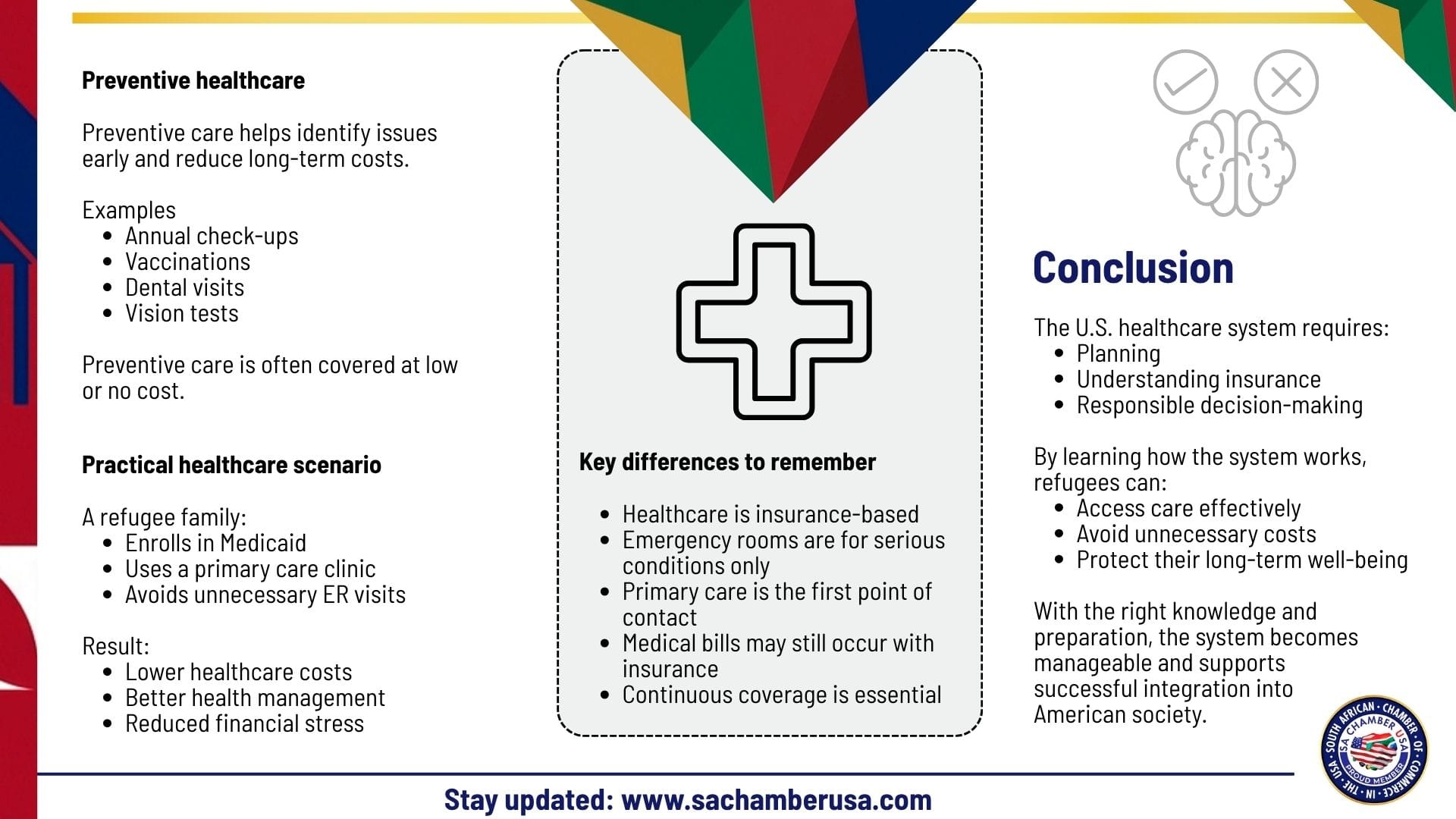
This section explains the structure of the U.S. healthcare system and the importance of health insurance. It describes options such as Refugee Medical Assistance, Medicaid, and employer-sponsored insurance. The section emphasises that healthcare in the U.S. is costly without insurance and that maintaining continuous coverage is essential. It compares the U.S. system with South African healthcare, highlighting differences in access, cost, and responsibility. Understanding healthcare options helps newcomers avoid financial strain and access necessary medical care.
Click anywhere on the image to enlarge
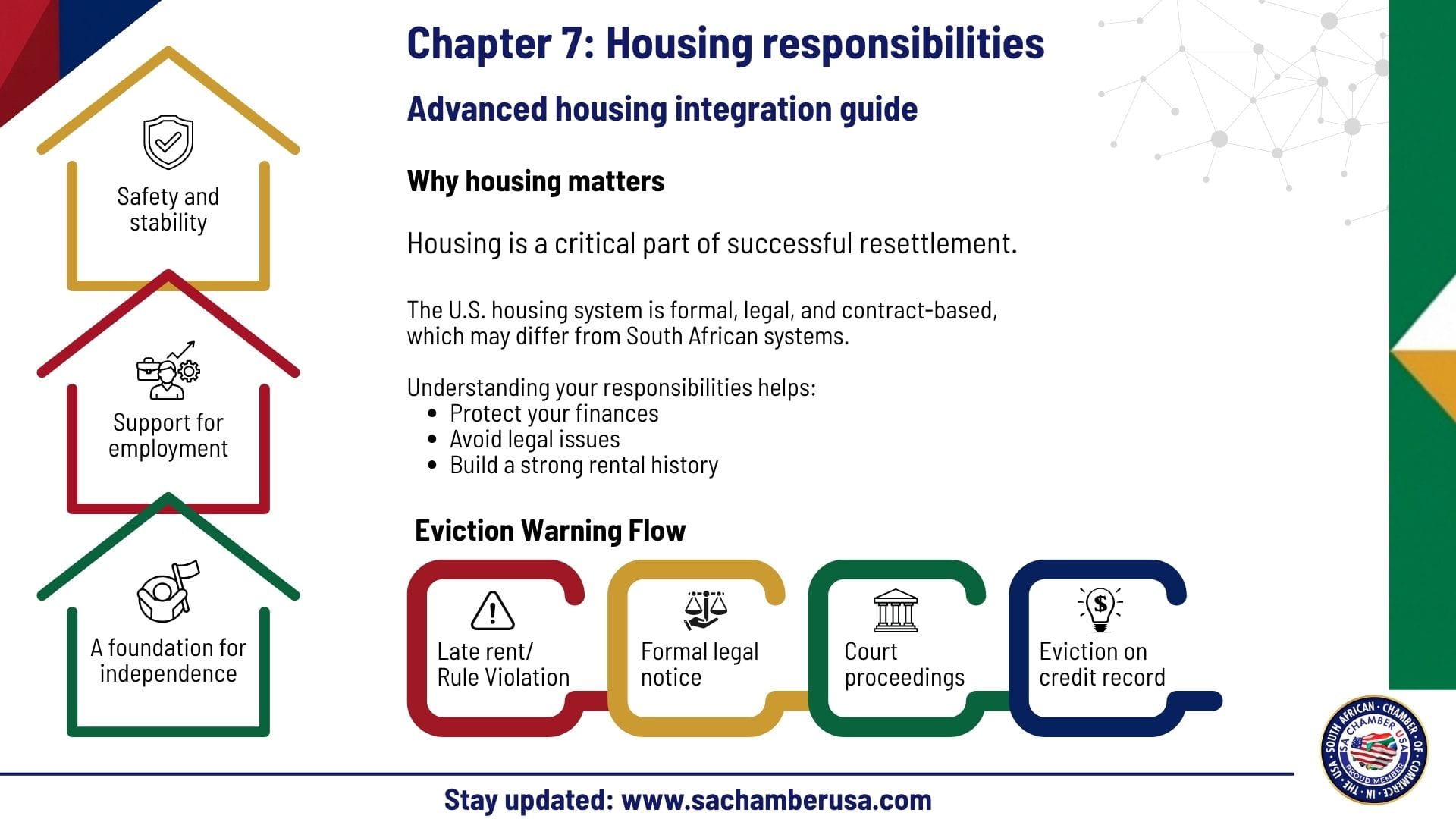
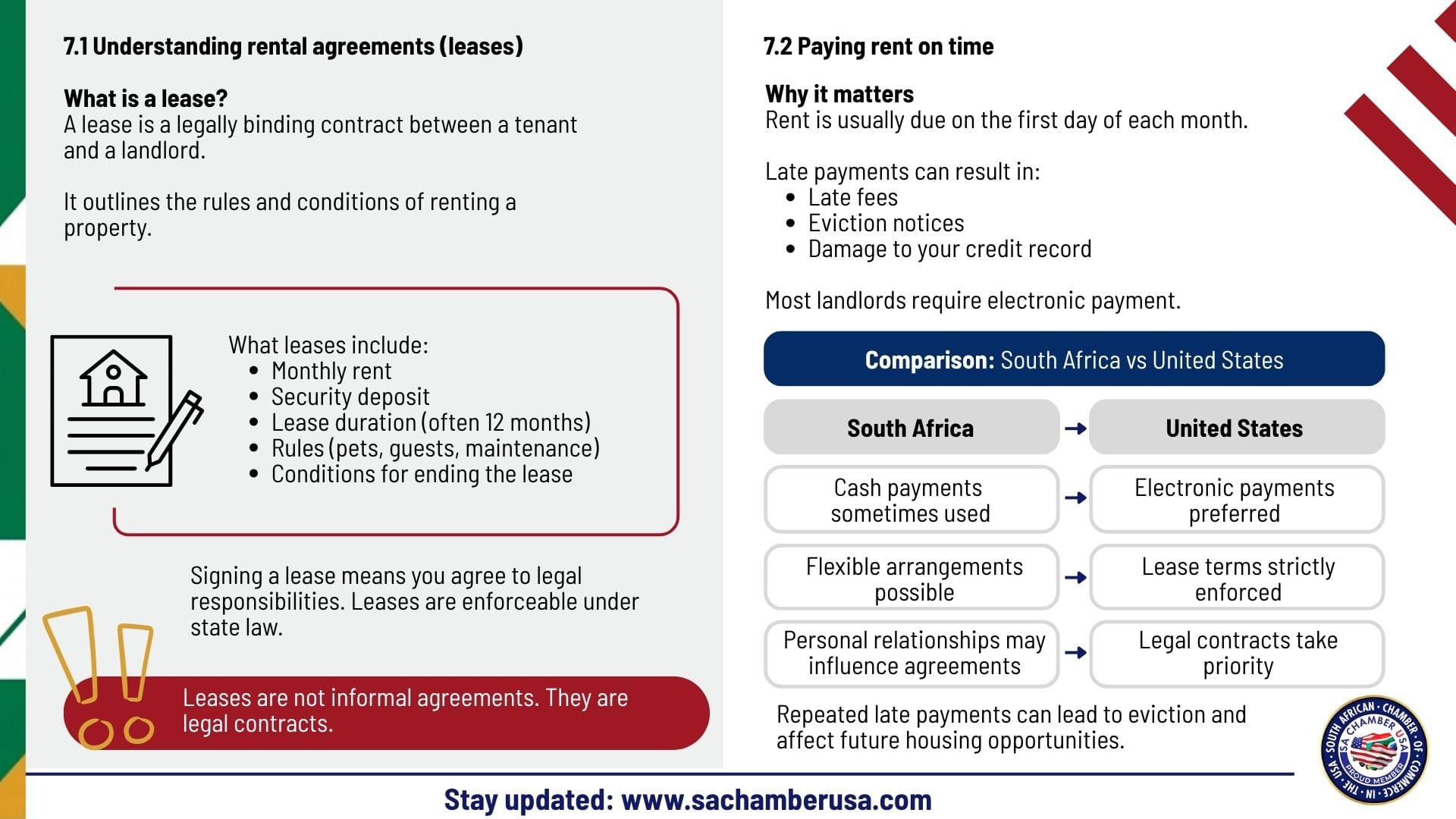
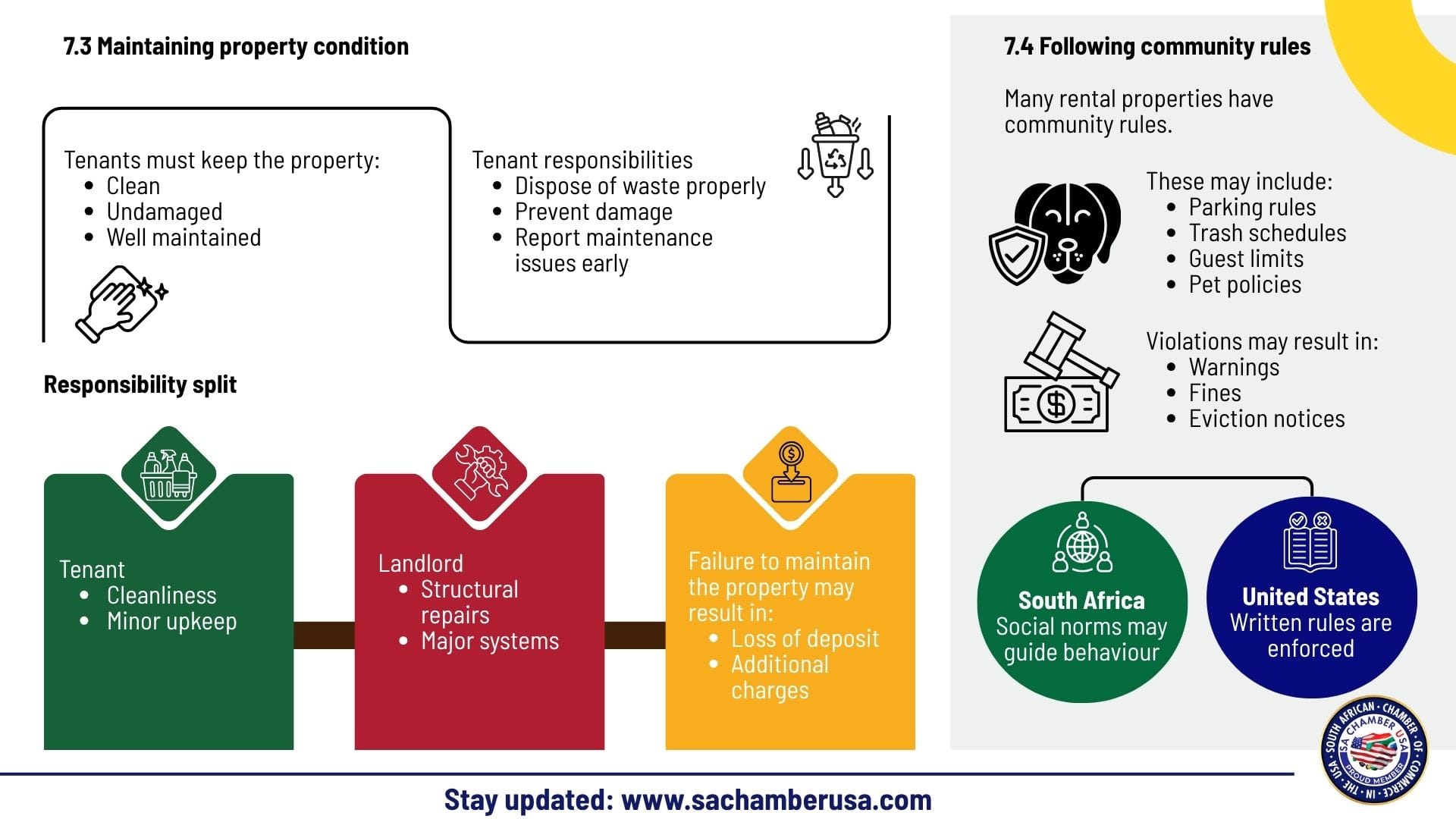
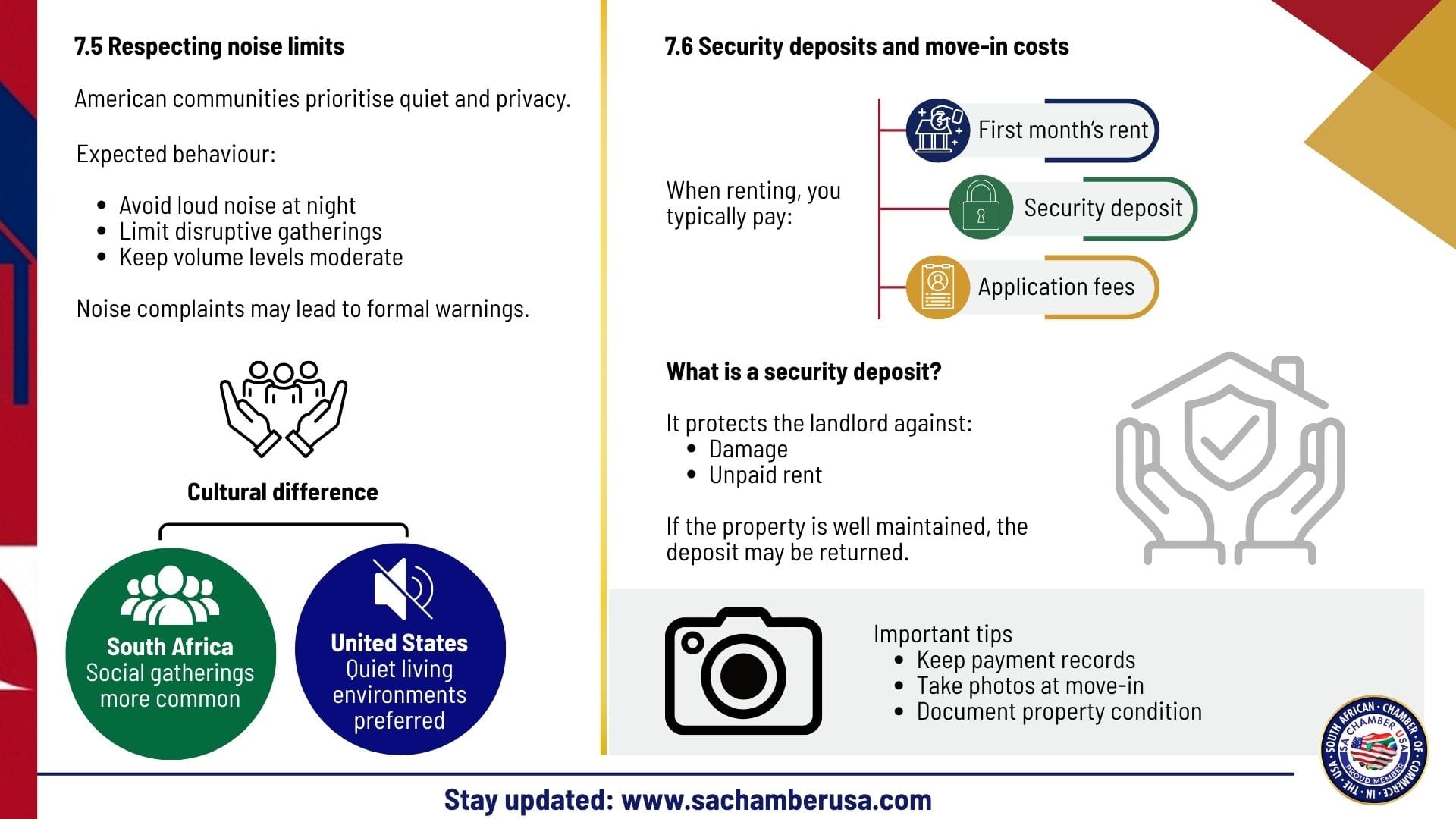
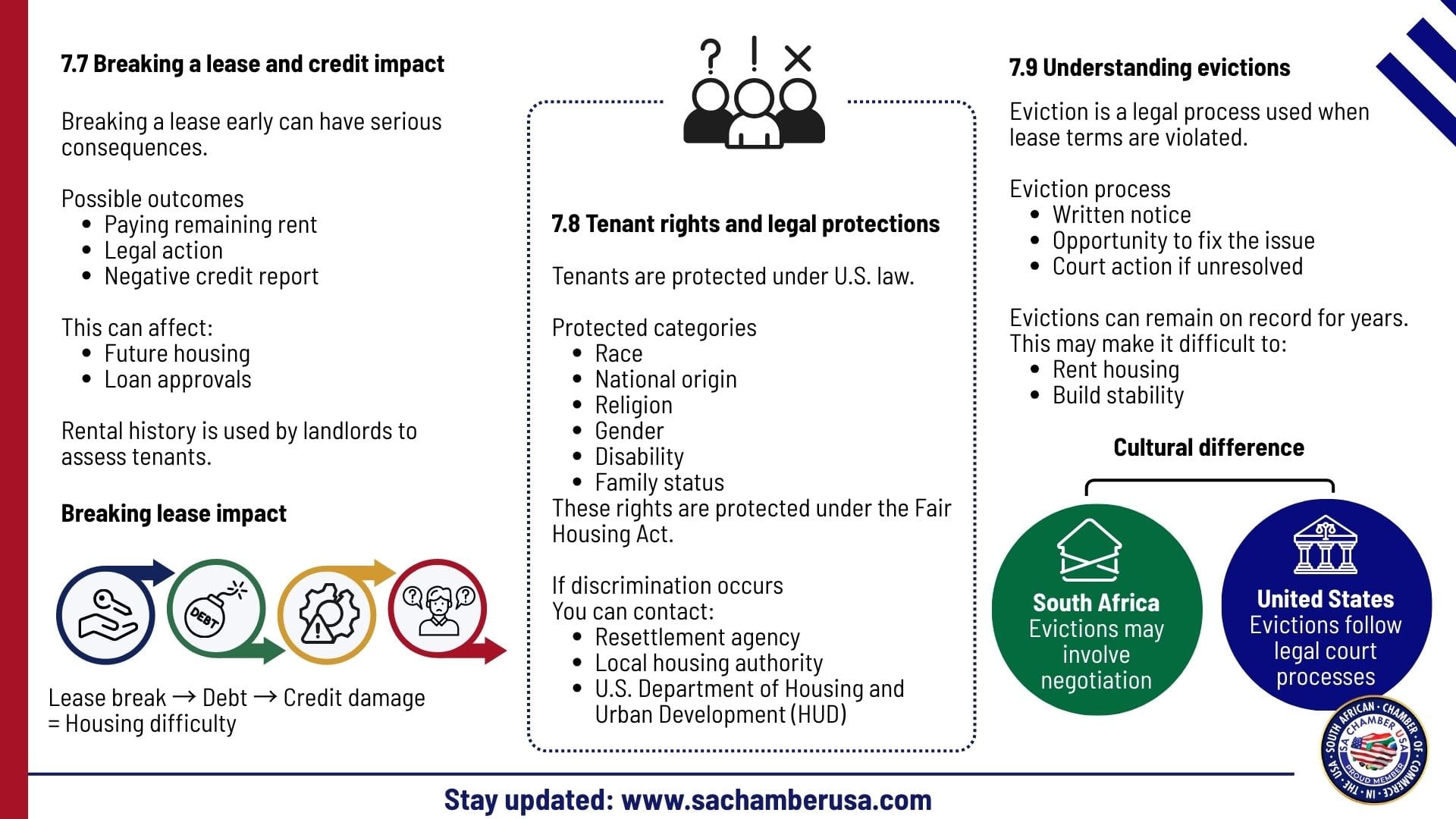
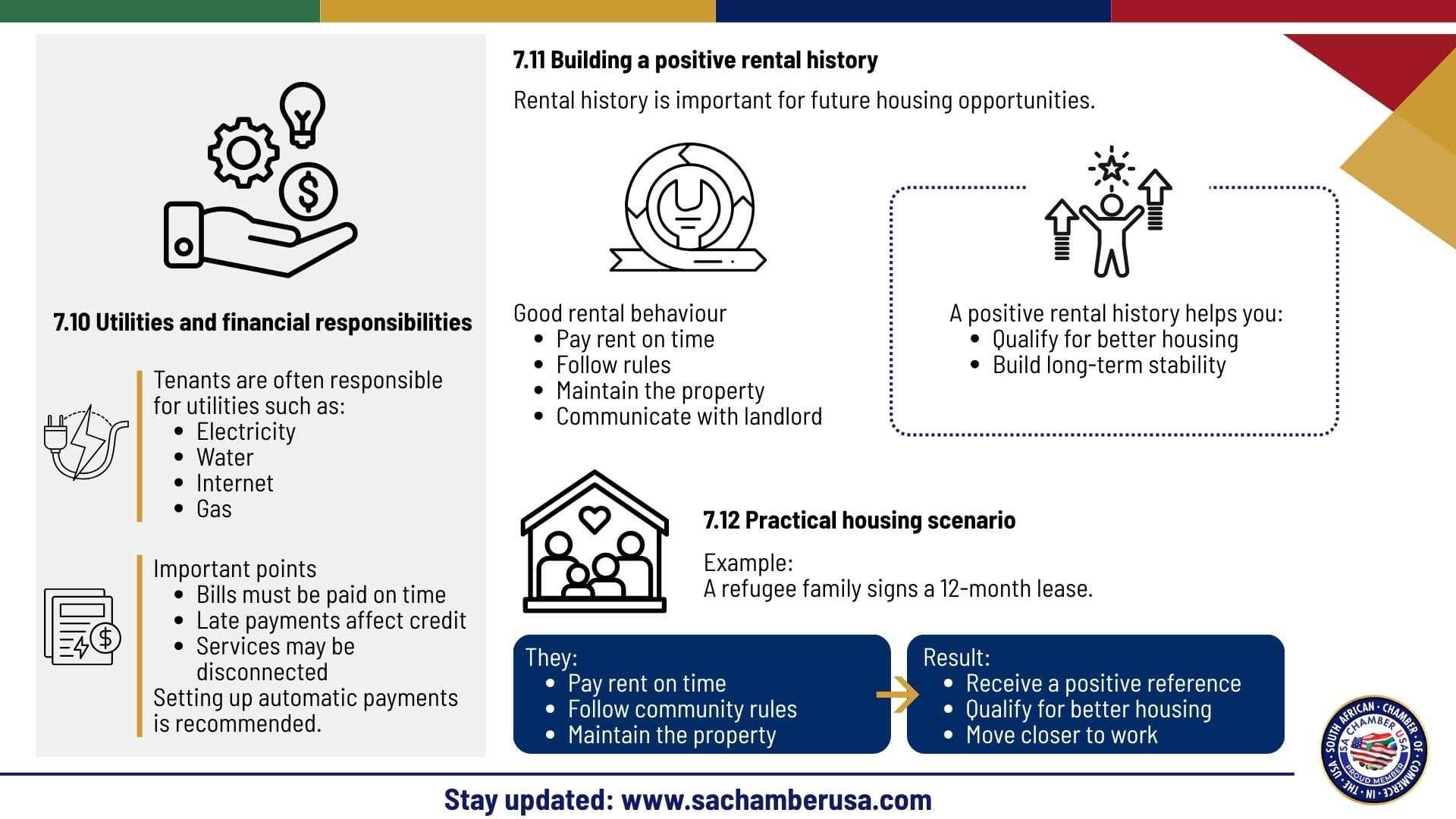
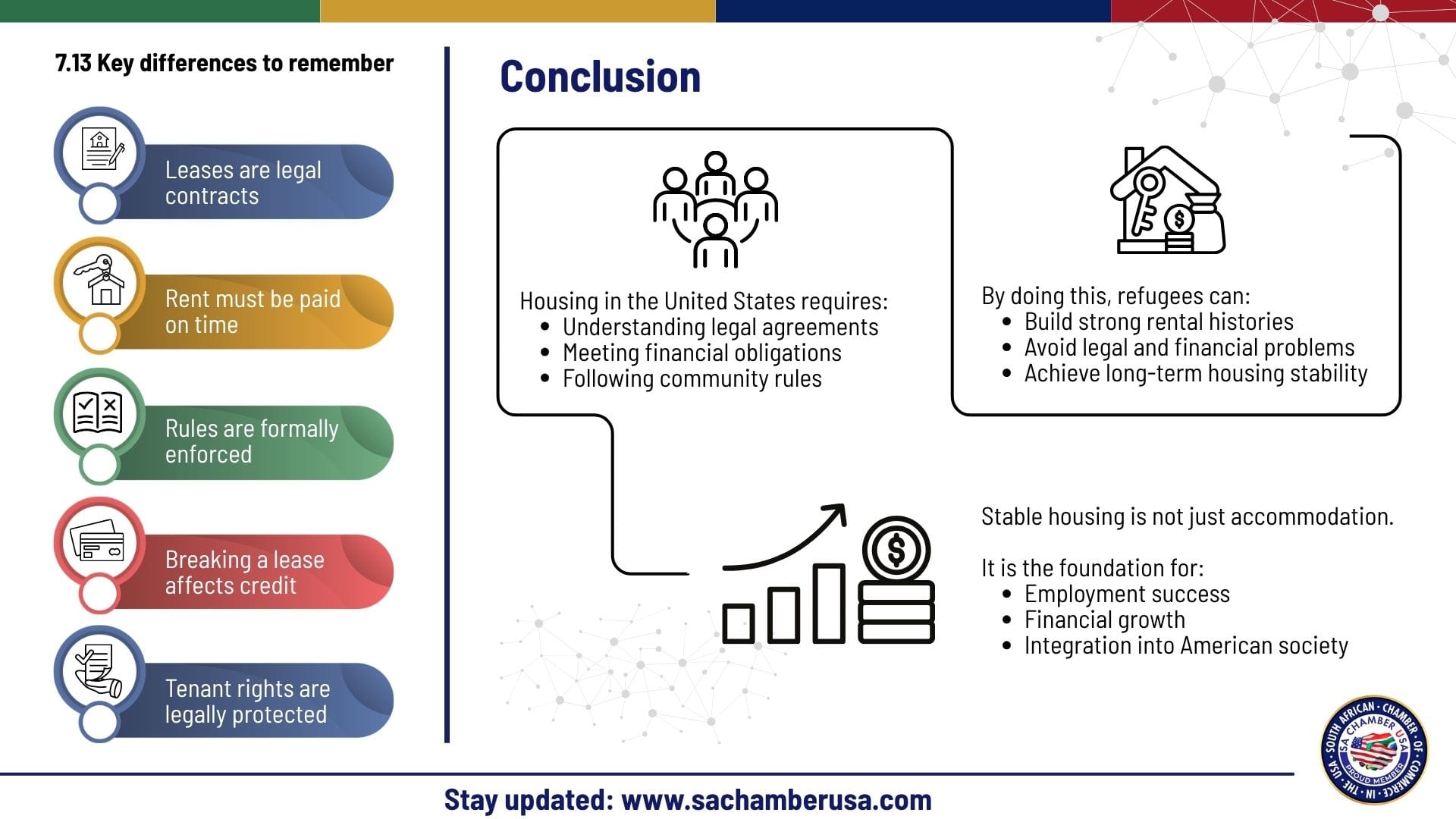
This section addresses practical aspects of daily life, including housing responsibilities and adapting to new living conditions. It highlights the importance of understanding rental agreements, financial commitments, and household responsibilities. The section reinforces the need for planning, budgeting, and compliance with local regulations to ensure stable living arrangements and reduce stress during resettlement.
Click anywhere on the image to enlarge
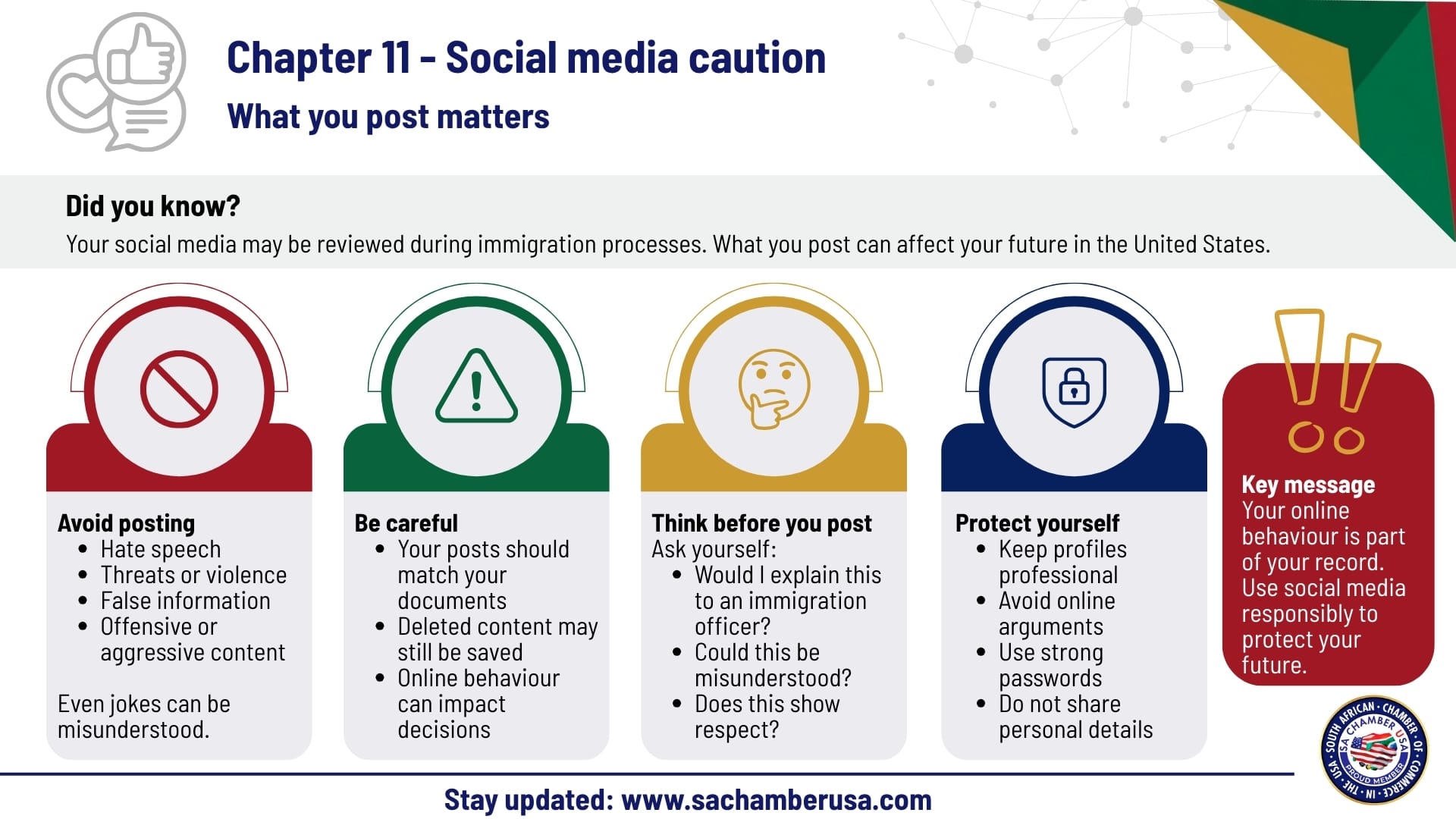
This section explains the impact of online behaviour on immigration and professional opportunities. It highlights that immigration authorities may review social media activity during application processes. The section advises maintaining respectful online communication, avoiding harmful content, and protecting personal information. Responsible digital behaviour supports immigration goals and professional credibility while reducing risks associated with online activity.
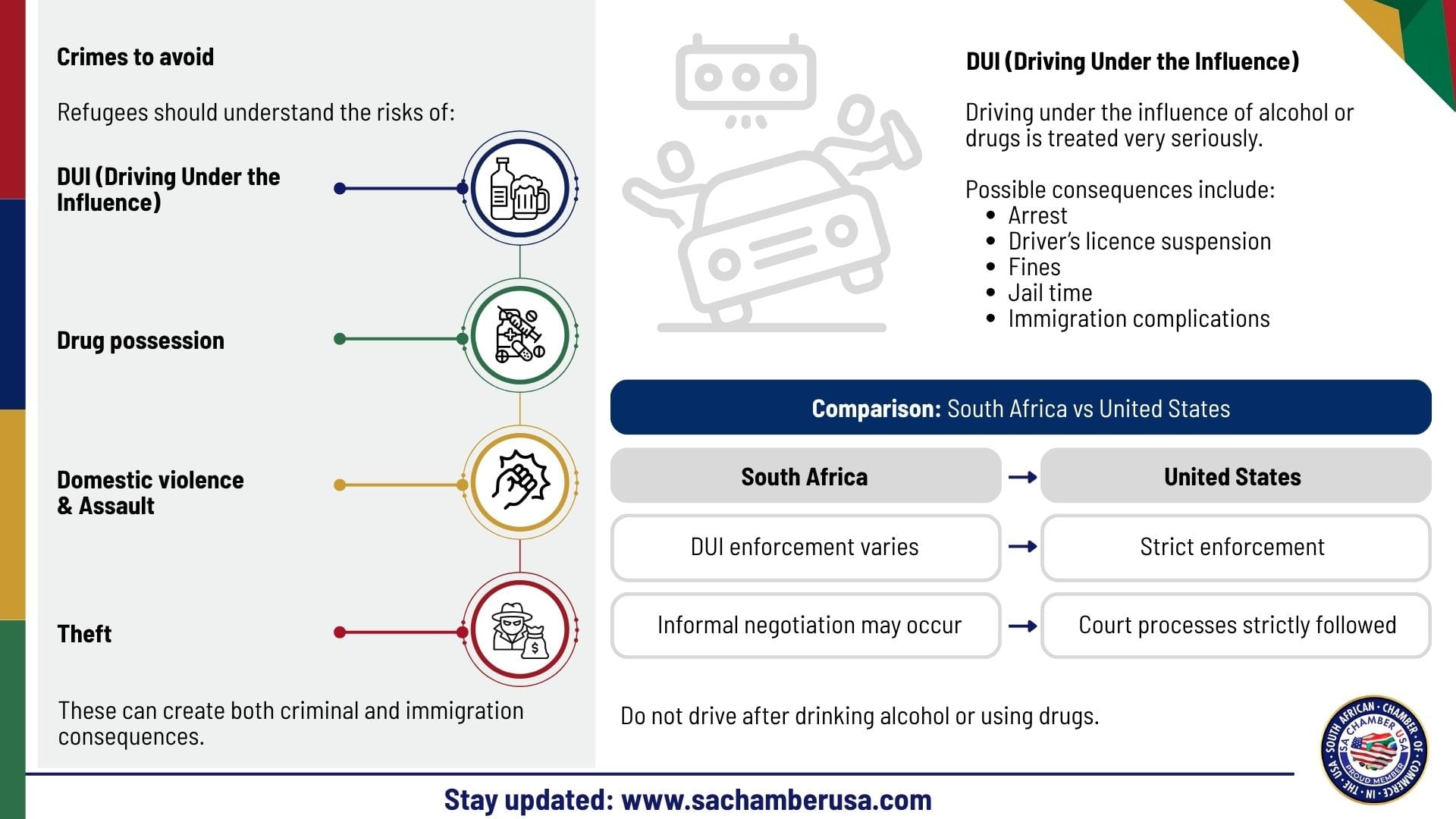
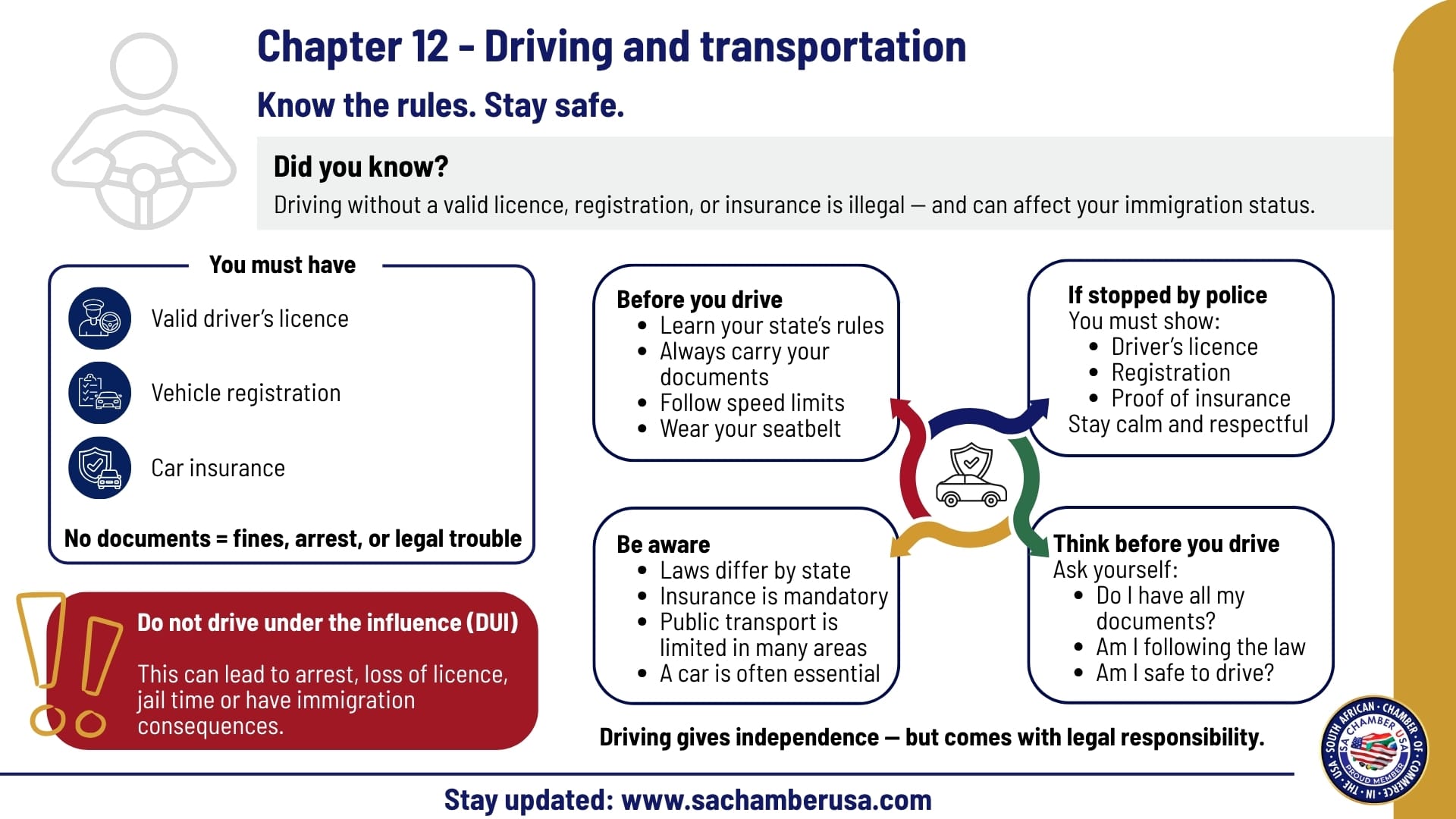
This section explains the importance of understanding U.S. driving laws and responsibilities. It covers licensing requirements, vehicle registration, insurance obligations, and traffic laws. It also discusses the consequences of driving without proper documentation and the serious implications of DUI offences. The section compares transportation systems between South Africa and the United States and stresses the importance of compliance to ensure safety and avoid legal issues.
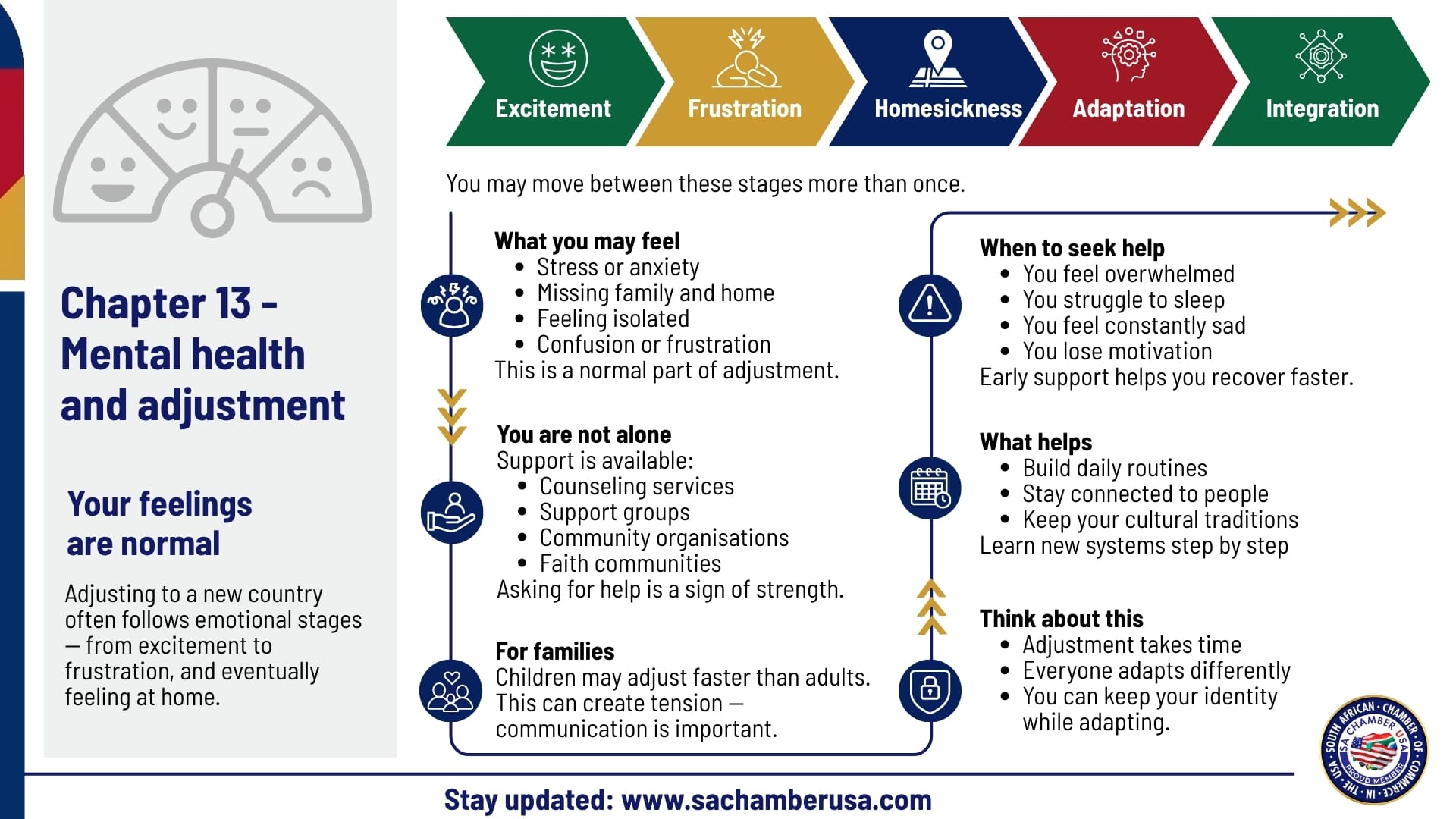
This section addresses the emotional challenges associated with relocation. It explains stages of cultural adjustment, including excitement, frustration, homesickness, and eventual adaptation. It highlights common mental health challenges such as stress, anxiety, and cultural adjustment difficulties. The section encourages seeking support and recognises that emotional ups and downs are normal. Understanding mental health as part of the adjustment process supports long-term well-being.
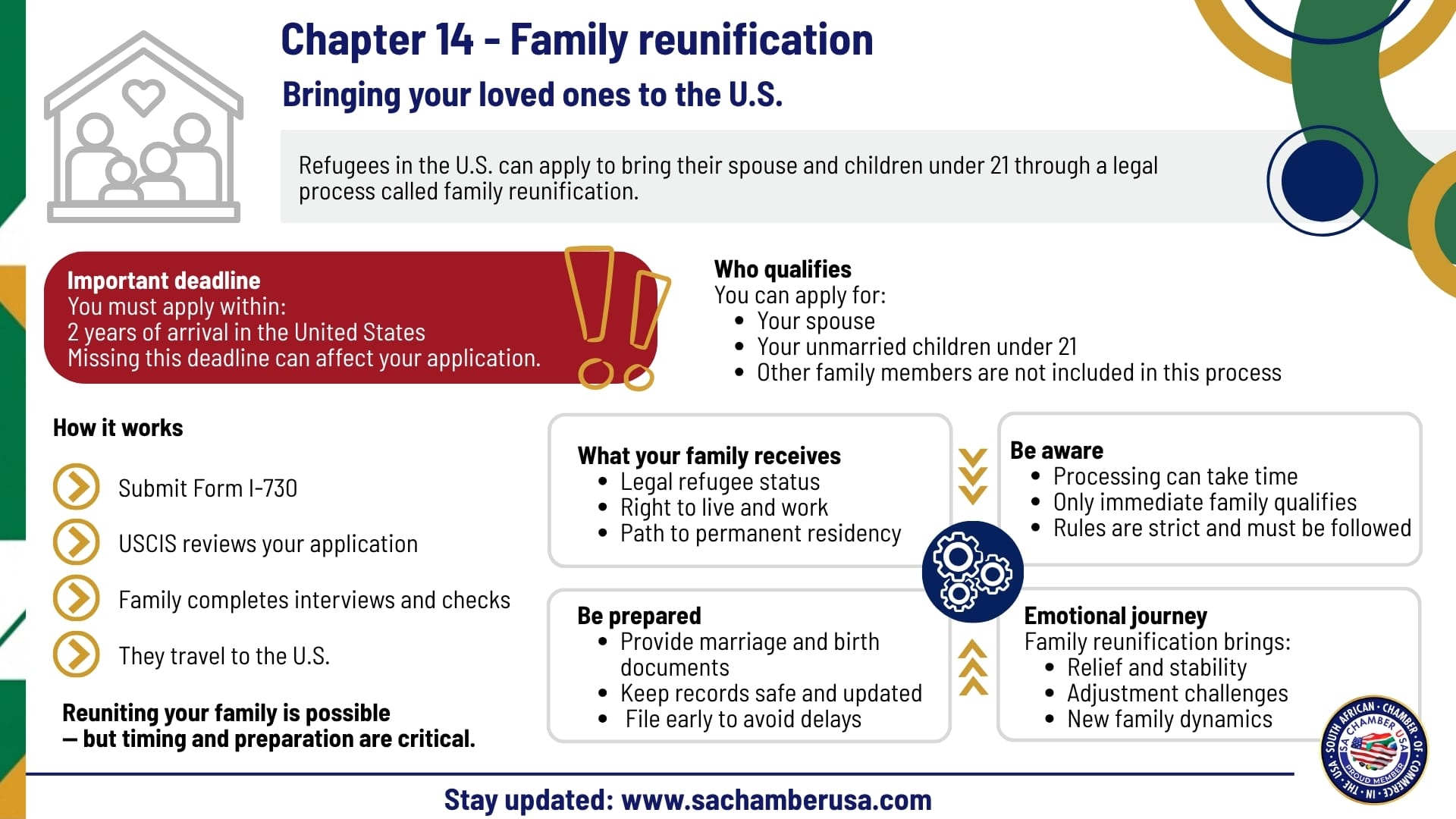
This section outlines the legal process for reuniting with immediate family members through the refugee family reunification system. It explains eligibility, filing procedures, timelines, and legal requirements. The section also addresses emotional and cultural considerations associated with reunification and highlights the importance of documentation and compliance. It clarifies that U.S. immigration law primarily prioritises immediate family members and that processing timelines may vary.
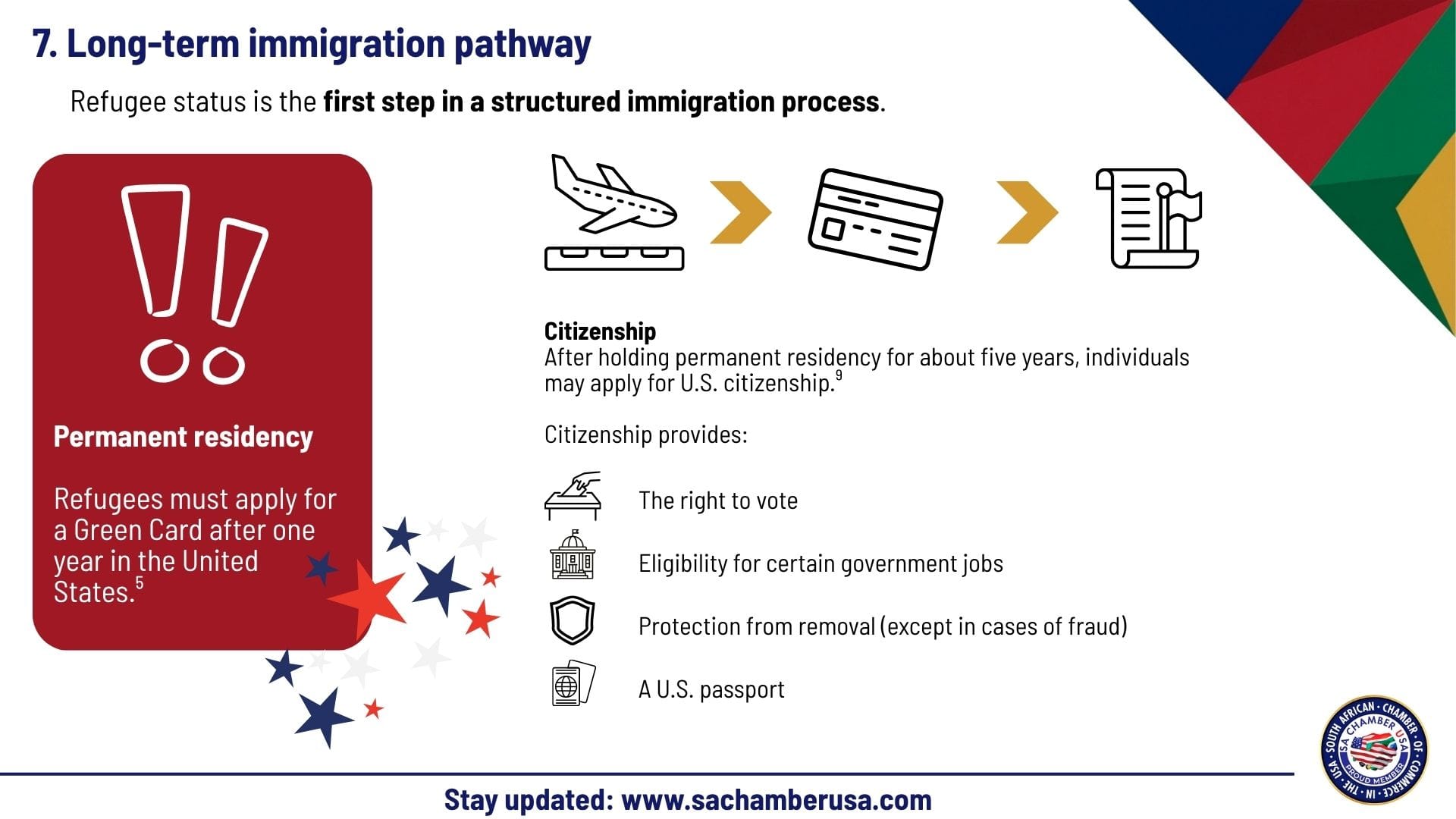
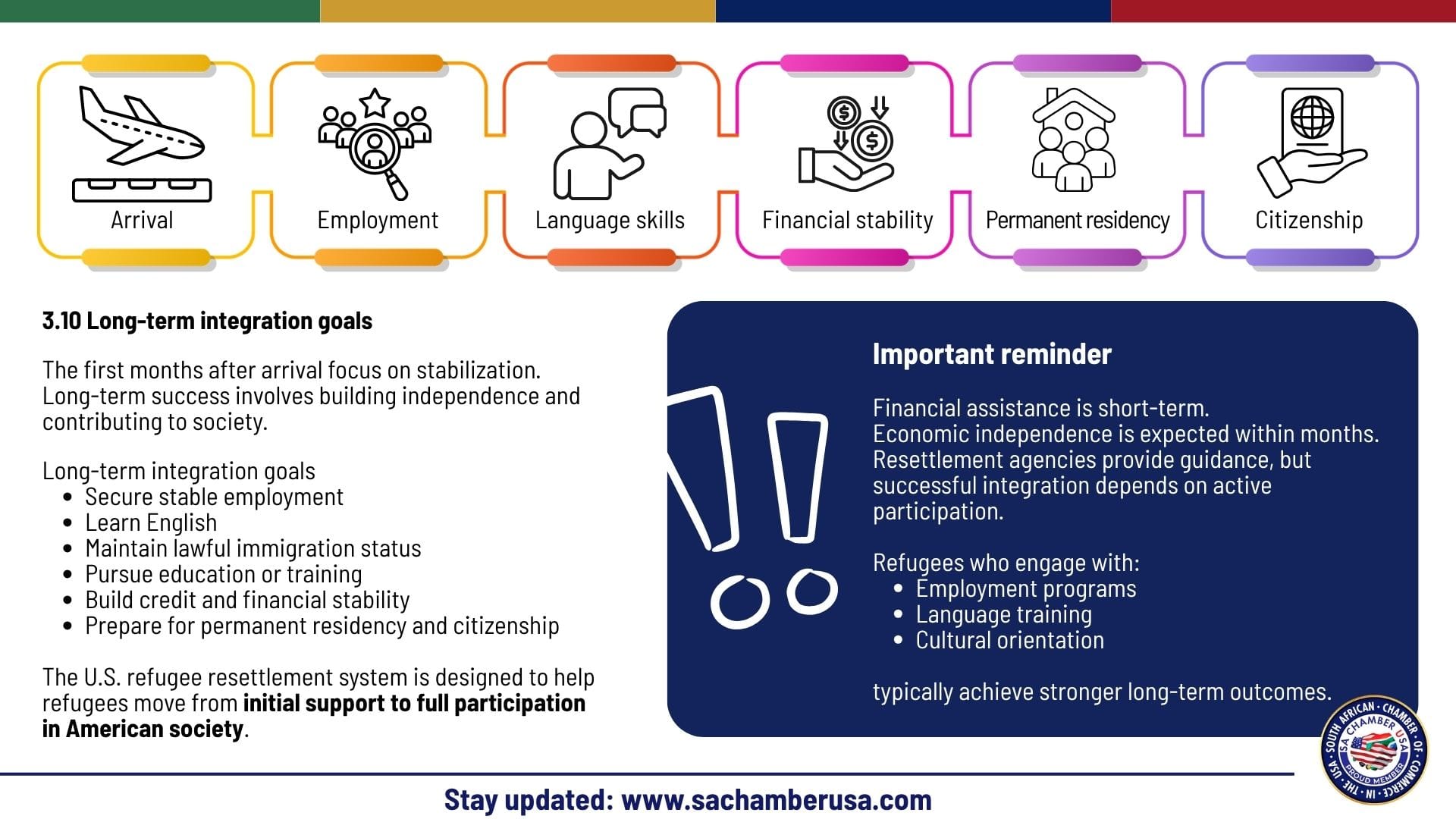
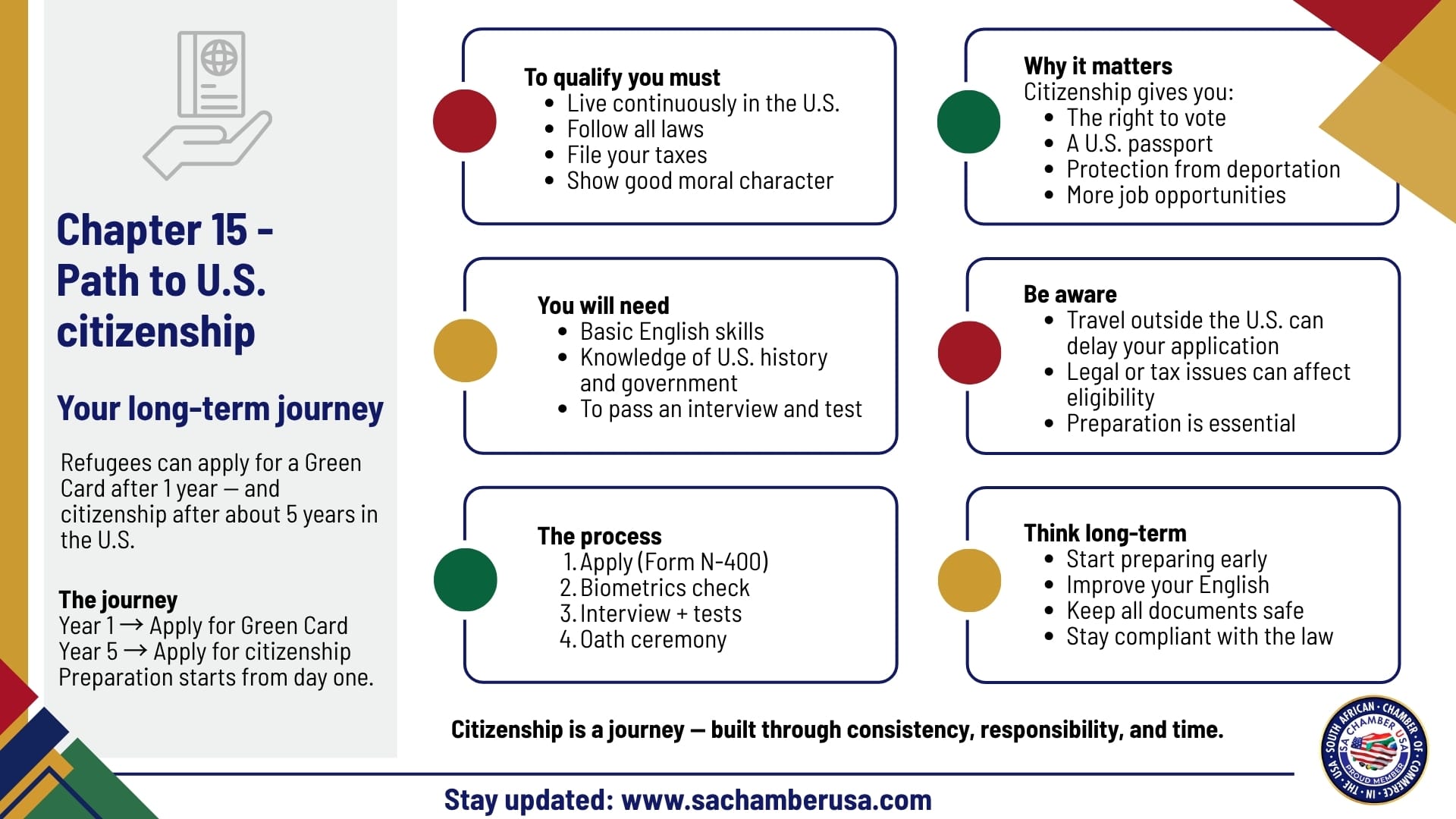
This section explains the process from refugee status to permanent residency and eventual citizenship. It outlines eligibility requirements, timelines, language and civics requirements, and the importance of good moral character. The section emphasises the need for continuous residence, legal compliance, and preparation for naturalisation. Understanding these requirements helps newcomers plan long-term immigration goals.
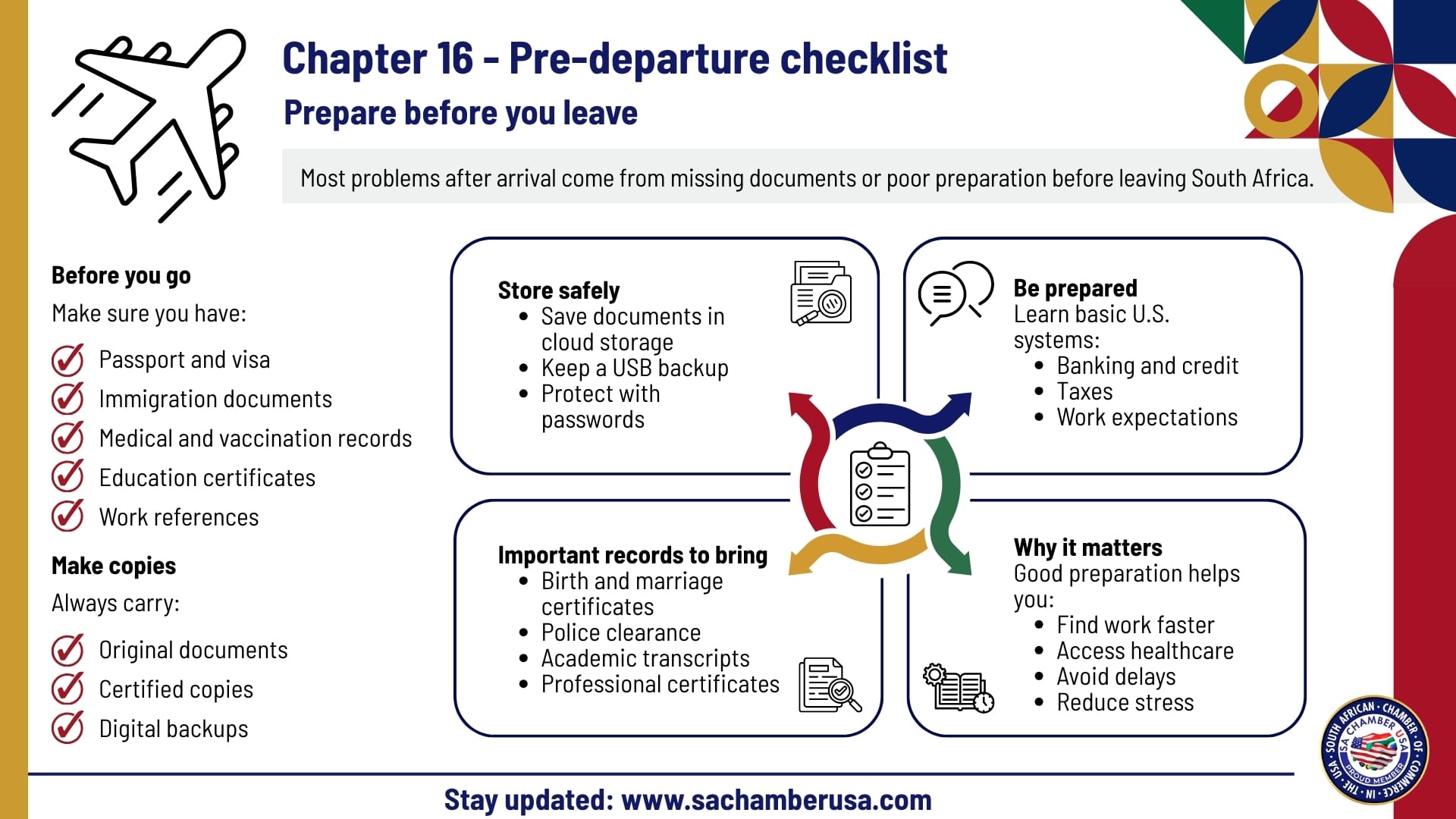
This section provides guidance on preparing before departure from South Africa. It emphasises the importance of gathering and verifying documentation, including immigration records, civil documents, medical records, and educational credentials. It also advises securing digital copies, preparing financially, and understanding cultural expectations. Thorough preparation reduces delays, prevents complications, and supports smoother integration upon arrival.
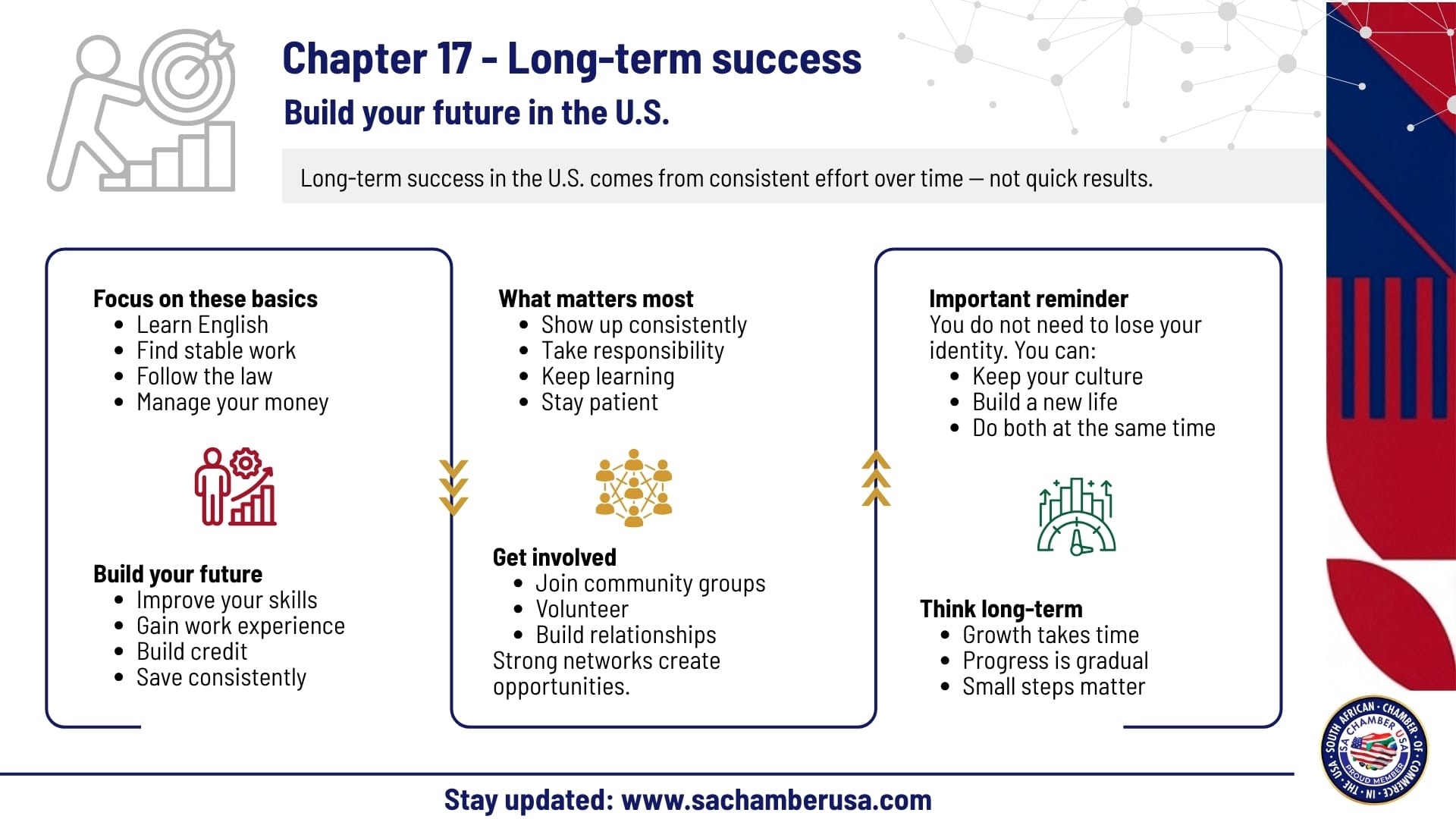
This section outlines strategies for achieving long-term stability in the United States. It highlights the importance of learning English, securing employment, maintaining legal compliance, building credit, saving money, pursuing education, and participating in community life. The section emphasises that integration is a gradual process requiring consistent effort, responsibility, and planning
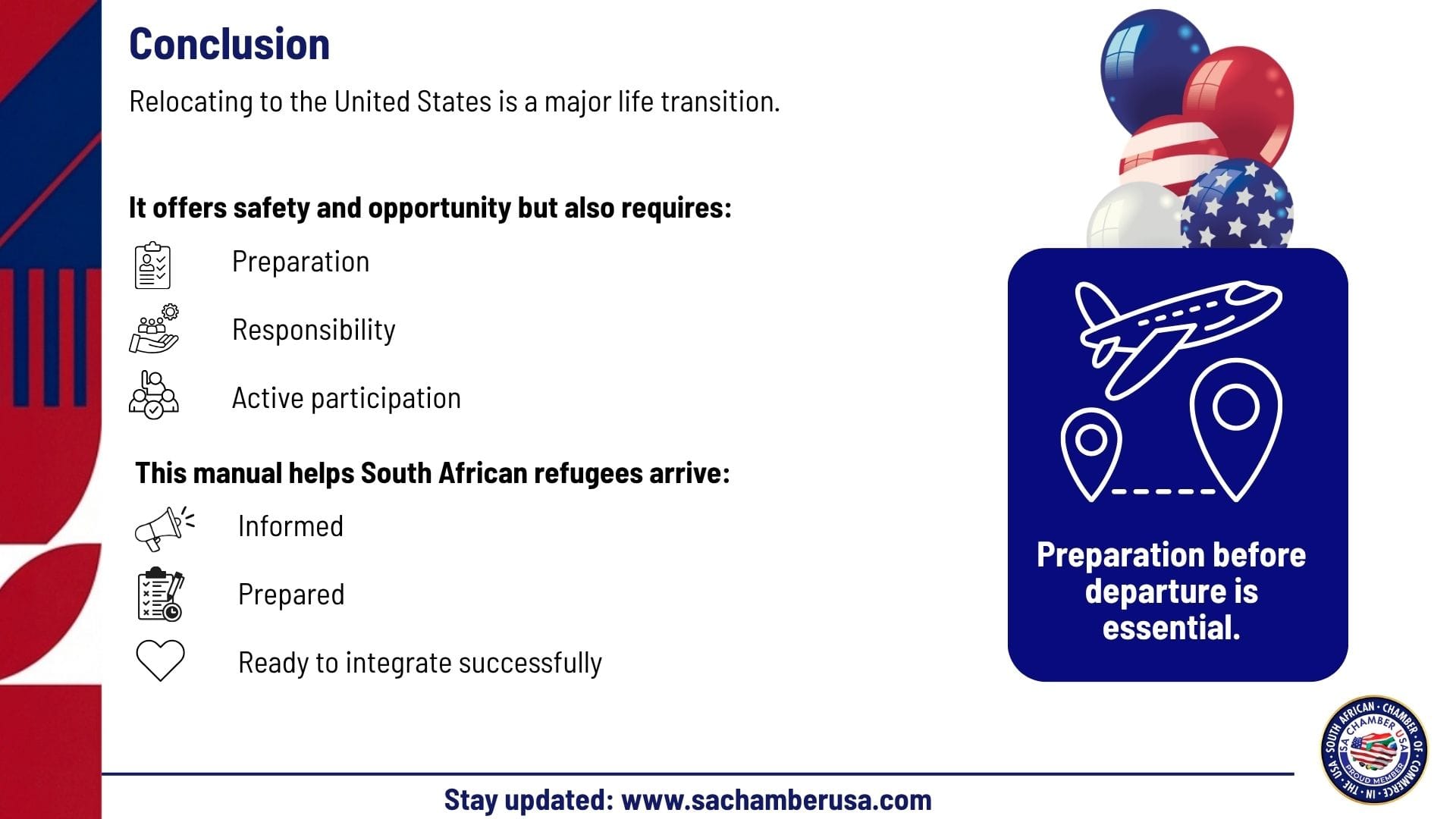
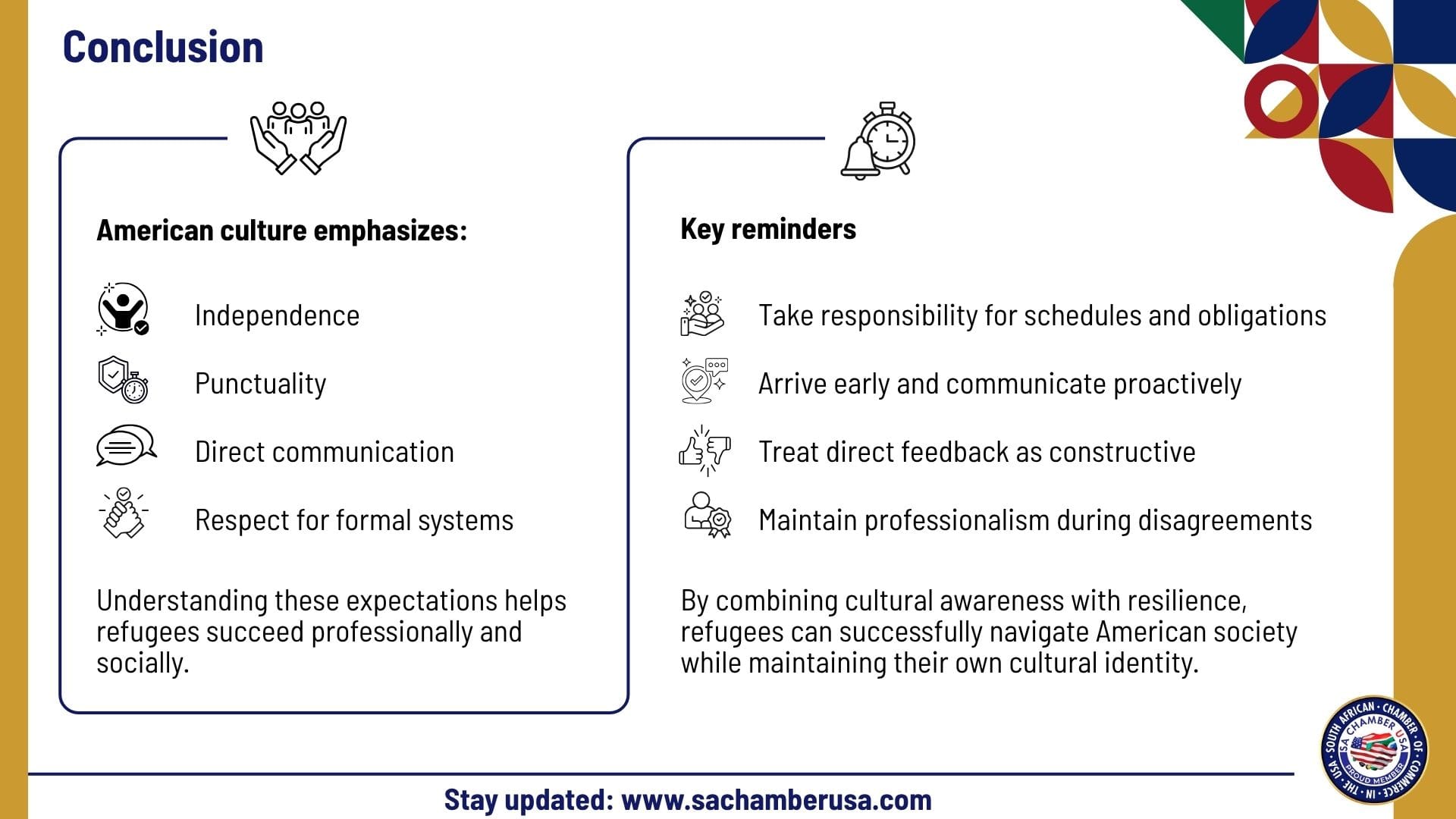
The final section reinforces that relocation is both a personal and practical journey. It acknowledges the challenges and opportunities associated with moving to the United States and encourages lawful participation, cultural respect, and long-term planning. The section emphasises that success involves balancing cultural identity with adaptation to American systems, and that preparation, perseverance, and responsible participation create lasting opportunities.